Focus Home Interactive has released Pro Cycling Manager 2012, a bicycle management game that sees the players training a team of riders in an attempt to win some of the greatest official competitions such as Tour De France, La Vuelta and Ardennes Classics. Pro Cycling Manager 2012 is powered by the Gamebryo engine and features 3D races, so it will be interesting to see how the game performs on modern-day PC configurations. Continue reading Pro Cycling Manager 2012 – PC Performance Analysis→
Spellforce 2: Faith in Destiny, the second expansion for Spellforce 2, is finally here with us. This expansion was announced back in 2009 but was delayed by JoWood due to funding issues. After various delays, the expansion was slated for a March 2011 release but then, JoWood decided to delay it indefinitely. Nordic Games then stepped in and offered their help in funding and completing it. Fast forward a whole year and here we are today, with Spellforce 2: Faith in Destiny finally being released as a standalone game. Continue reading Spellforce 2: Faith in Destiny – PC Performance Analysis→
Color us impressed. Although Rockstar stated that they’d offer us a proper PC version of Max Payne 3, we had our doubts. You see, after the awful GTA IV port, we couldn’t help but be suspicious about it. And even though some gamers claimed that there were gains with a quad-core, we can confirm today that most of them saw a performance jump due to moving on to CPUs with a better architecture. GTA IV runs the same on a dual-core and a quad-core CPU of the same family, proving that it does not actually take advantage of the extra cores. And we are delighted to report today that Max Payne 3 is the most optimized PC game of 2012. Continue reading Max Payne 3 – PC Performance Analysis→
Cyanide’s Game of Thrones has just been released and we are bringing you a PC performance analysis for it. Game of Thrones RPG is powered by Epic’s Unreal Engine 3, which means that it should normally run fine on a variety of PC configurations. In case you’re wondering then no: Cyanide did not mess it up and Game of Thrones runs real smooth. As always, we used an overclocked Q9650 (at 4.2Ghz) with 4GB RAM, an Nvidia GTX295, Windows 7-64Bit and the latest version of the GeForce ForceWare drivers. Continue reading Game of Thrones PC Performance Analysis→
There is no denying that there is something special about Piranha Bytes. Although their games are bugged to death, at their time of release, they are really addictive. They are not ground-breaking but – at the same time – they are unique and something that is worth your time and effort. And although Risen 2 is dumbed down (compared to the first Risen or the Gothic series) and consolized (especially the inventory system), it’s a pretty good and enjoyable game. Naturally, Piranha’s title had major technical issues when it was released, and that’s precisely why we decided to wait until they fix them. Continue reading Risen 2: Dark Waters PC Performance Analysis→
Rebellion has released the PC version of Sniper Elite V2, and it’s time to see how this sniper game performs on our beloved platform. Sniper Elite V2 was self-published by Rebellion themselves and is a nice port. There have been some improvements to the game’s textures and there are keyboard indications for all in-game actions. There is also a mouse smoothing option, so be sure to disable it if you want to avoid any mouse acceleration side effects. Unfortunately, there is no option to adjust the FOV, and you might notice some pop-in when the levels are initially loaded. Sniper Elite V2 is a multiplatform title and although it is enjoyable and fun on the PC, it could look – and perform – better. Continue reading Sniper Elite V2 – PC Performance Analysis→
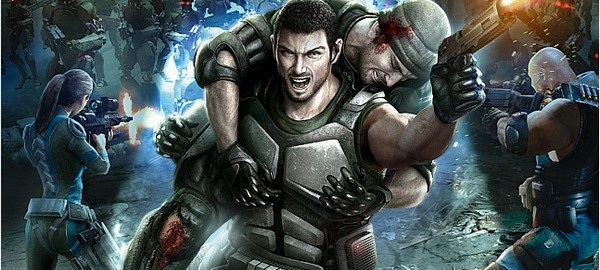
Binary Domain was well received on consoles, and we were delighted to hear that this squad-based shooter would be coming to our beloved platform. And to be honest, we were expecting more than a shoddy port. Sure, we didn’t expect to see higher-resolution textures or extra PC features but this is a really bad and poor port. Okay, we’ve seen worse ports than this but let’s face; this is a port that screams ‘consolitus’ and we know that some of you hate this word, but that’s the truth. Continue reading Binary Domain – PC Performance Analysis→
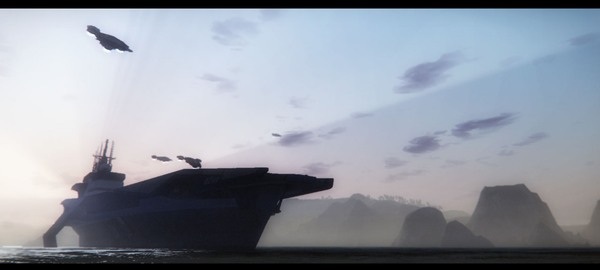
Truth be told, we were a bit worried about Carrier Command: Gaea Mission. You see, Bohemia is a talented team there is no doubt about that. However, their engine was seriously bugged – back in the days of ArmA 2 and Take on Helicopters – and suffered from a lot of performance issues. Well, good news guys as the remake of Carrier Command uses a different engine that runs amazingly well. This newly, in-house engine, is GPU bound and did not stress our CPU even when there were firefights on-screen. Way to go Bohemia. Continue reading Carrier Command: Gaea Mission – Beta Performance Analysis→
We always liked Bugbear’s games. FlatOut was a great arcade racing series and run flawlessly in a lot of PC system configurations. Naturally, we thought that Ridge Racer: Unbounded would live up to the standards that were set by the Finish studio. Sadly though, what we have in our hands is a shoddy console port of a really promising game. Not only, that, but Ridge Racer: Unbounded suffers from all the flaws and issues that plagued the entire FlatOut series. Yes, there is rubber band and yes the controls are a mess, especially if you try to play the game with the keyboard, something that was no issue with the FlatOut games. Continue reading Ridge Racer: Unbounded PC Performance Analysis→
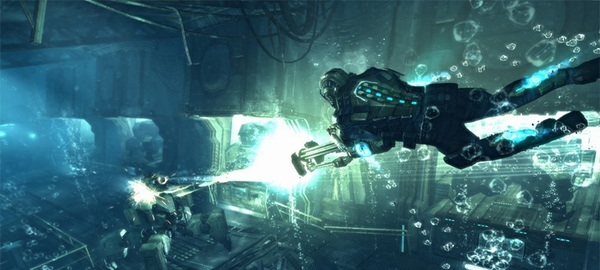
Biart Studios have released their first indie third-person shooter title, Deep Black: Reloaded. The game was initially known as U-Wars and was meant to take advantage of Nvidia’s PhysX and 3D Vision. Back when it was called U-Wars, the developers had trouble finding a publisher. Fast forward a couple of years and here we are with Biart’s renamed game that is published by them in a digital form. Given its indie nature, we were wondering whether or not it was worth writing a Performance Analysis about it. However, we got intrigued when we found out that it was a 3D-Ready title, so we felt the need to give it a shot. As always, we used an overclocked Q9650 with a GTX295, 4GB RAM, Windows 7-64Bit and the latest version of Nvidia’s ForceWare drivers. Continue reading Deep Black: Reloaded PC Performance Analysis→