
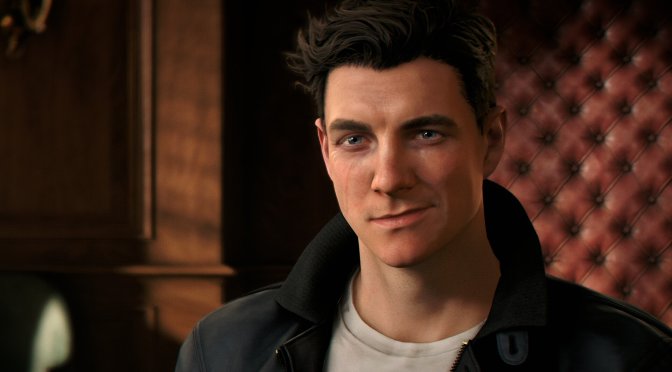
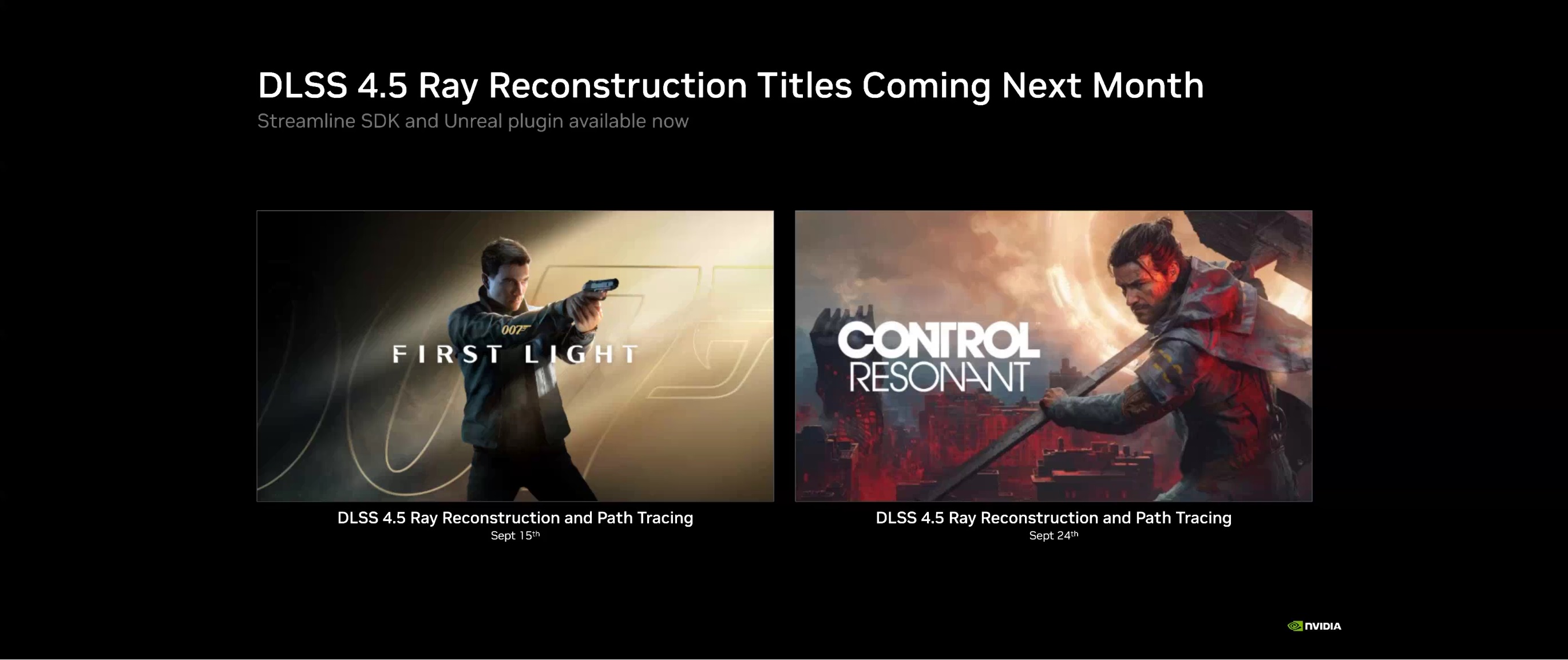
NVIDIA has announced that the promised Path Tracing Patch for 007 First Light will be released on September 15. Moreover, the game will get support for NVIDIA DLSS 4.5 Ray Reconstruction.
007 First Light uses the Glacier Engine, and it is one of the best-looking rasterized games on PC. IO Interactive has used a lot of high-quality textures, and the game world looks stunning. It also features numerous impressive scripted events and some great weather effects. Overall, the game looks excellent, even though you can easily spot the areas where path tracing will further enhance the visuals.
007 First Light performs and looks great on PC right now. The game does not require a high-end GPU to be enjoyed at 1080p. At 4K, things get more demanding, but the NVIDIA RTX 5090 can provide a smooth gaming experience, even when not using any upscaler.
The game also supports DLSS 4.5, and its implementation was great. However, there is still no support for AMD FSR Frame Gen or for Intel XeSS 2.0. There is word on when the devs will add support for AMD FSR Frame Gen. So, that kind of sucks for AMD fans.
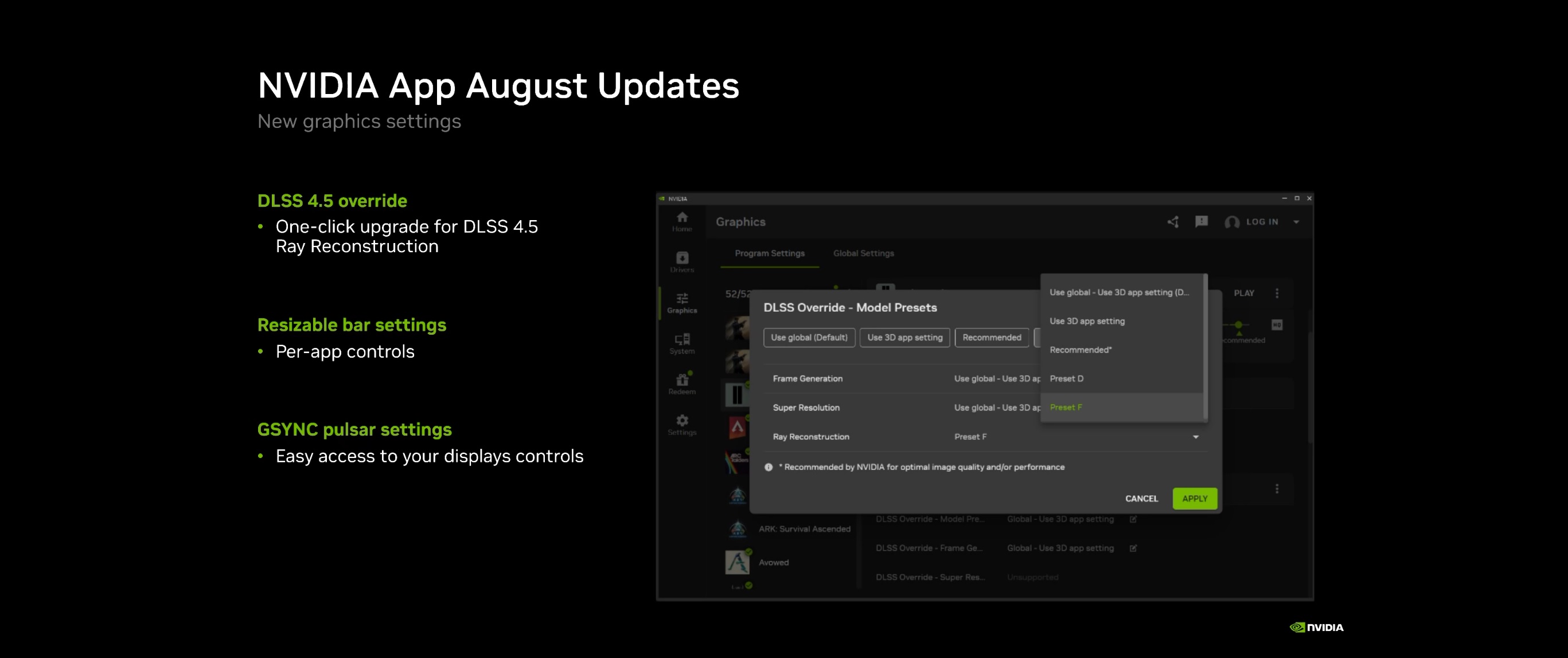
In other news, NVIDIA has announced that PC gamers will be able to enable or disable reBAR from the NVIDIA App. This is huge news as it can allow you to test games with or without it. NVIDIA owners will be able to enable/disable it per game. As such, you will no longer have to rely on the NVIDIA Inspector Tool to use it.
I’ll be sure to test the Path Tracing Patch for 007 First Light when it comes out. So, stay tuned for more!

John is the founder and Editor in Chief at DSOGaming. He is a PC gaming fan and highly supports the modding and indie communities. Before creating DSOGaming, John worked on numerous gaming websites. While he is a die-hard PC gamer, his gaming roots can be found on consoles. John loved – and still does – the 16-bit consoles, and considers SNES to be one of the best consoles. Still, the PC platform won him over consoles. That was mainly due to 3DFX and its iconic dedicated 3D accelerator graphics card, Voodoo 2. John has also written a higher degree thesis on the “The Evolution of PC graphics cards.”
Contact: Email