
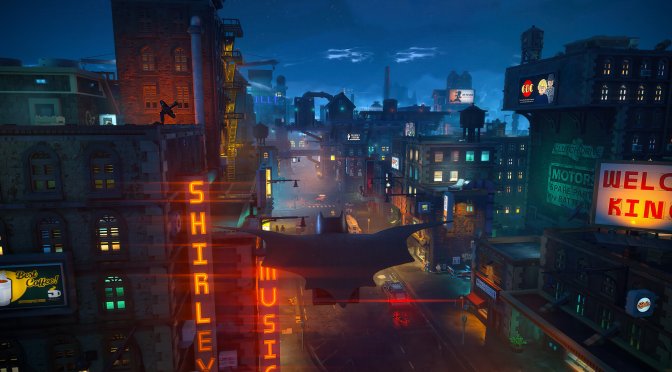
LEGO Batman: Legacy of the Dark Knight will be officially released to everyone tomorrow. Powered by Unreal Engine 5, it’s time to benchmark it and examine its performance on PC.
For our benchmarks, I used an AMD Ryzen 9 7950X3D, 32GB of DDR5 at 6000Mhz, AMD’s Radeon RX 6900XT, RX 7900XTX, RX 9070XT, as well as NVIDIA’s RTX 2080Ti, RTX 3080, RTX 4090, RTX 5080, and RTX 5090. I also used Windows 10 64-bit, the GeForce 596.49, and the Radeon Adrenalin Edition 26.5.2 drivers.
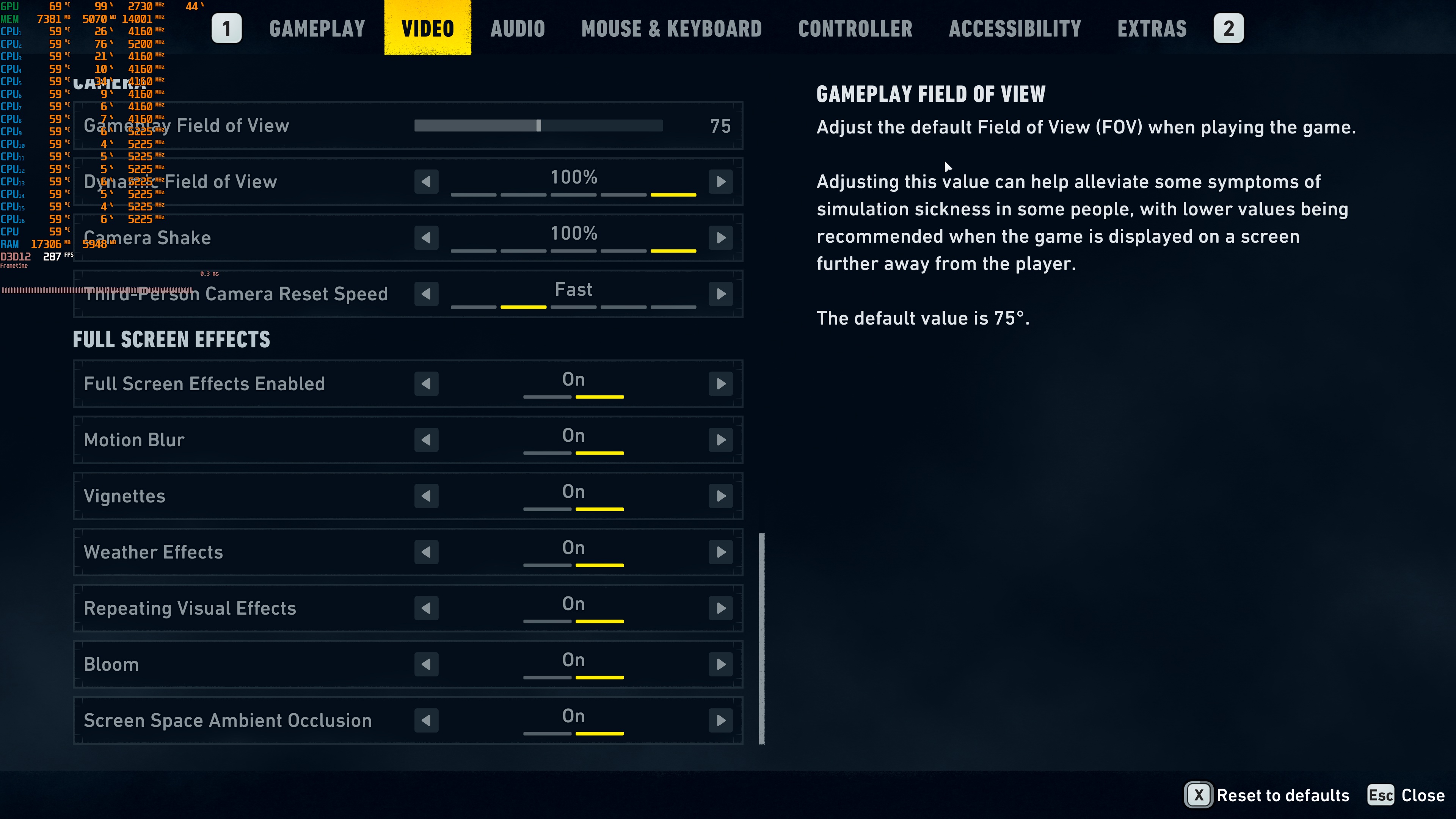
TT Games has added a lot of graphics settings to tweak. PC gamers can adjust the quality of Textures, Global Illumination, Shadows, Materials, and more. The game also supports NVIDIA DLSS 4, AMD FSR 3.1, and Intel XeSS 2.0. Plus, there are FOV sliders, and there is support for uncapped framerates.
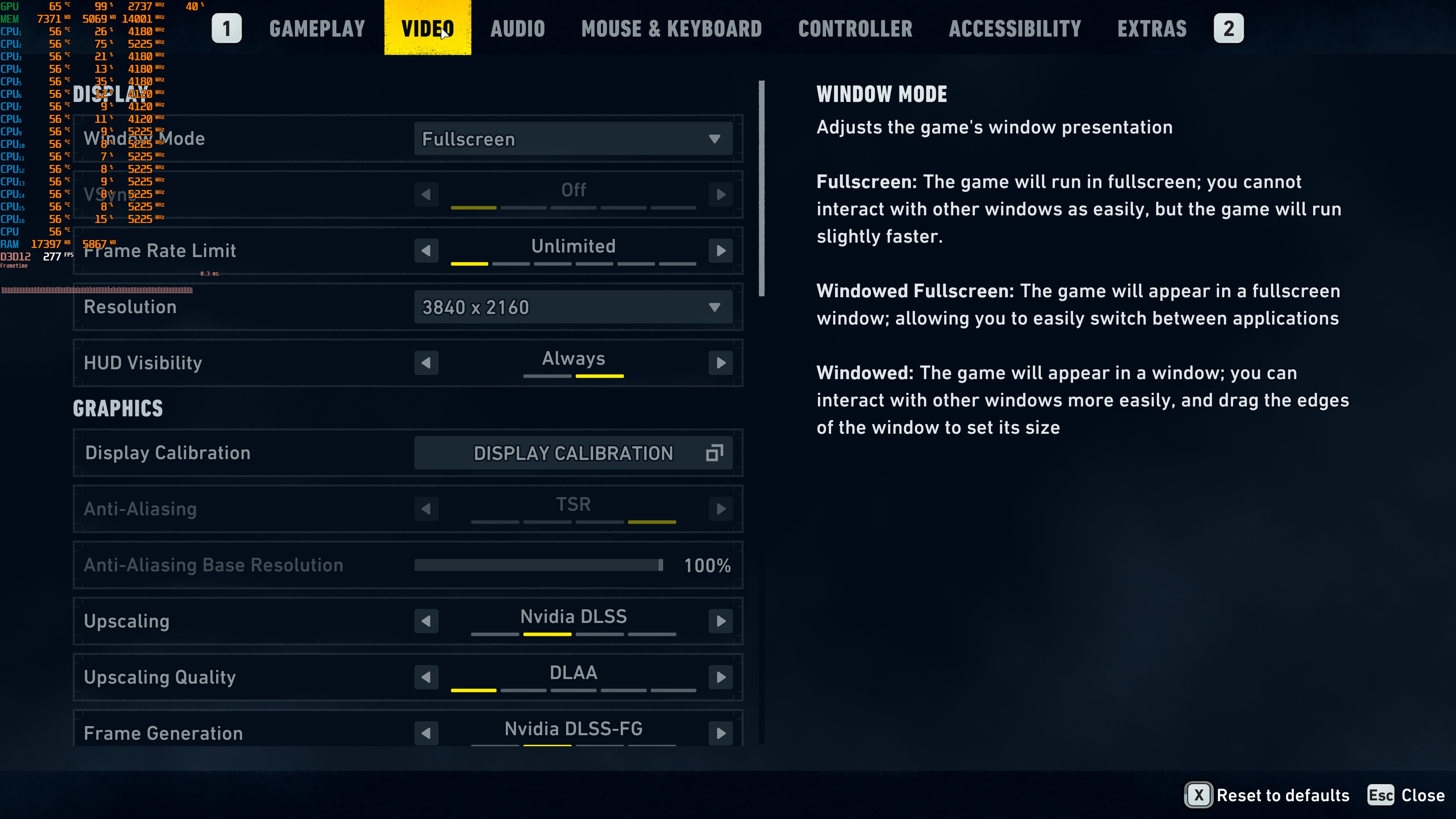
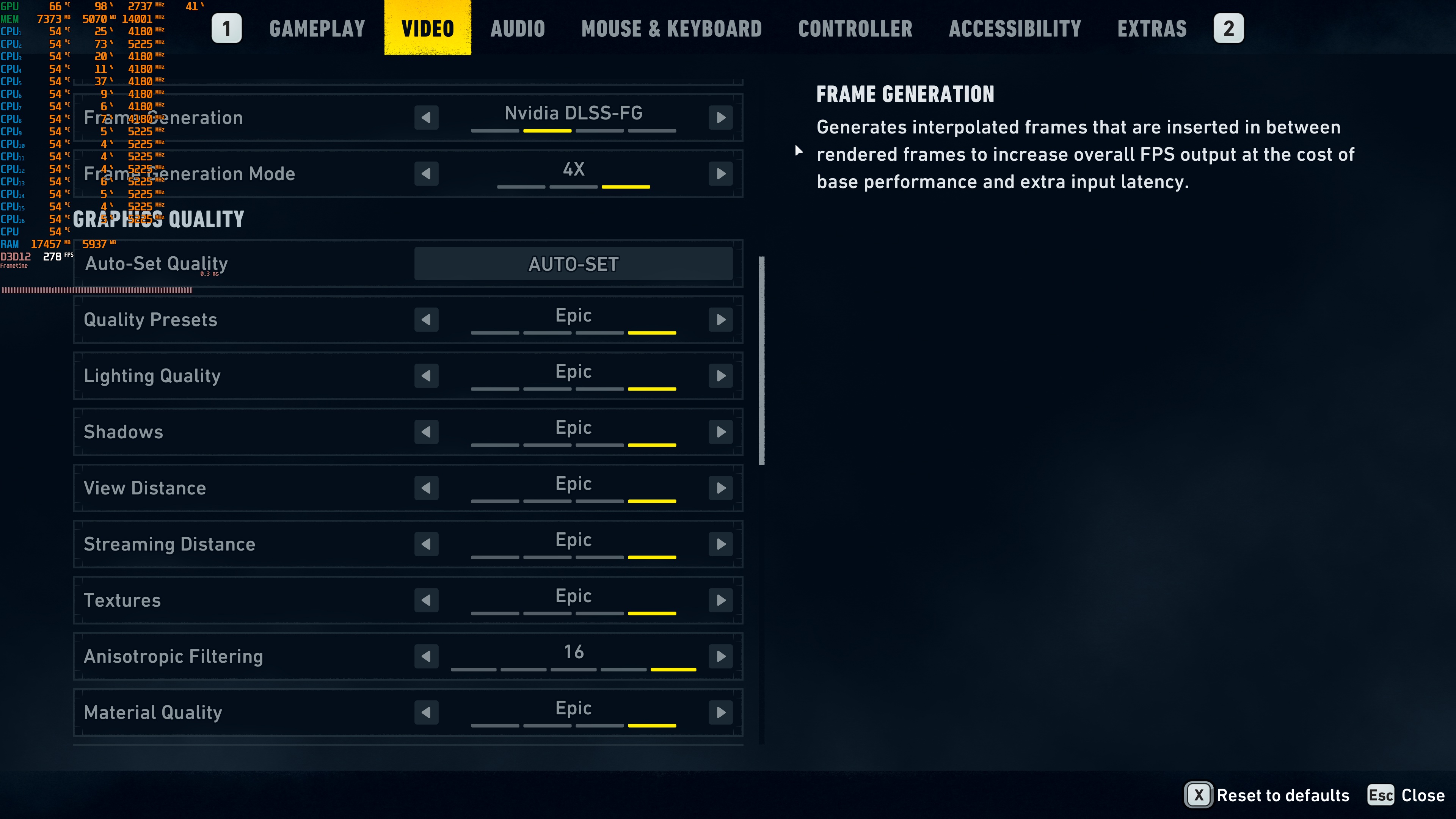
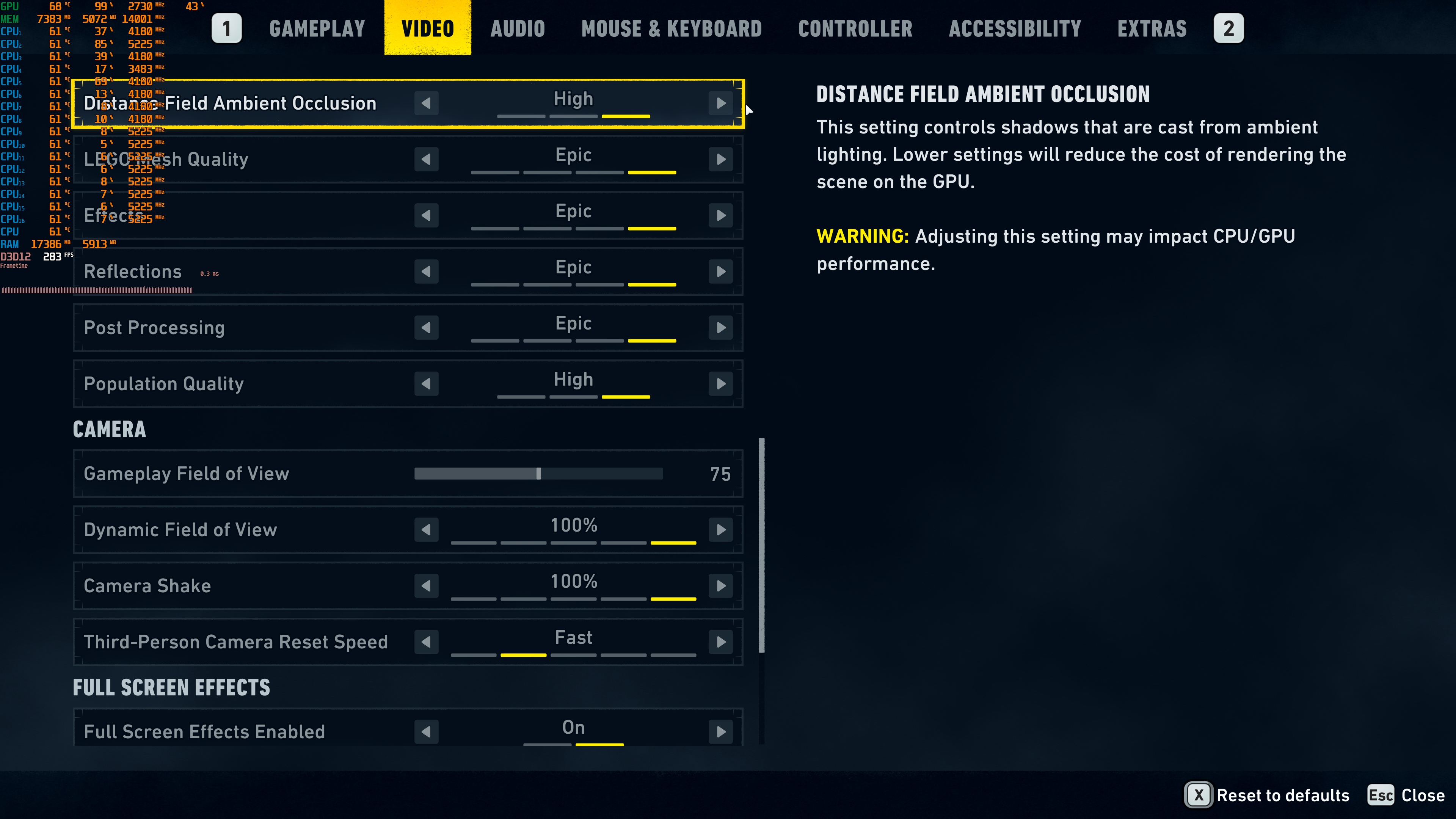
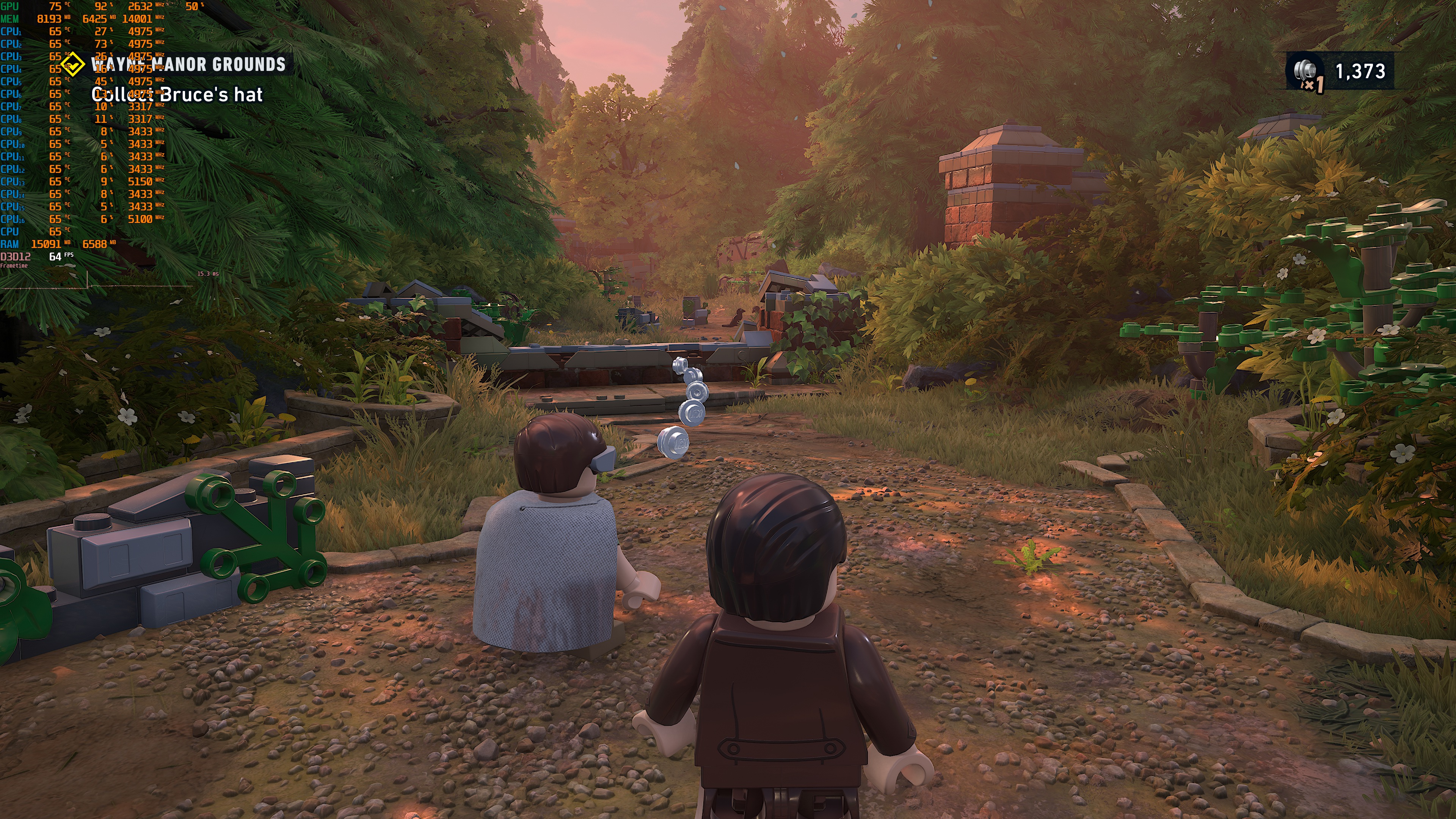
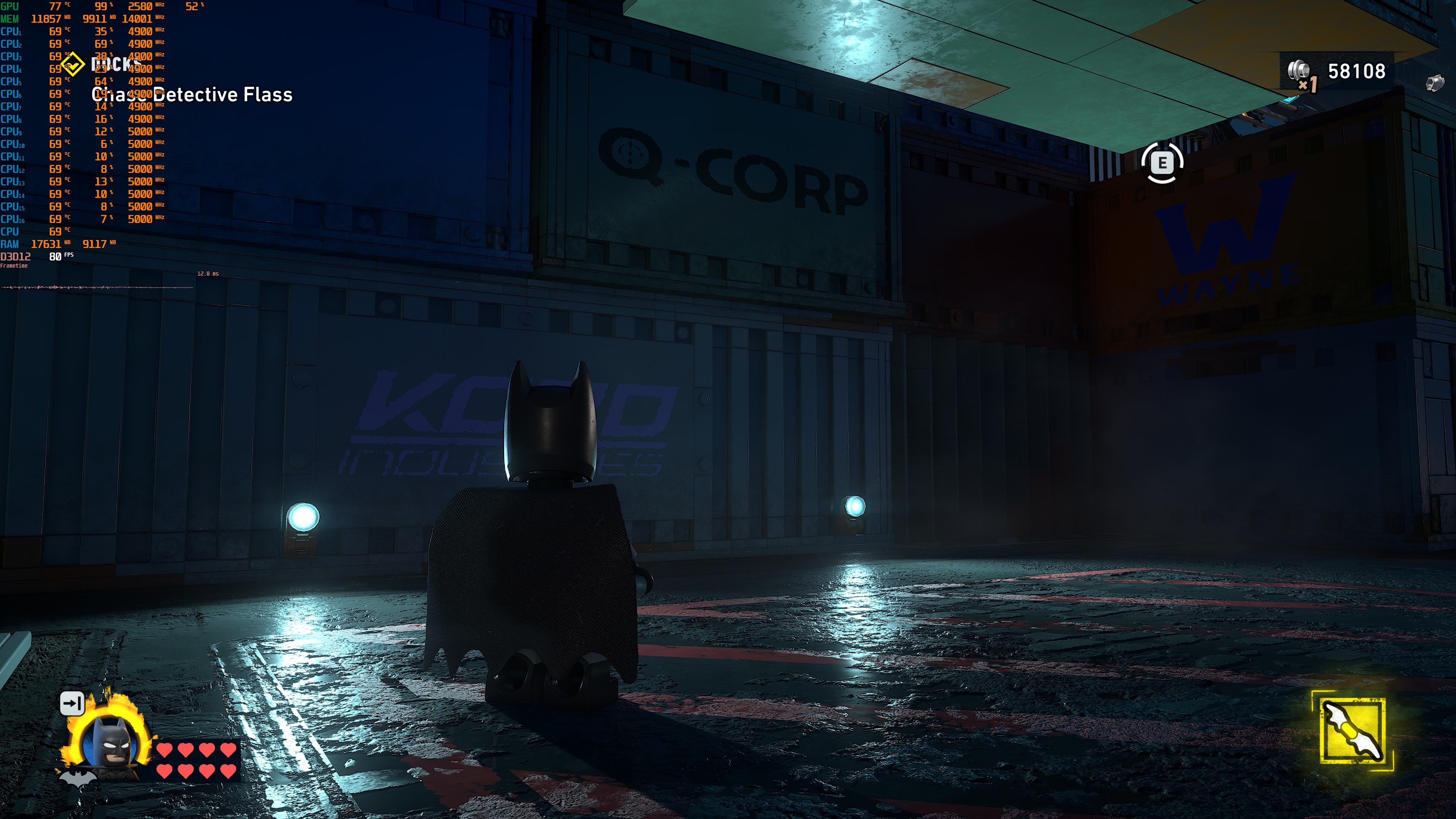
LEGO Batman: Legacy of the Dark Knight does not have a built-in benchmark tool. For our tests, I used the Garden area in Wayne Manor. This appeared to be more demanding than the open-world area of Gotham City. So, consider our benchmarks as the worst-case scenario. Most other areas run noticeably better than our benchmark scene.
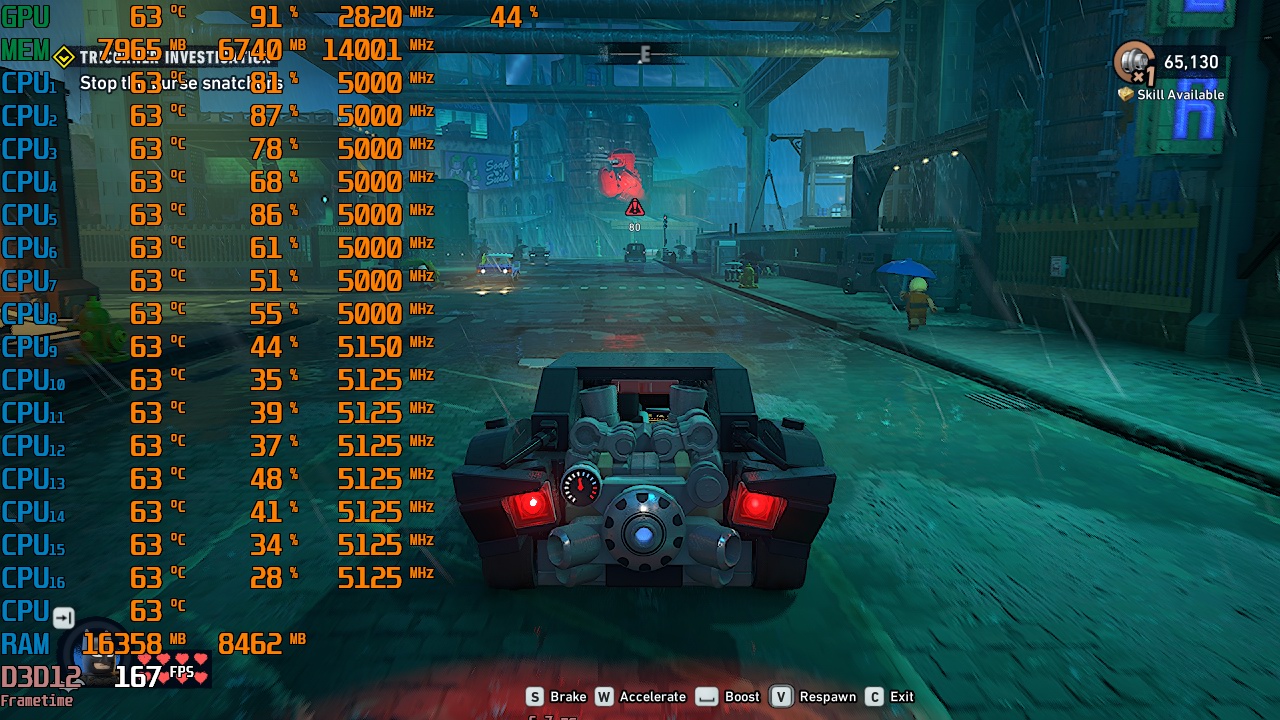
LEGO Batman: Legacy of the Dark Knight does not require a high-end CPU. To eliminate any GPU bottlenecks, I had to run the game at 720p. And, as you can see below, the AMD Ryzen 9 7950X3D can push framerates over 166FPS. So, there is no point in testing different CPU configurations. Most of you will be limited by your GPU and not by your CPU.
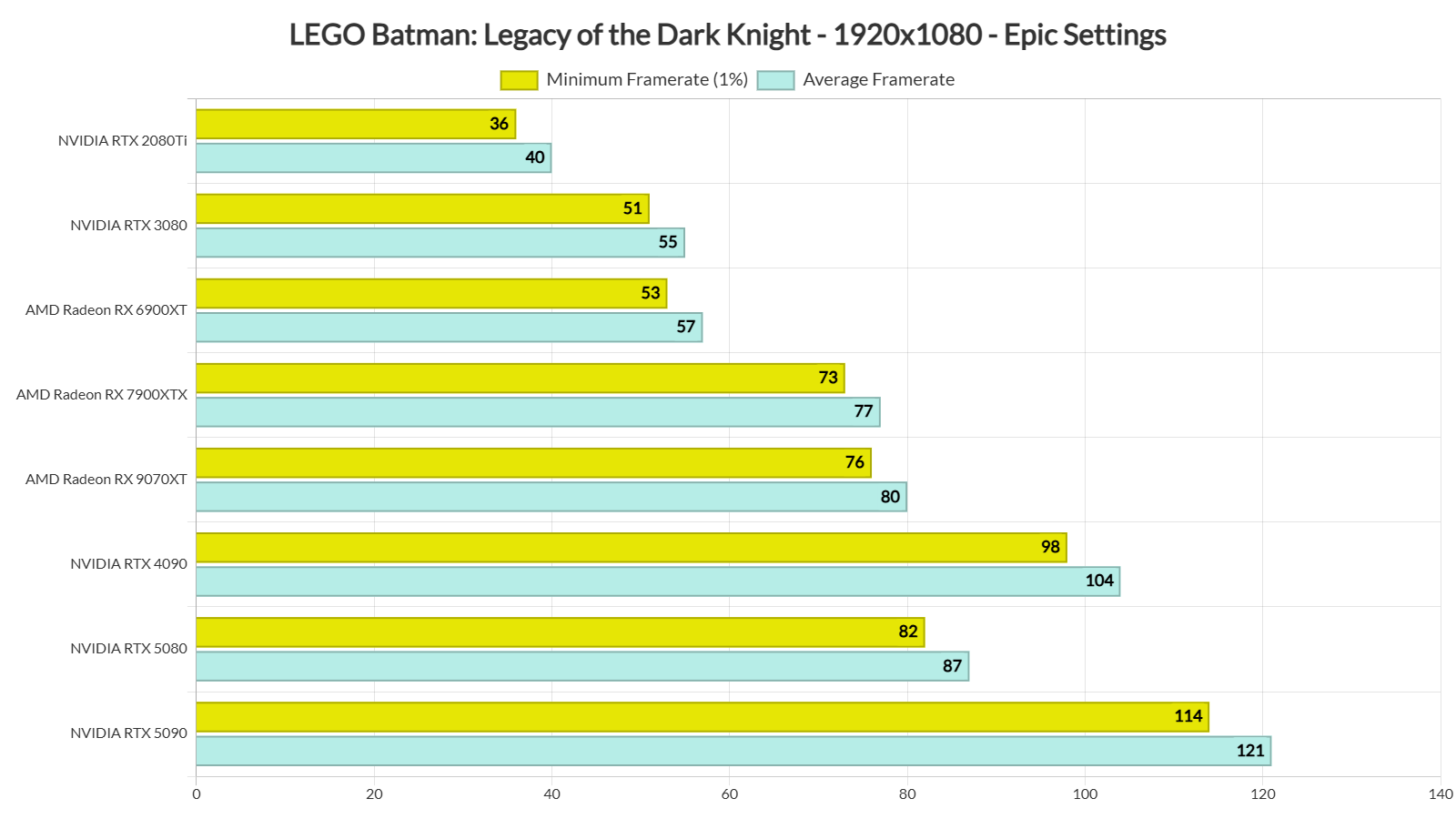
Our top five GPUs were able to run our benchmark scene with over 60FPS at all times at 1080p/Epic Settings. Interestingly enough, the gap between the AMD Radeon RX 9070XT, or the AMD Radeon RX 7900XTX, and the NVIDIA RTX 5080 is quite small.
The only GPUs that were able to provide a 60FPS experience at 1440p/Epic Settings were the NVIDIA RTX 4090, RTX 5080, and the RTX 5090. As for Native 4K, the NVIDIA RTX 5090 was able to provide a smooth gaming experience, provided you use a G-Sync monitor.
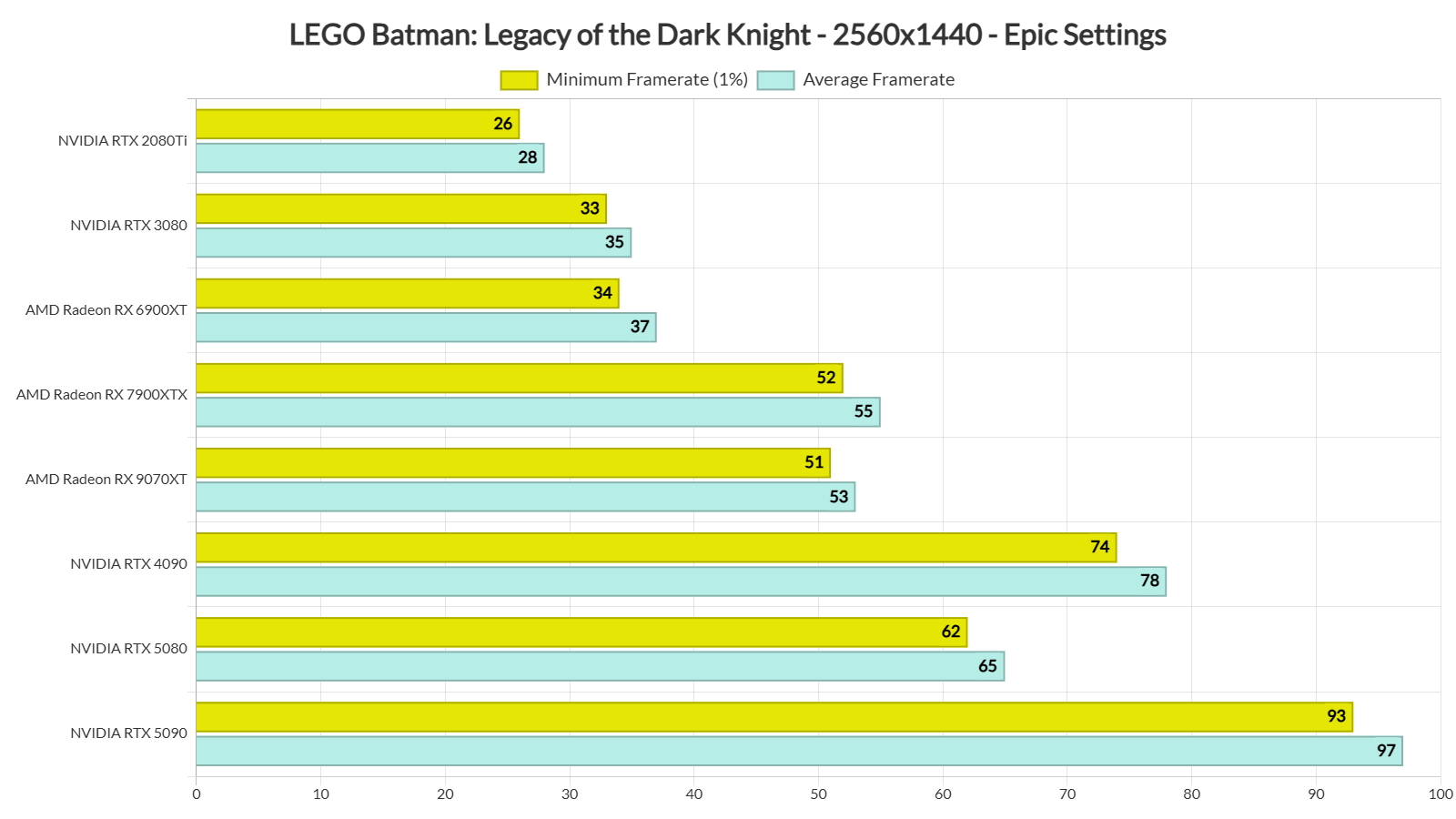
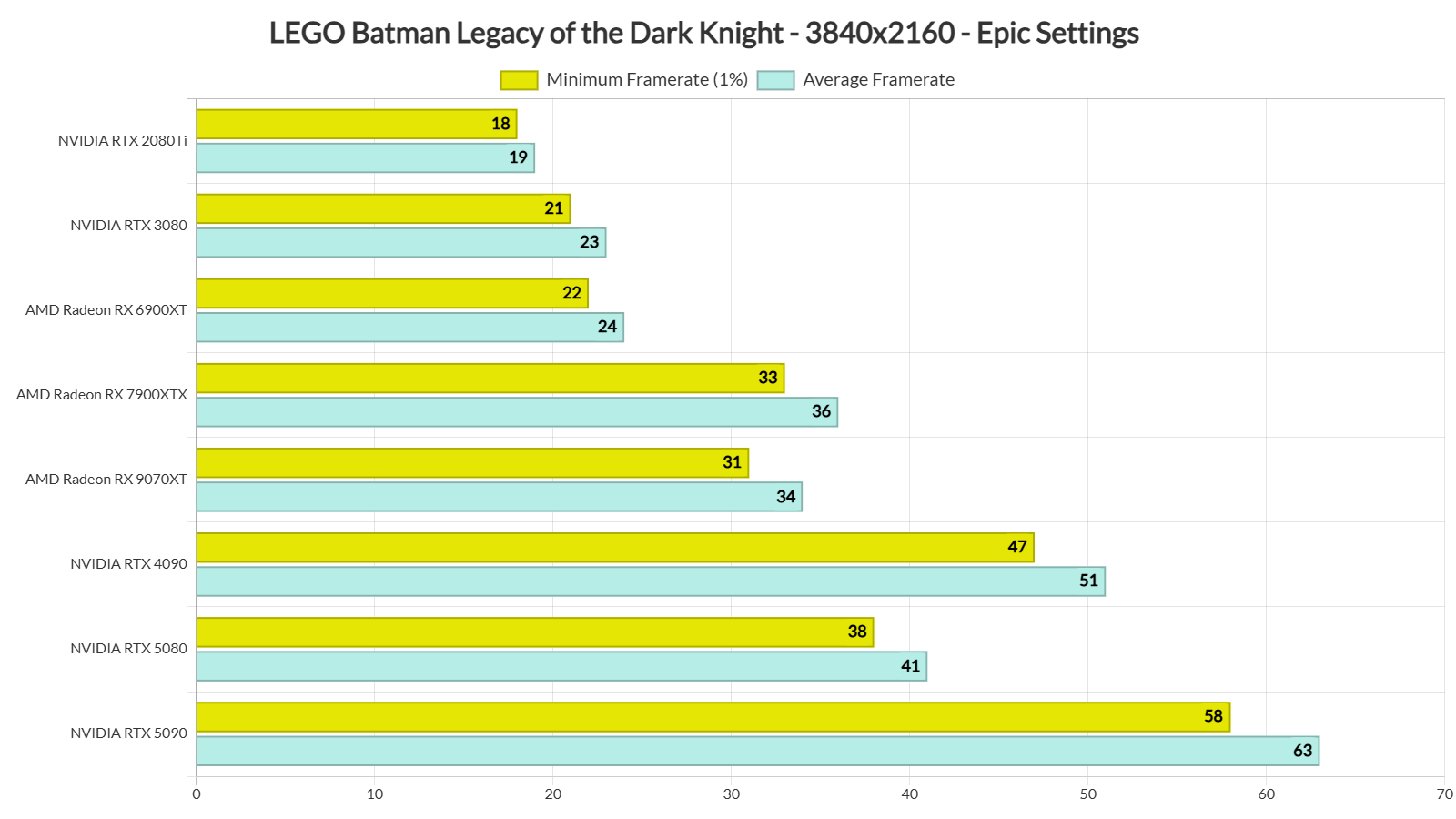
As I’ve said before, these are stress tests. I believe it’s always best to benchmark the most demanding areas of a game. However, some people may look only at the benchmark results and assume the game performs poorly. In reality, it typically runs at 90+ FPS on an NVIDIA RTX 5090 at native 4K with Epic settings. So keep that in mind when reviewing the numbers.
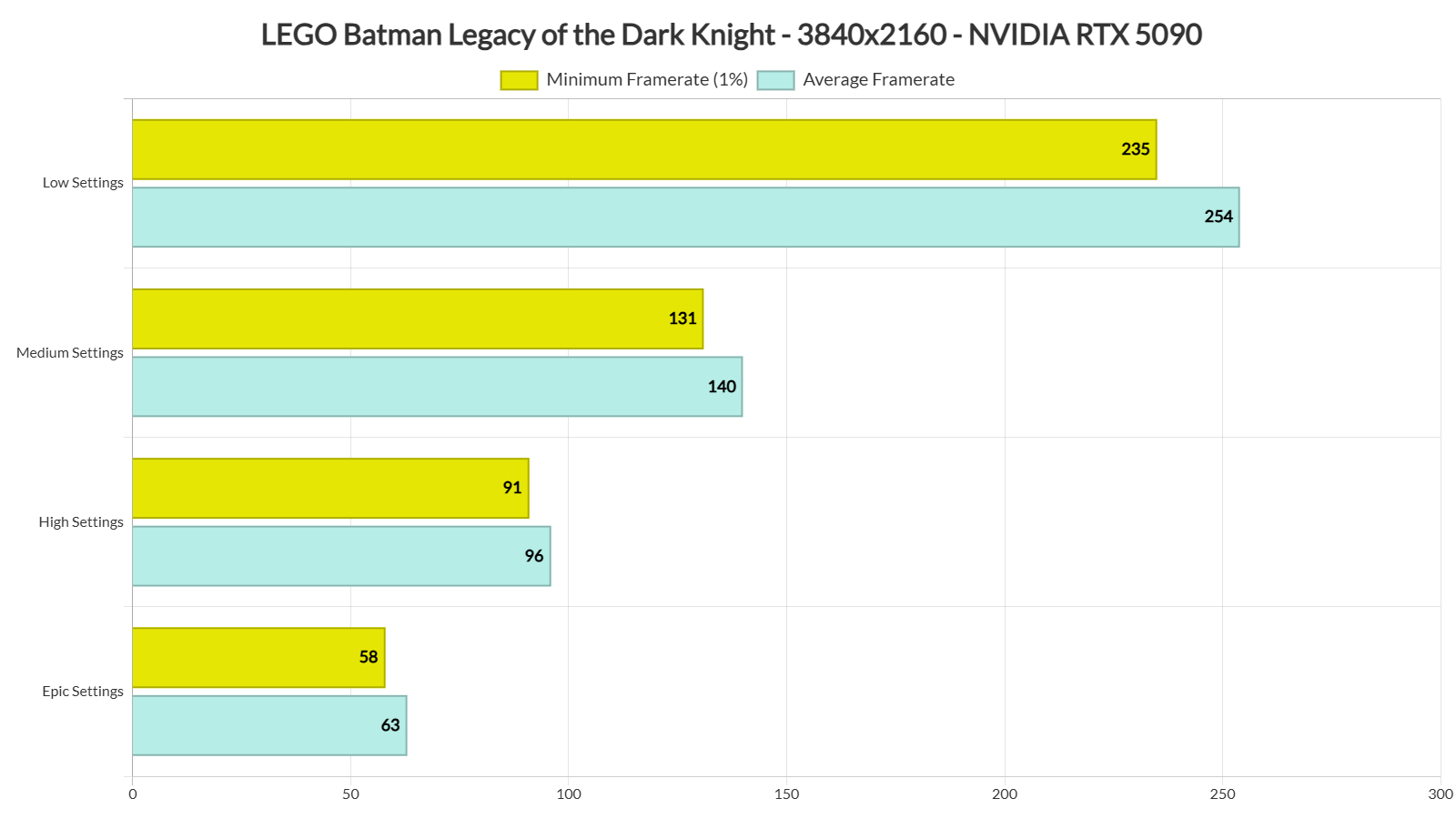
It’s also worth noting that the game can scale incredibly well with its in-game settings. At Native 4K, we were getting over 90FPS on the NVIDIA RTX 5090 with High Settings. With Medium Settings, we were able to reach 140FPS. And with Low Settings, we were over 230FPS at all times.
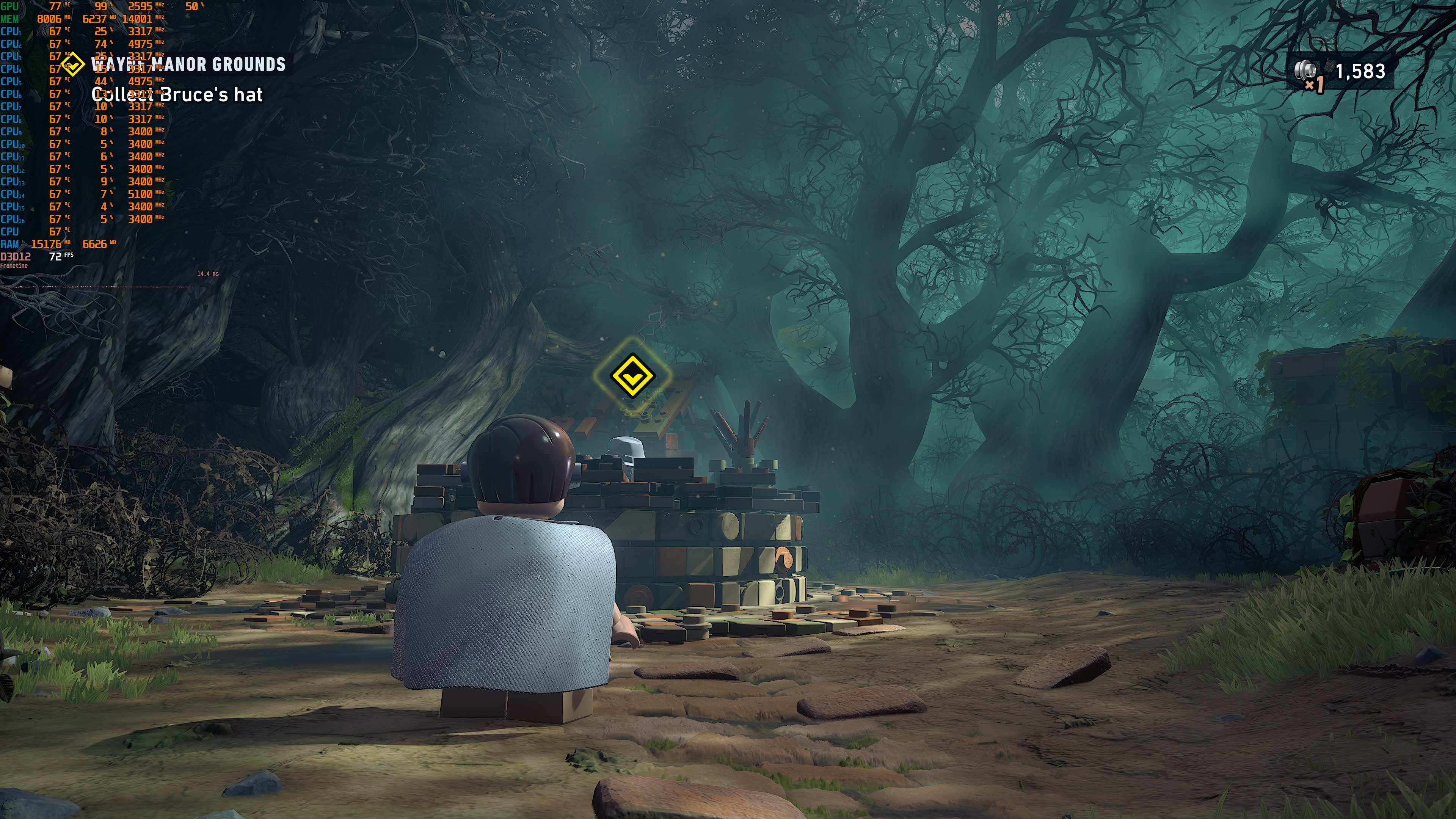
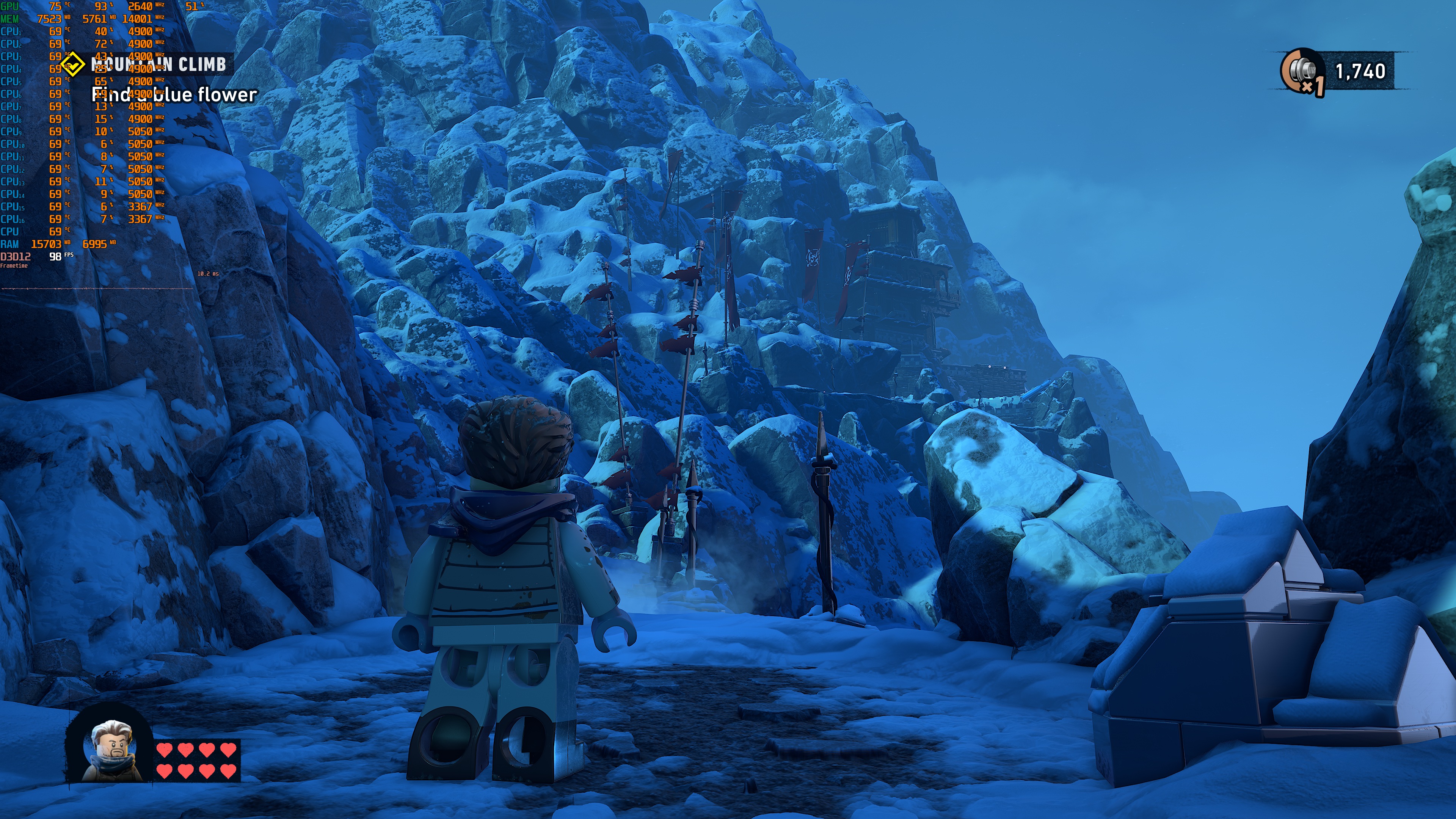
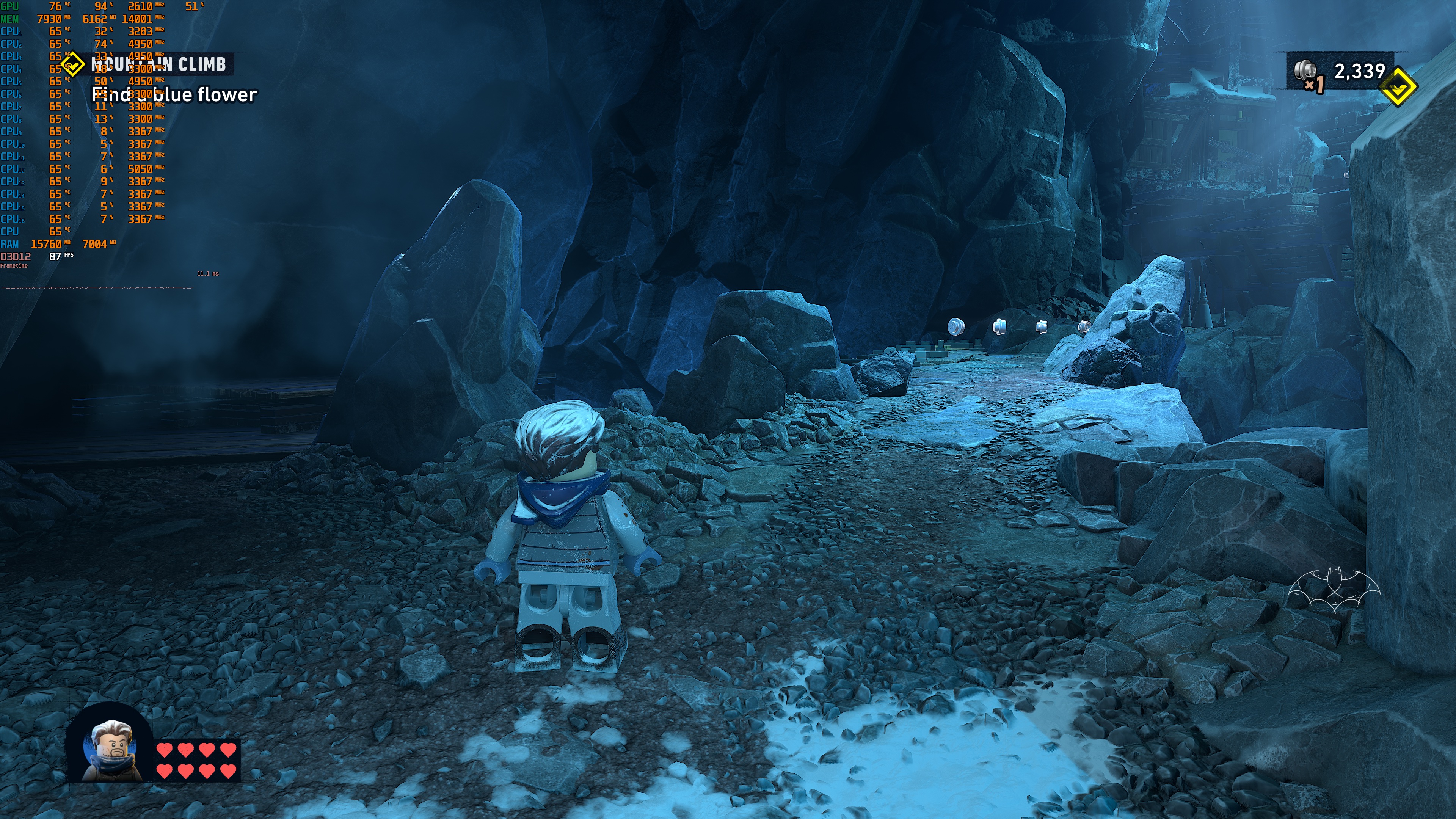
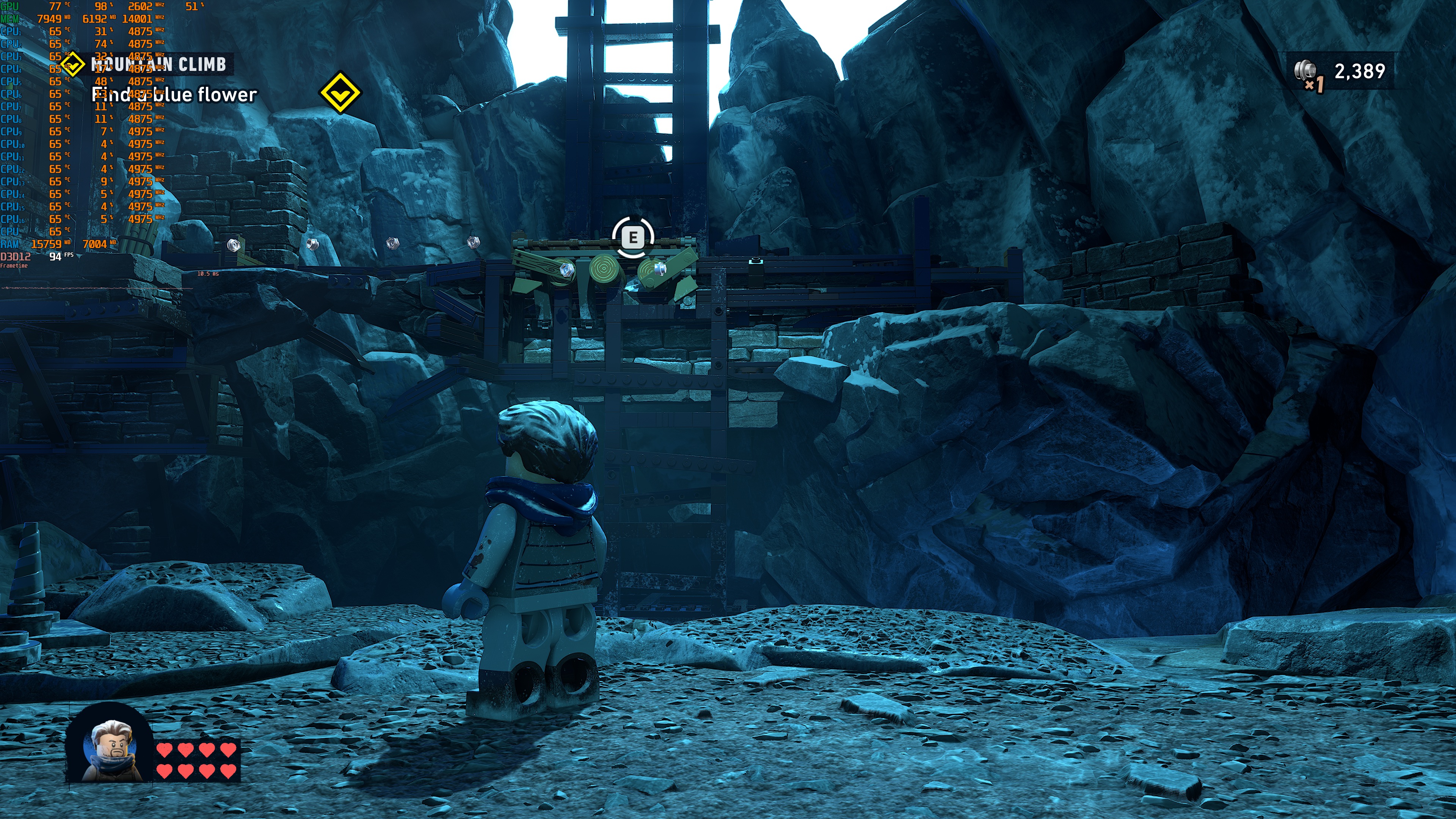
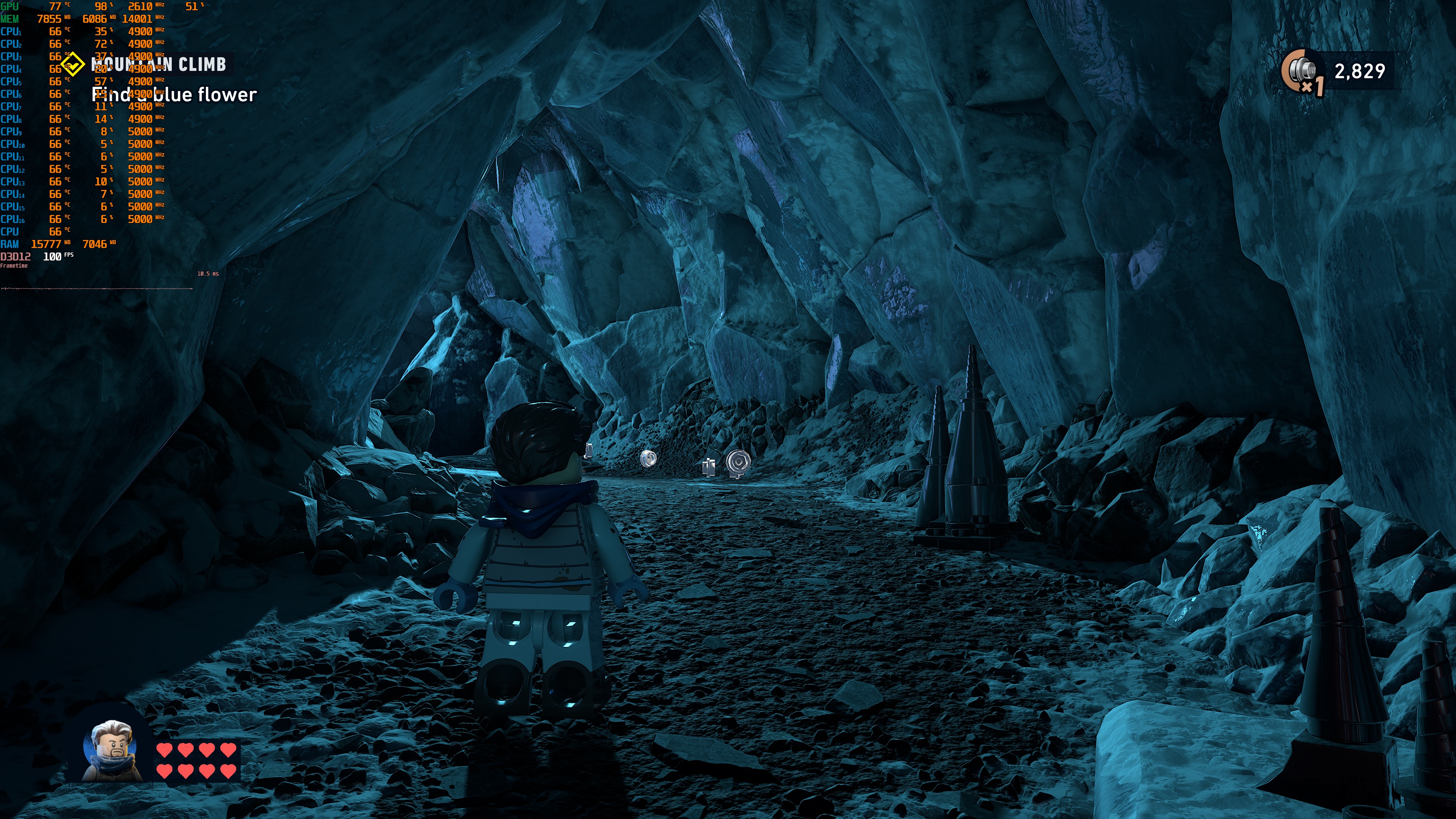
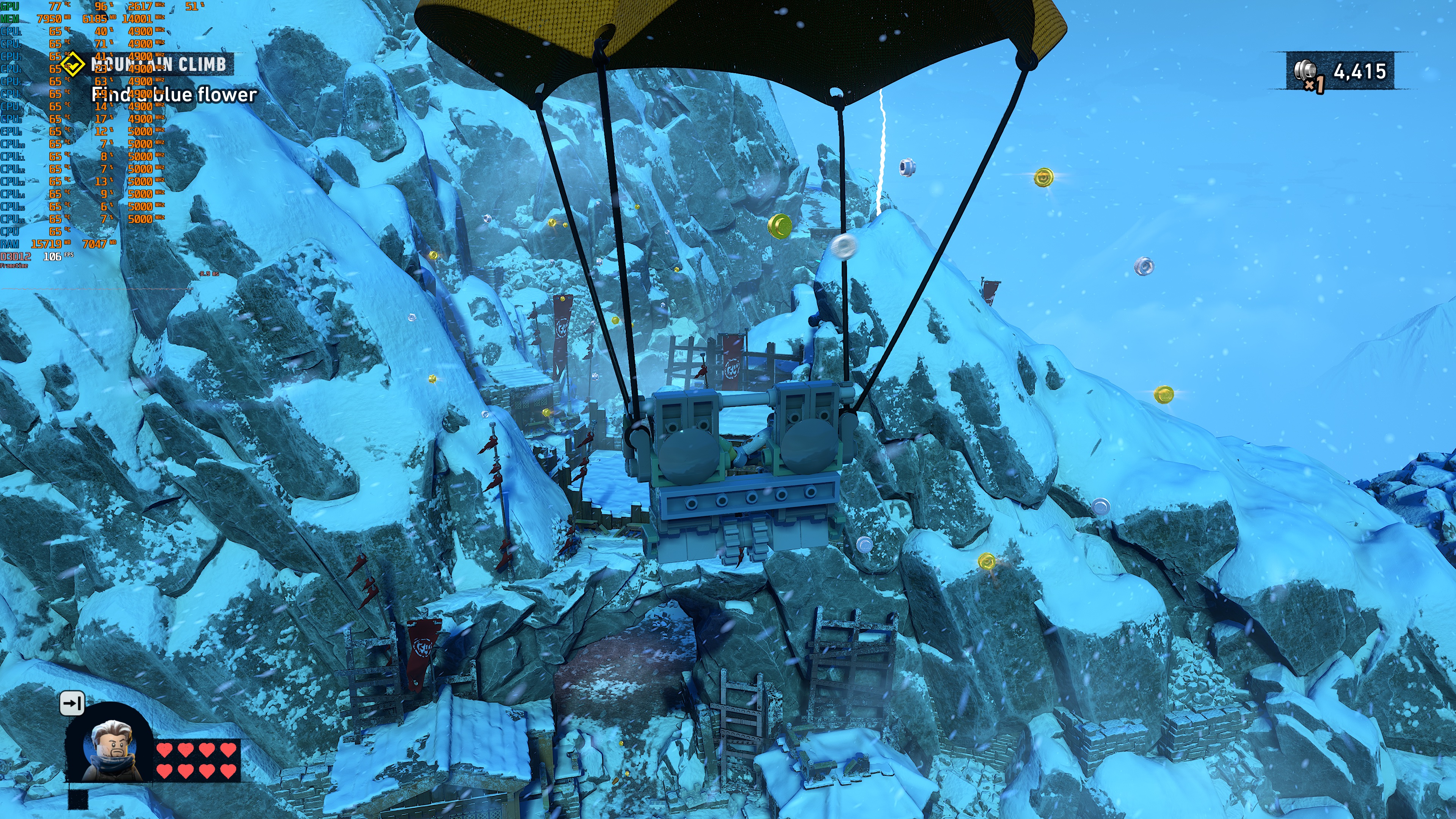
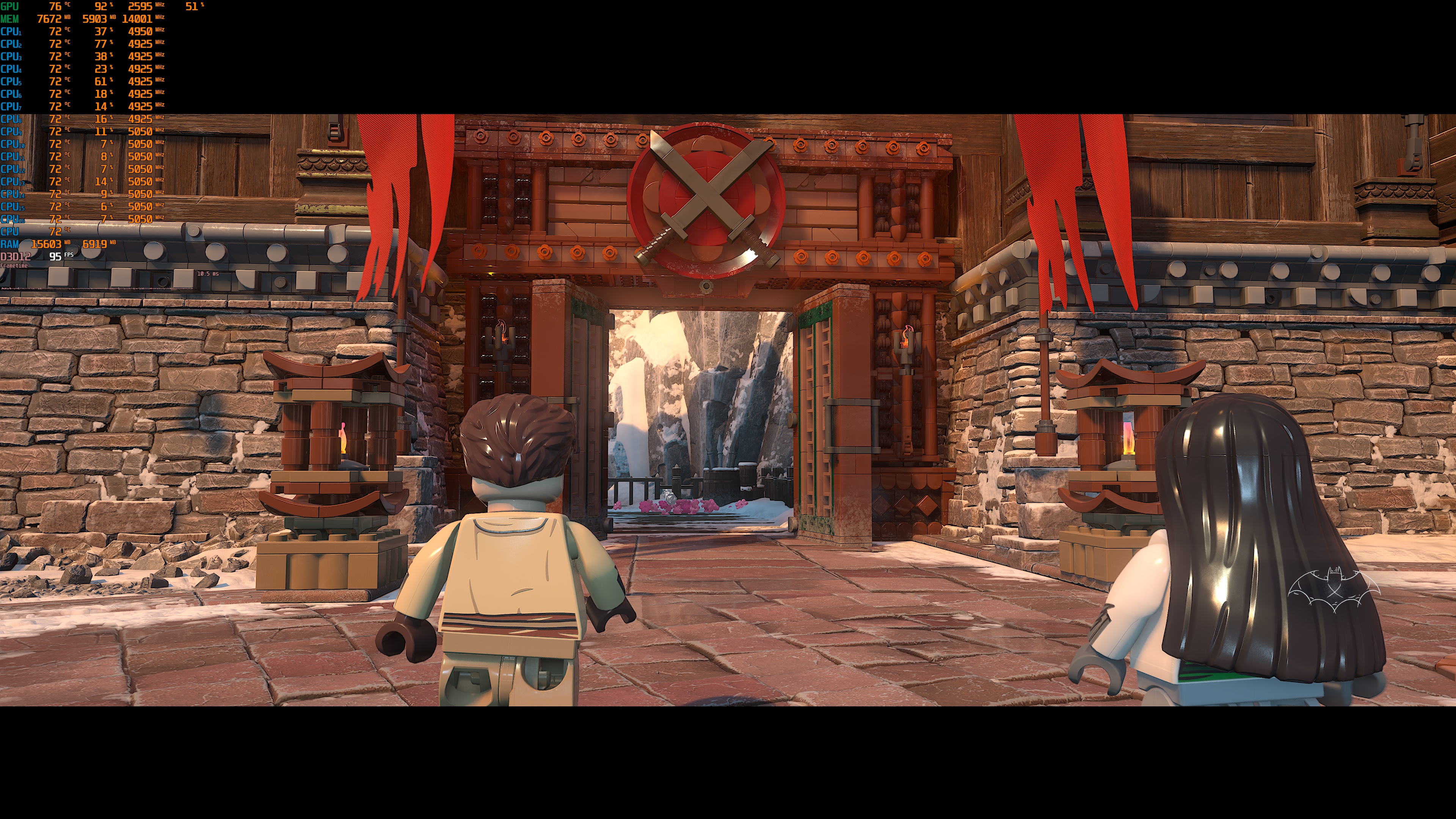
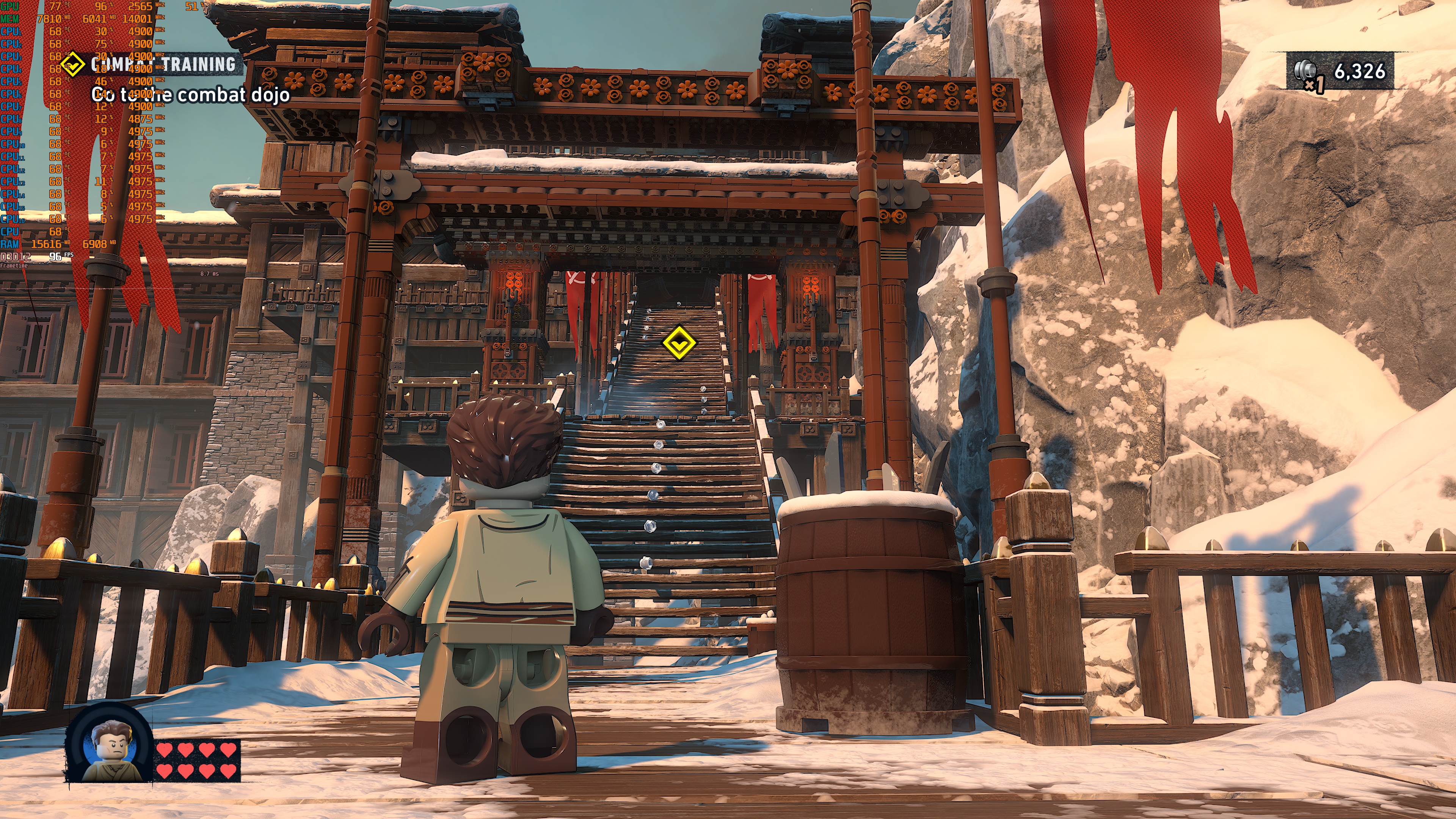
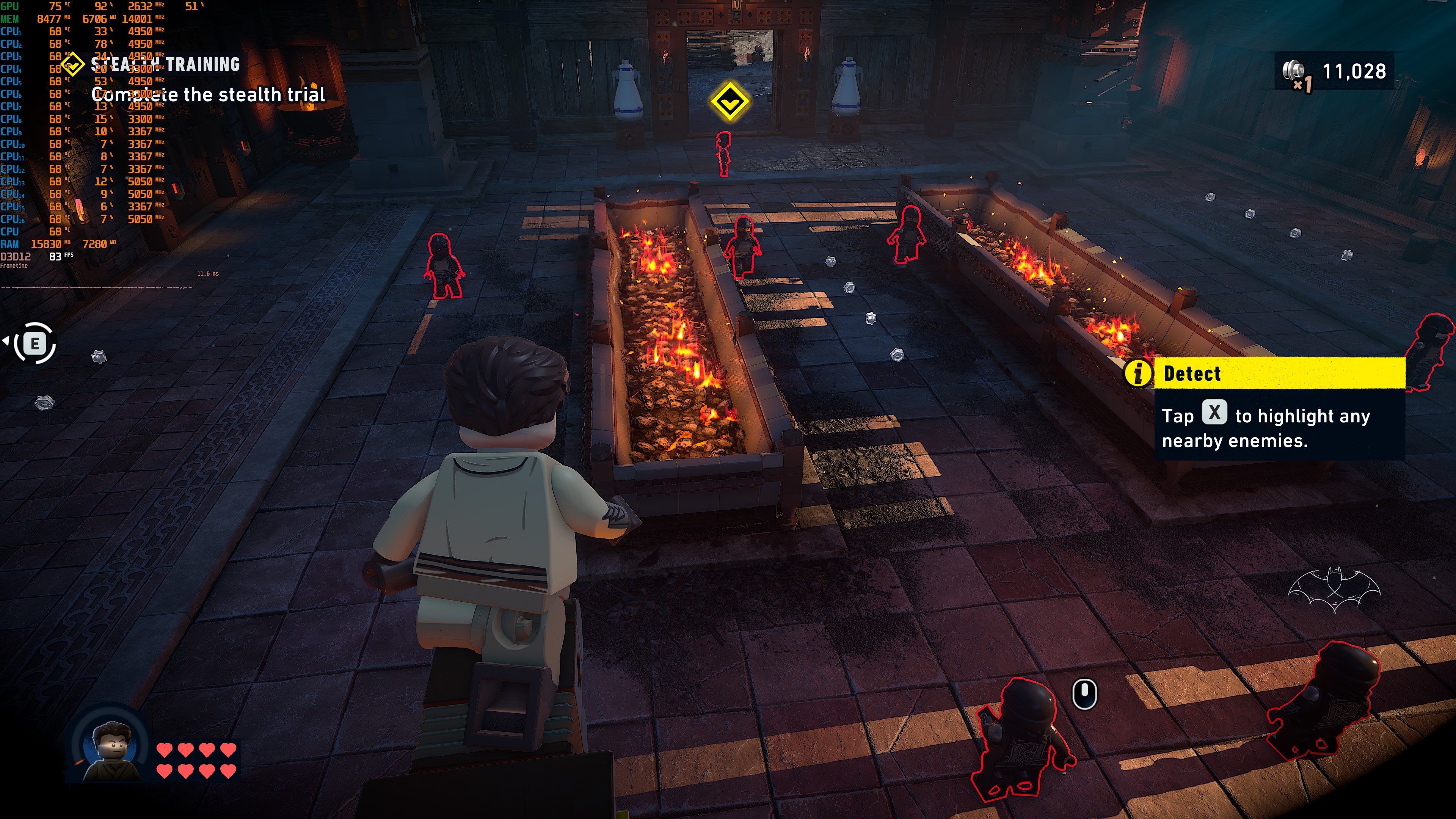
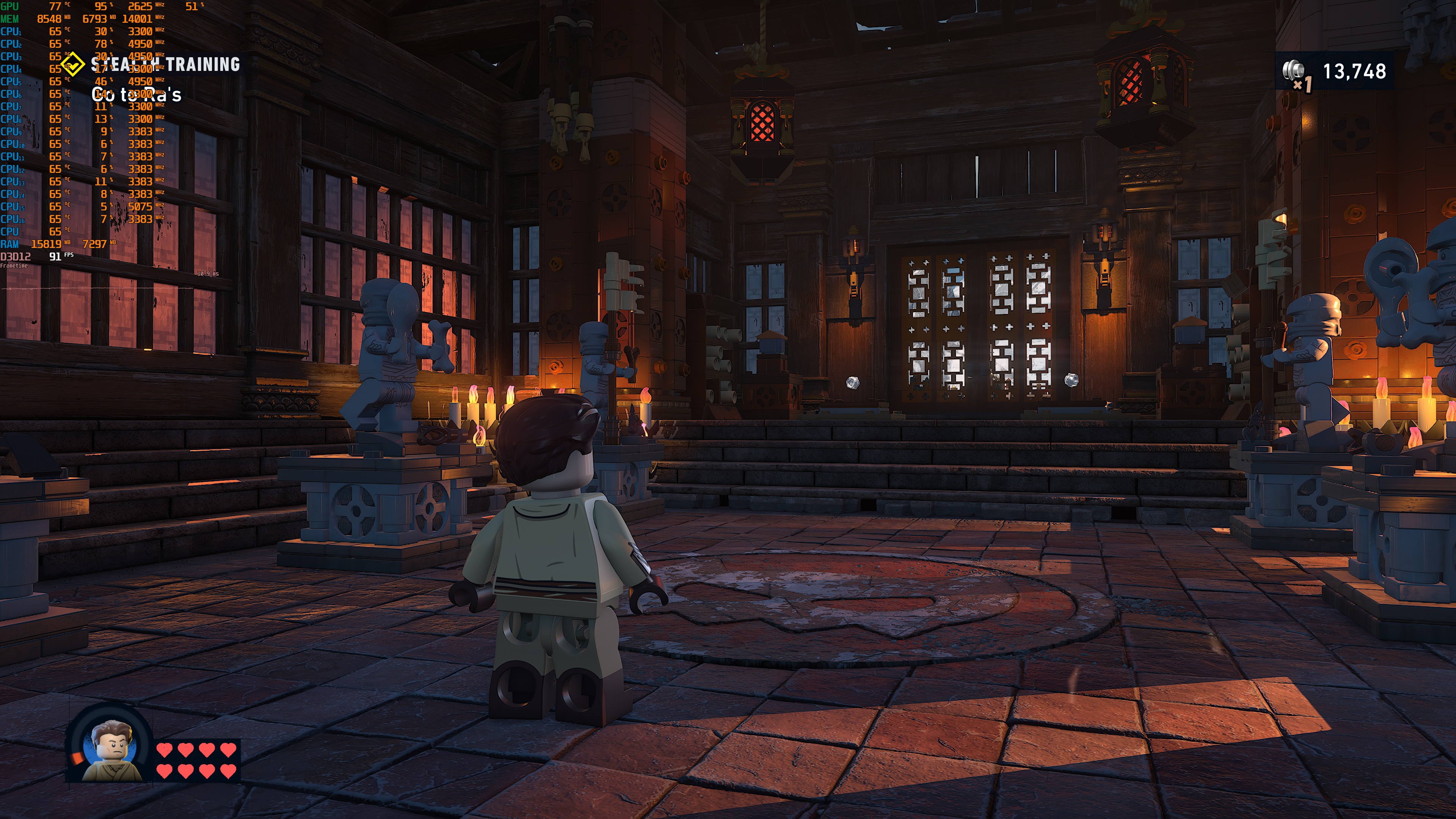
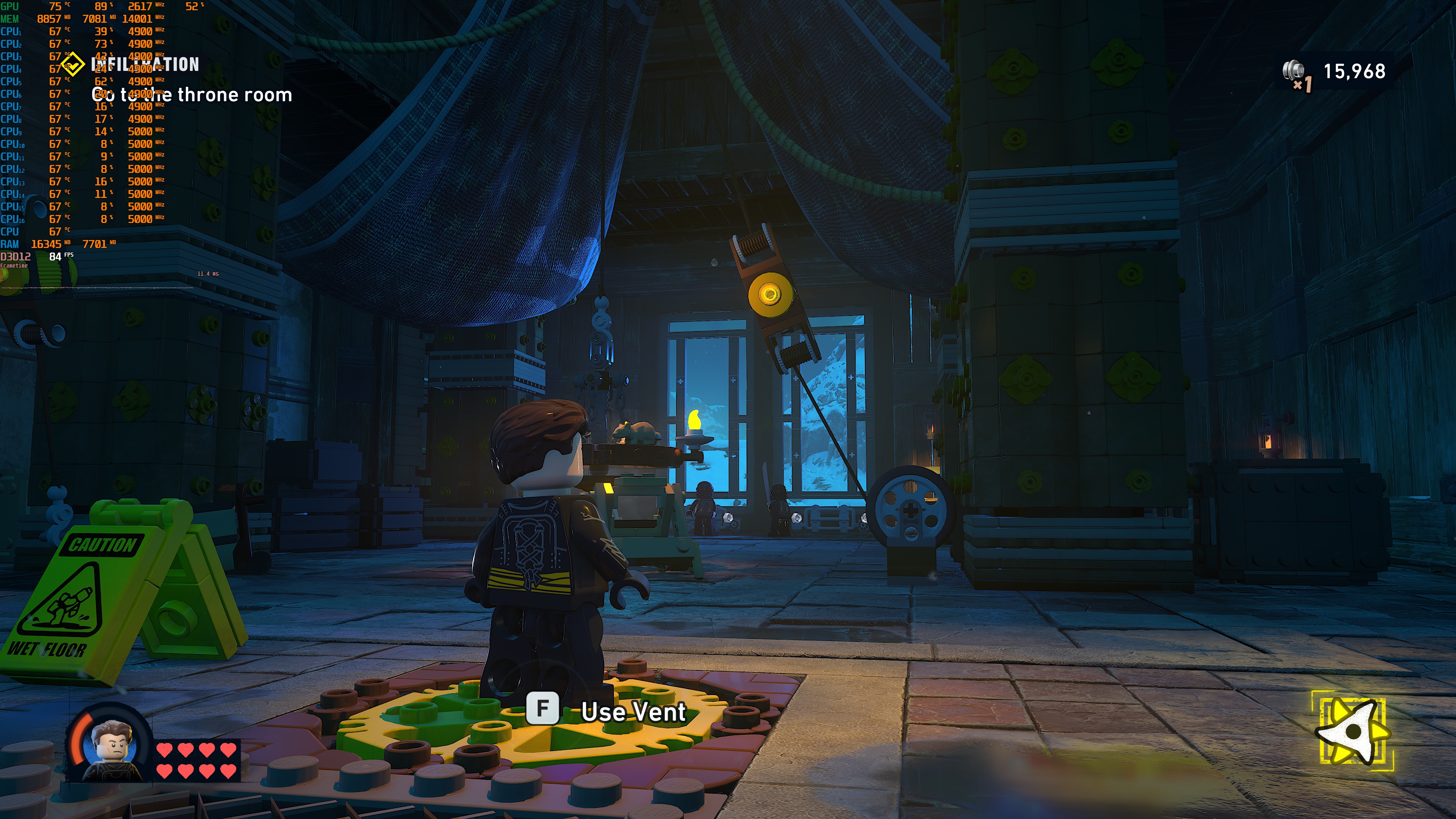
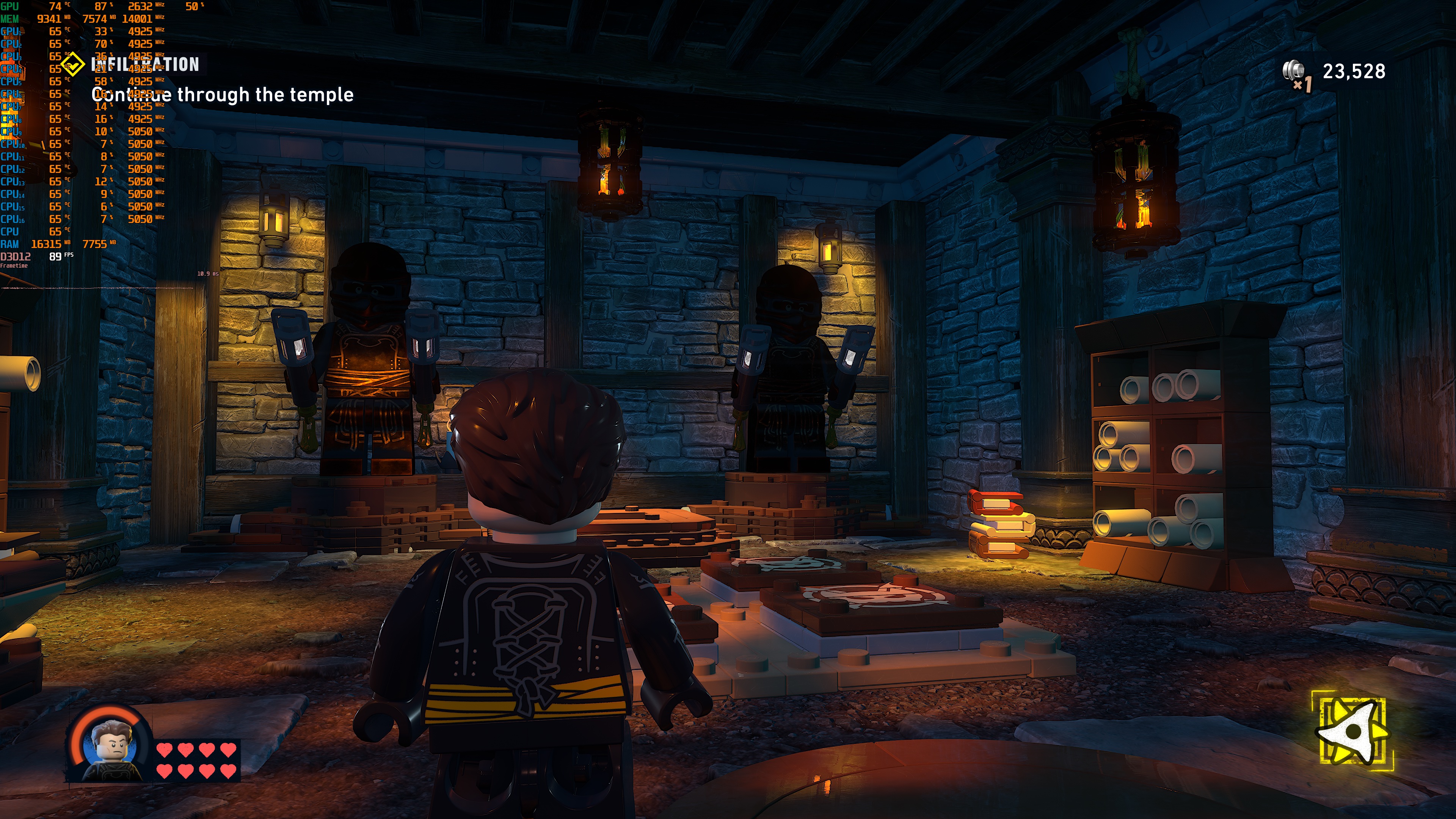
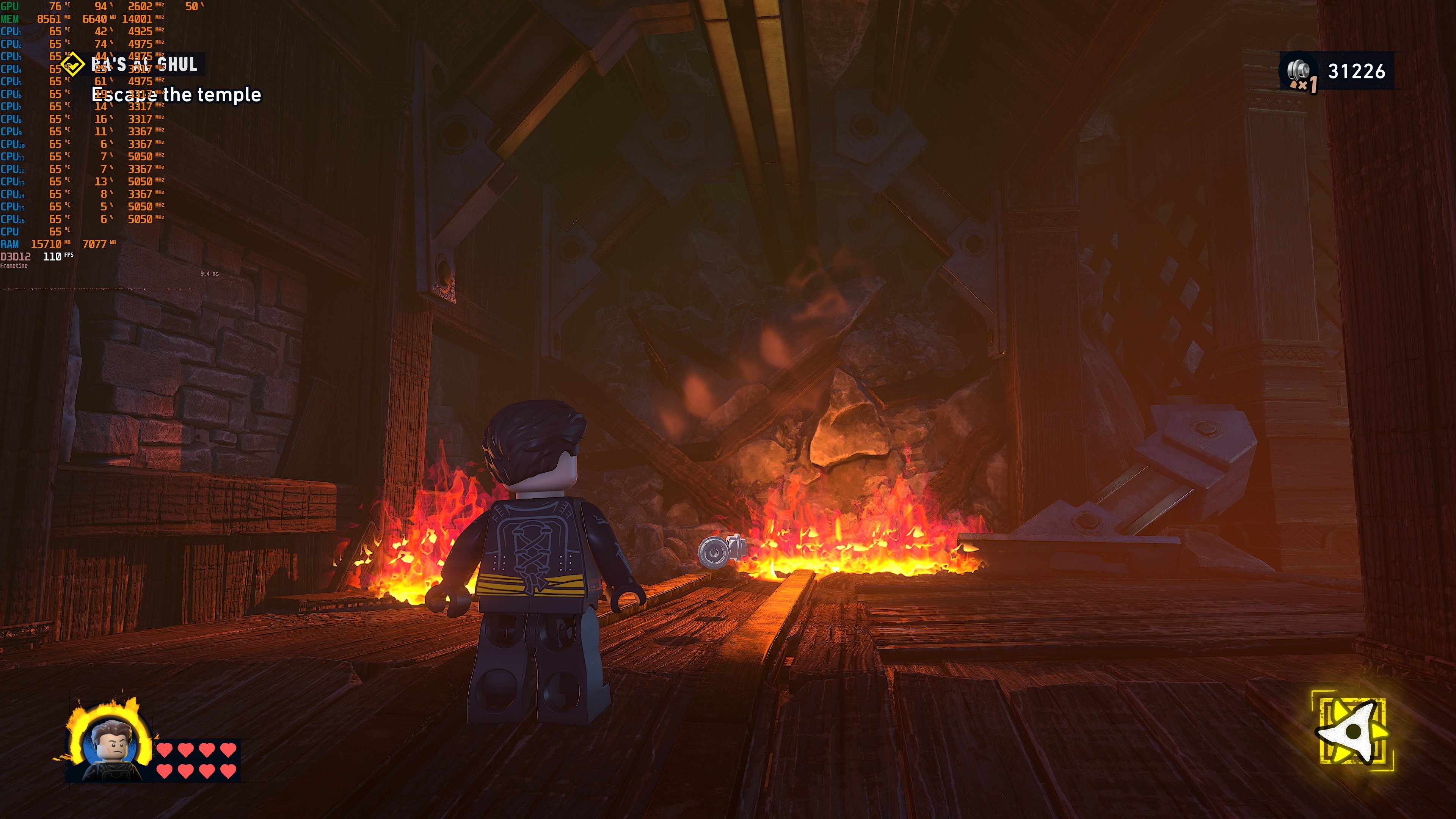
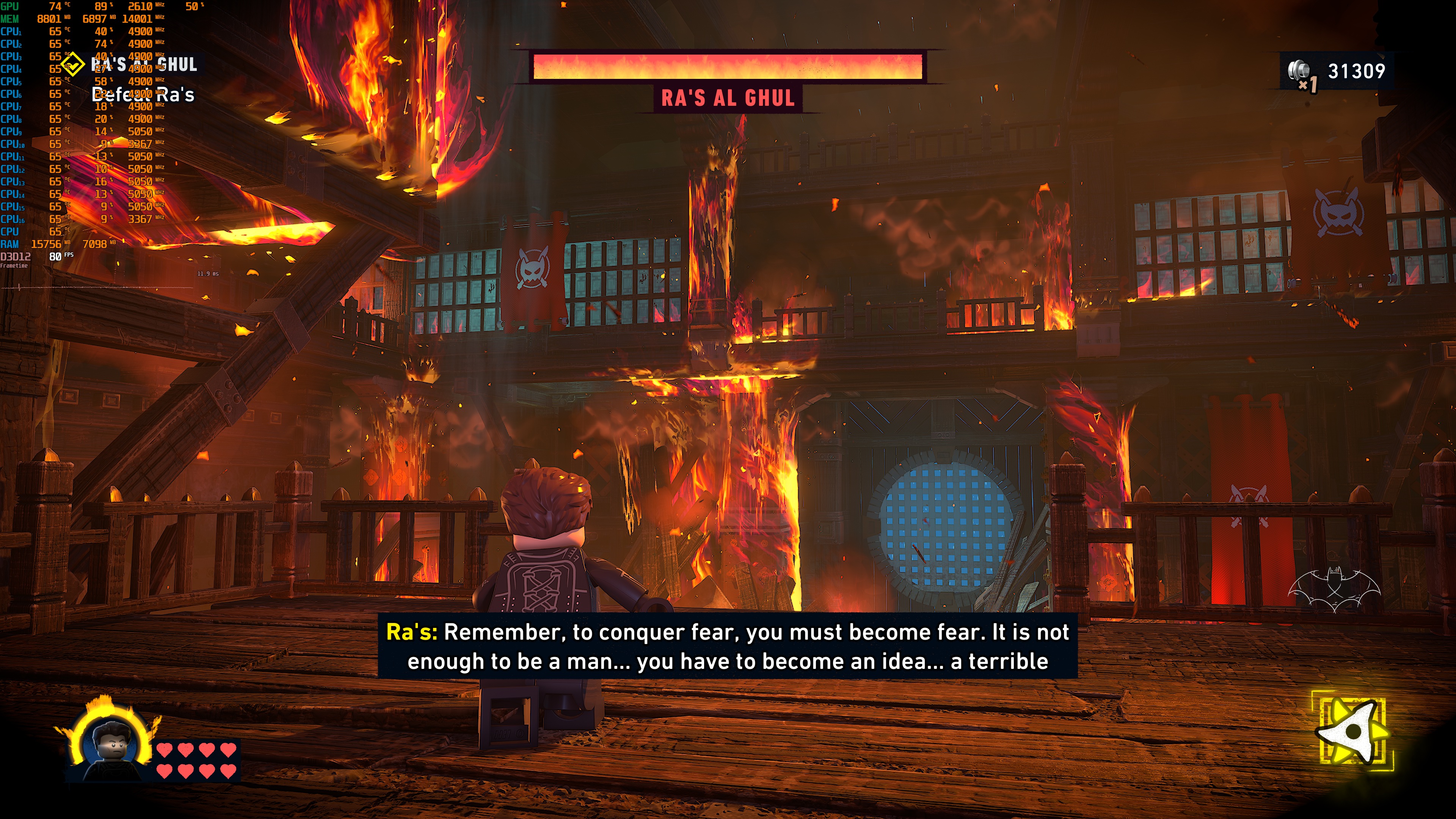
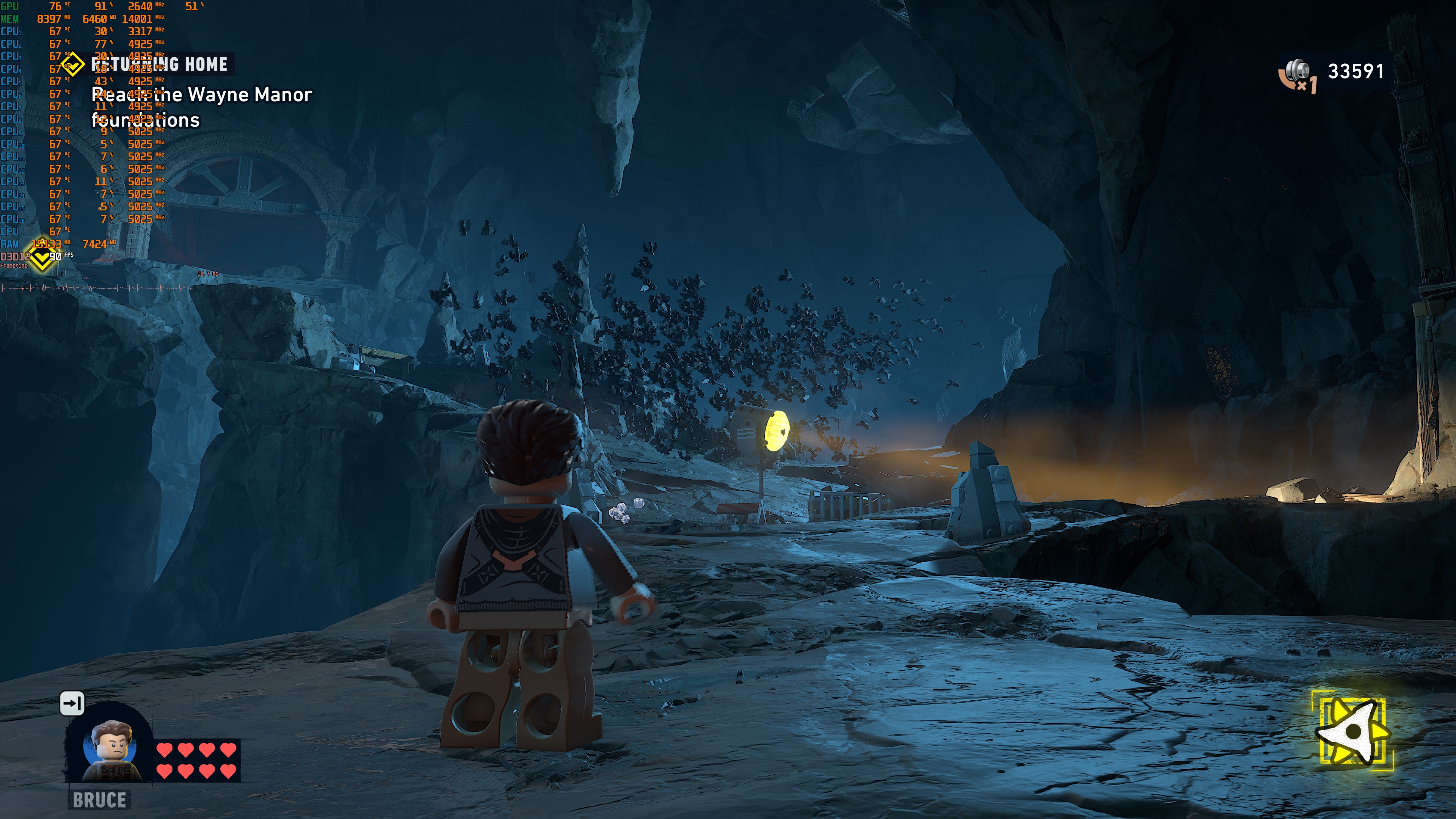
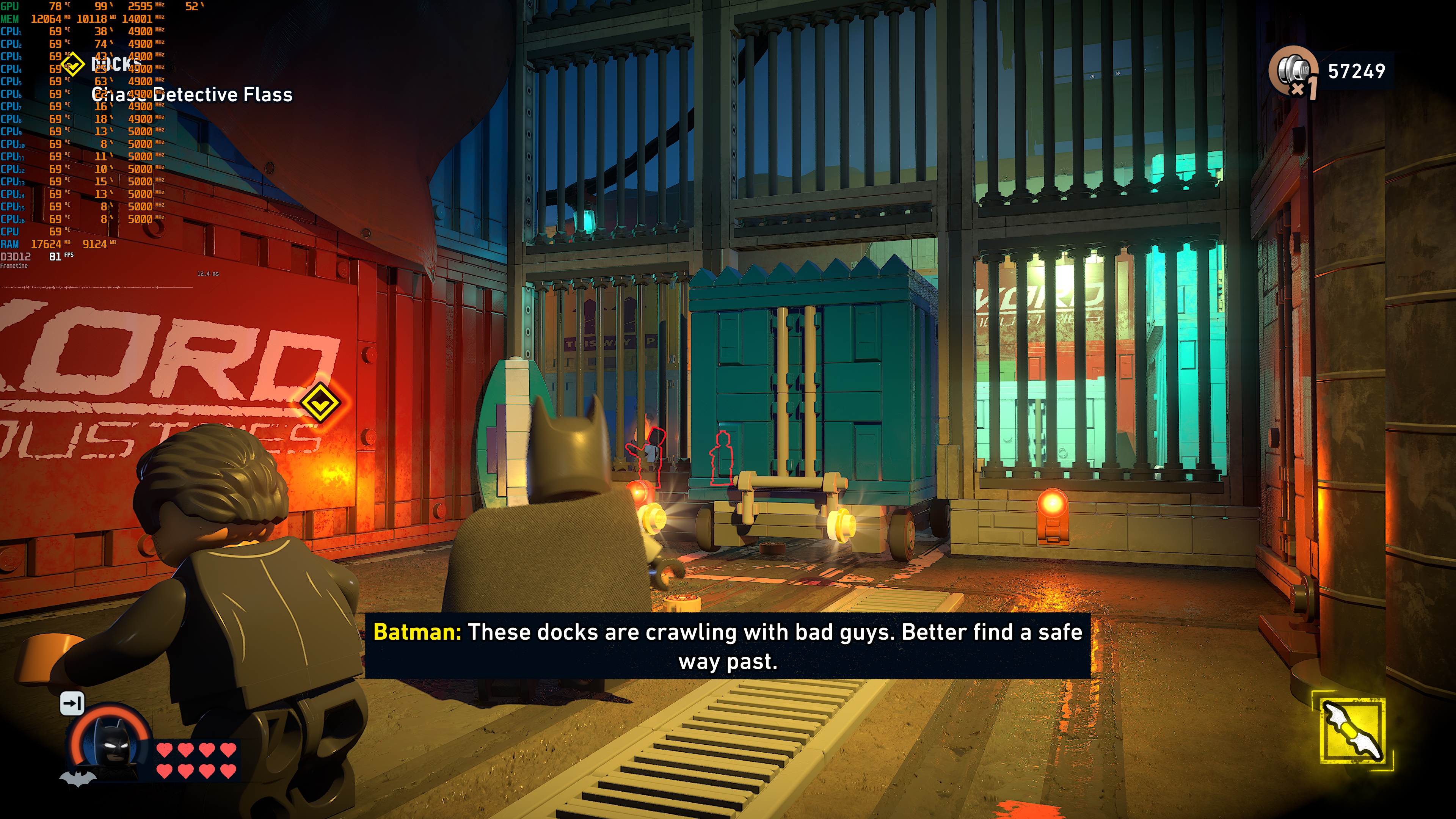
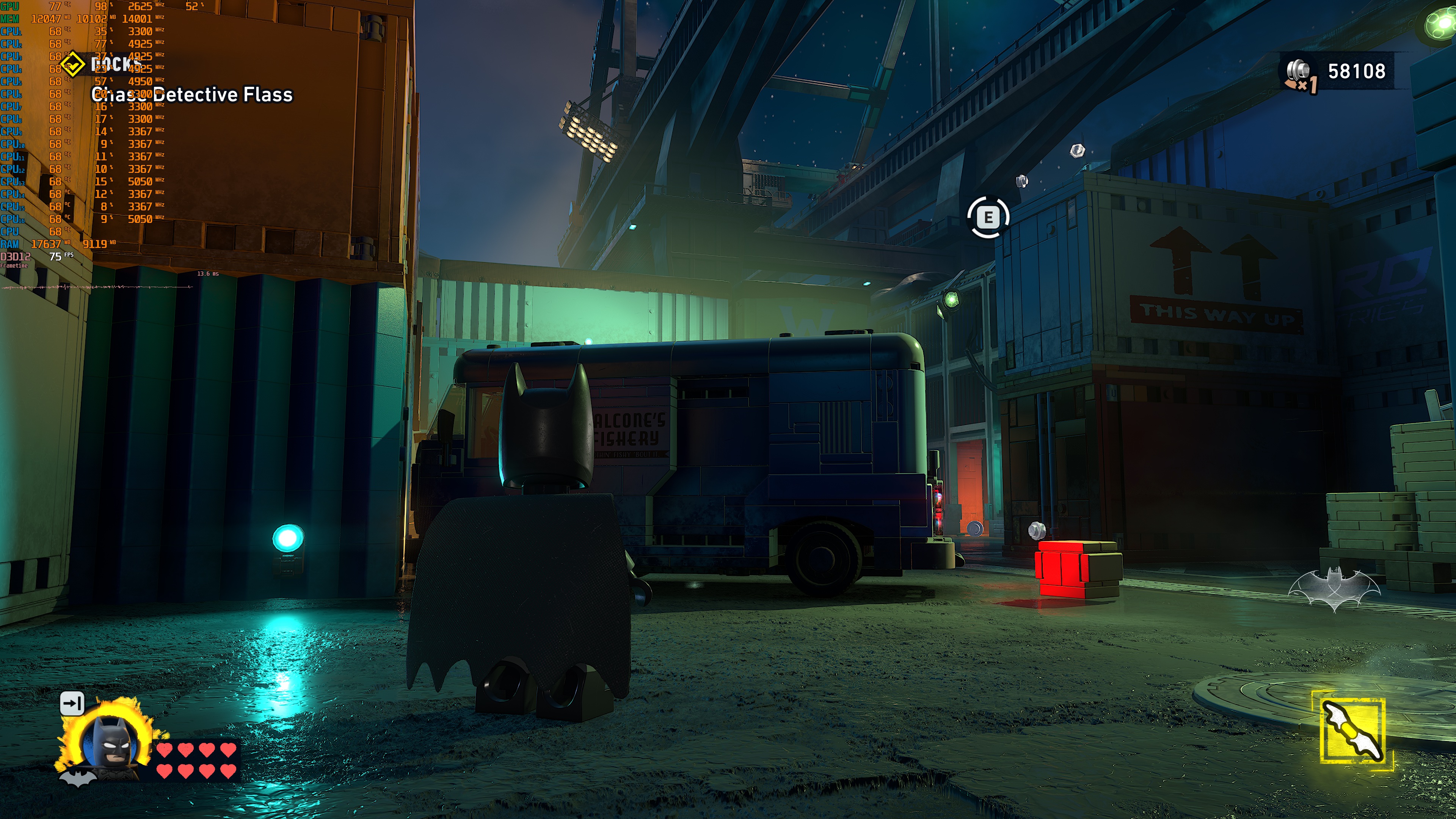
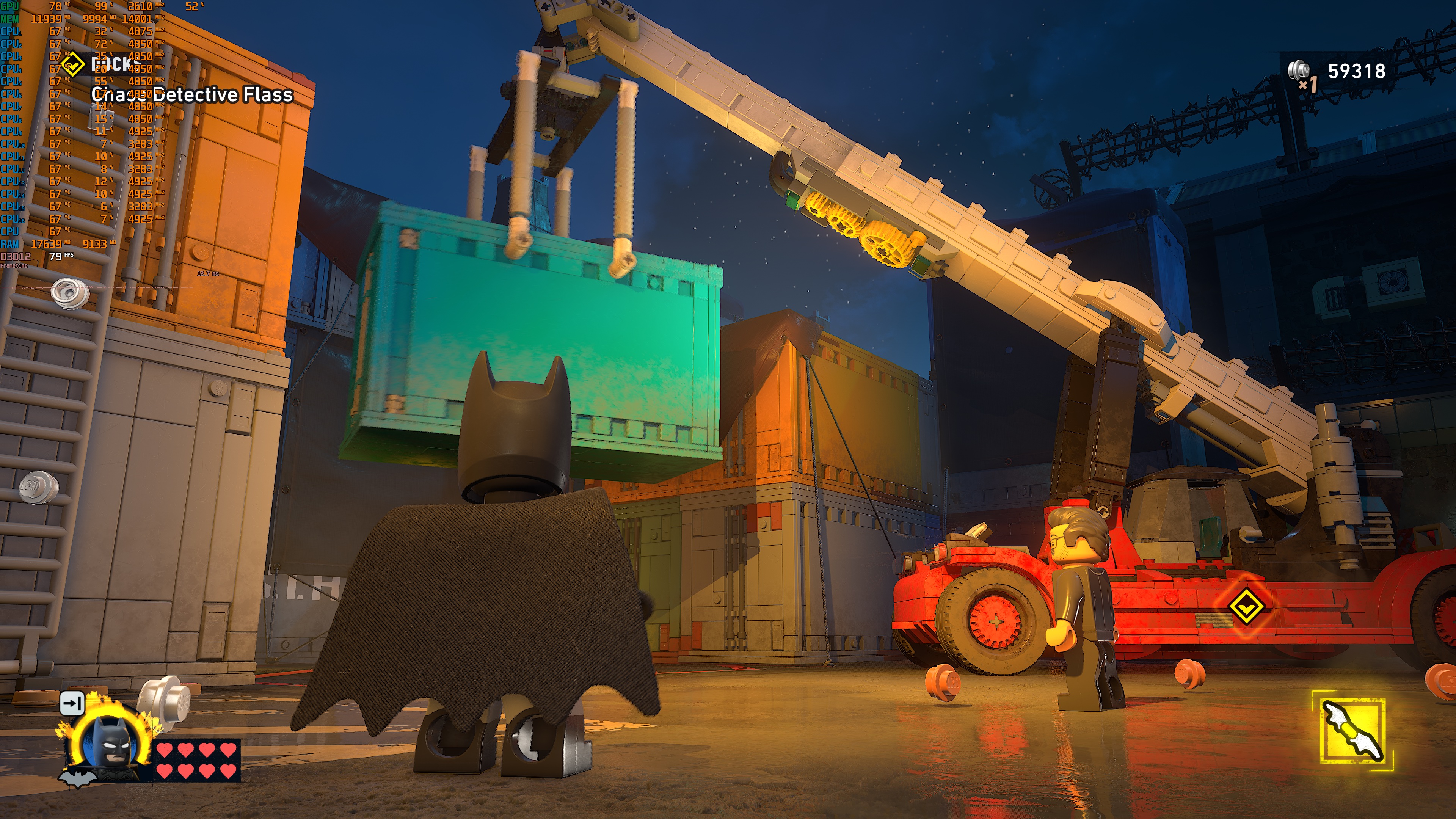
Graphically, LEGO Batman: Legacy of the Dark Knight looks excellent. This is easily the best-looking LEGO game to date. The developers implemented Lumen, resulting in consistently great lighting throughout the game. The LEGO models are sharp and detailed, and the environments are filled with great small touches.
Before closing, I should note that there are a few traversal stutters while using the Batmobile in Gotham City. These stutters are not as bad as those we saw in Oblivion Remastered. Still, I’m certain that a lot of players will be able to spot them.
All in all, LEGO Batman: Legacy of the Dark Knight runs quite well on PC. While the Epic settings can be demanding, the game performs comfortably on older GPUs when using High settings. But even with Epic settings, the NVIDIA RTX 5090 can still maintain 60 FPS at Native 4K, which is an impressive result for a game that uses Lumen. So, long story short, this isn’t a technical disaster like what some assumed when they saw its ridiculous PC requirements.
Enjoy!










John is the founder and Editor in Chief at DSOGaming. He is a PC gaming fan and highly supports the modding and indie communities. Before creating DSOGaming, John worked on numerous gaming websites. While he is a die-hard PC gamer, his gaming roots can be found on consoles. John loved – and still does – the 16-bit consoles, and considers SNES to be one of the best consoles. Still, the PC platform won him over consoles. That was mainly due to 3DFX and its iconic dedicated 3D accelerator graphics card, Voodoo 2. John has also written a higher degree thesis on the “The Evolution of PC graphics cards.”
Contact: Email