

AMD recently announced its Ryzen 5000-series Zen 3 Vermeer desktop CPU lineup, the next-gen architecture powering Ryzen processors. According to AMD these CPUs will offer better single-thread performance in PC games.
AMD also claimed that its high-end model will surpass Intel’s competitor, the core i9 10900K.
AMD Zen 3 promises to offer a higher max boost, significant IPC uplift, new core layout, and new cache topology. In fact, AMD claims that Zen 3 offers a 19% increase in single-thread scenarios over the previous-gen CPU lineup. In fact the flagship R9 5950X scores 641 points in CineBench R20 (Single-Core) benchmark test.
AMD will release four SKUs based on Zen 3 on November 5th. These four models are: AMD Ryzen 5 5600X, AMD Ryzen 7 5800X, AMD Ryzen 9 5900X and AMD Ryzen 9 5950X, respectively.
These processors are still chiplet-based, with one chiplet having either six or eight cores. Ryzen 5 and Ryzen 7 will have one chiplet, while Ryzen 9 will have two chiplets, and the easy way to identify this is through the amount of L3 cache each processor has.
We now have some more info on Zen 3 CPU lineup. According to an official leaked slide published over at Technopat, coming via Wccftech, which is still under strict embargo, AMD‘s upcoming Zen 3 CPUs are going to hugely benefit from a faster clocked system RAM modules, and will offer great memory overclocking support out of the box.
Gamers can now leverage from higher-clocked/spec’d DDR4 memory kit modules. AMD is now recommending an even faster clocked DDR4 Memory support with Zen 3 lineup. AMD has already made many improvements and refinements to the new Zen 3 core architecture, and the chipset design.
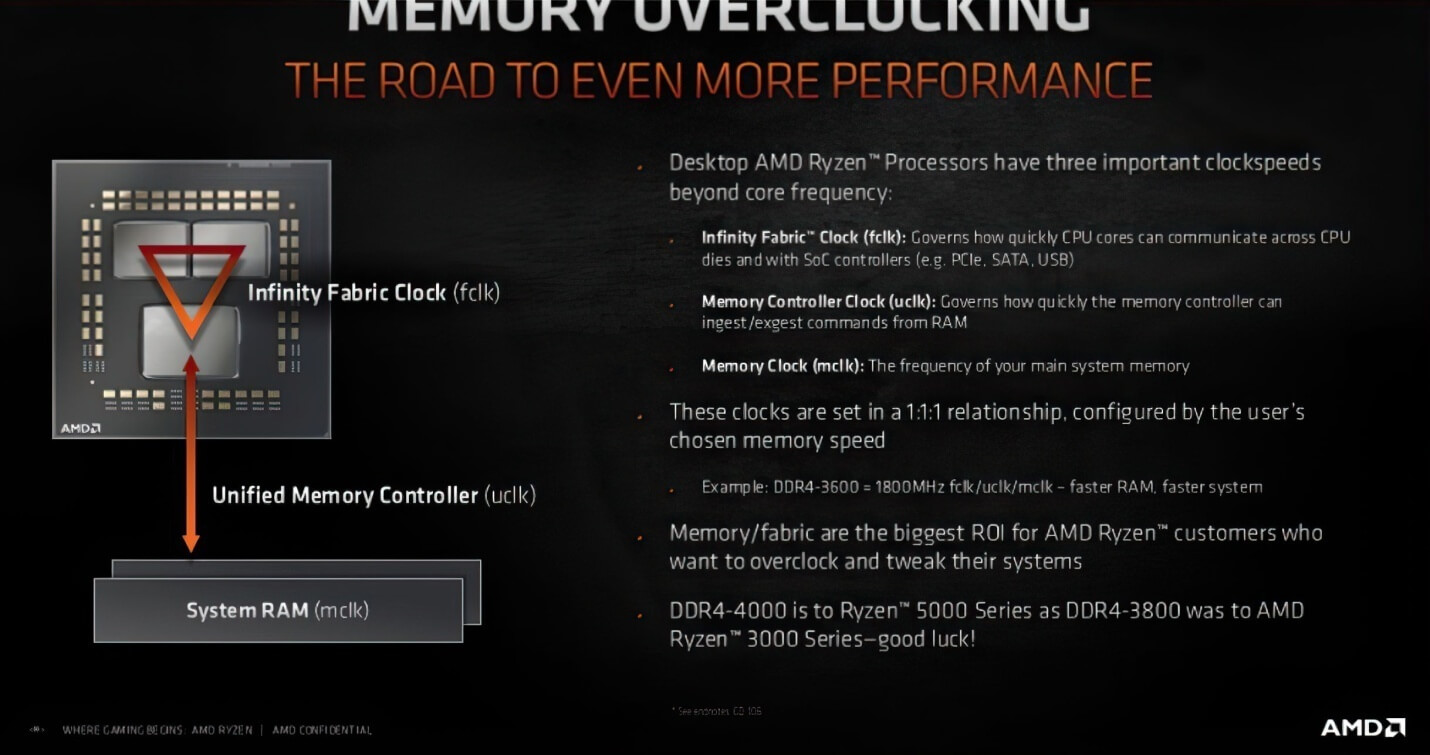
According to the leaked official slide, AMD is suggesting DDR4-4000 MHz system memory clock speed to be the sweet spot for all Ryzen 5000-series Zen 3 desktop processors, and DDR4-3800 MHz the sweet spot for all Ryzen 3000-series Zen 2 desktop CPUs.
However, the statement can also be inaccurate since AMD has suggested DDR4-3733 MHz as the sweet spot for the existing Ryzen 3000-series Matisse processors. Ryzen 3000-series Zen 2 SKUs allow synchronous operation between the Infinity Fabric clock (FCLK) and memory clock (MCLK) up to 1,800 MHz or DDR4-3600. Some really good samples can also handle 1,900 MHz (DDR4-3800) before breaking the 1:1 ratio.
If the slide and the information posted are indeed legitimate, the upcoming Ryzen 5000 Zen 3 processors would permit a FCLK up to 2,000 MHz (DDR4-4000). However, it’s important to highlight that DDR4-3200 is still the official memory speed spec supported on the Ryzen 5000 processors.
So basically in the end it still depends on the quality of the chip’s integrated memory controller (IMC), which dictates whether you can hit the higher frequencies or not. Nonetheless, we should exercise caution with any leaked slide/info posted on the web, and treat it as a rumor.
For context, we already know the three basic clock speeds which AMD Ryzen processors support. These are Infinity Fabric Clock (fclk), Memory Controller Clock (uclk) and lastly Memory Clock (mclk) itself. Infinity Fabric Clock (fclk) is the Fabric Clock. FCLK controls the speed of AMD’s Infinity Fabric, which handles communication across CPUs.
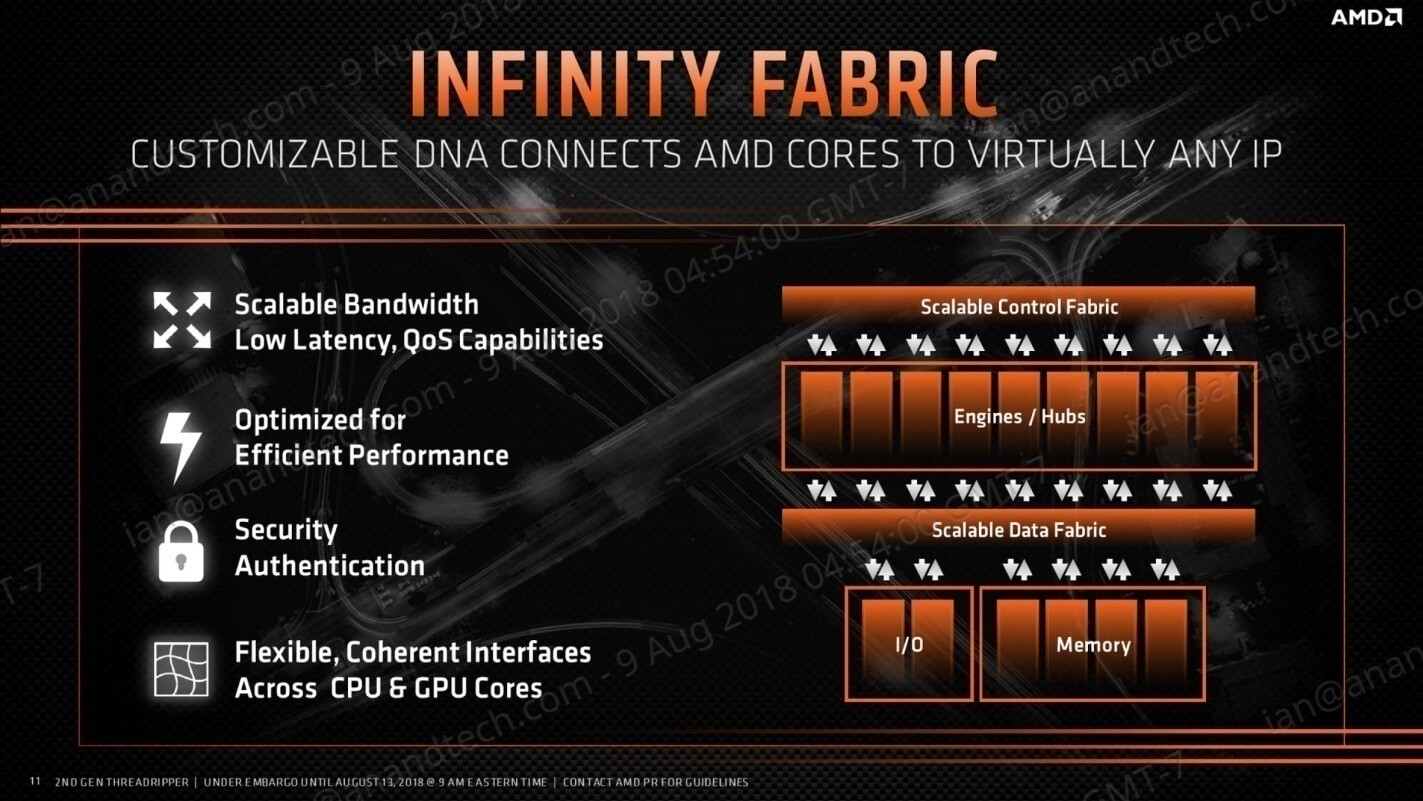
On Ryzen systems, the latency and available bandwidth for all connected components like the DRAM controller, PCIe bus, etc. is based off the Infinity Fabric speed (FCLK). All of this occurs in an interconnect AMD calls Infinity Fabric. The Infinity Fabric clock speed (FCLK) is configurable and directly relates to the memory clock (MCLK). For example in Ryzen 3000 CPUs, most will run a 1:1 ratio between FCLK and MCLK, which can be considered synchronous operation, up to 1,800MHz.
There may be instances where the FCLK may be set to operate in an asynchronous mode (not a 1:1 ratio), which may introduce increased latency, thus negating any performance benefit. However, for extremely high MCLK values (>3,600MHz), asynchronous operation may actually increase overall performance, at the cost of stability.
UCLK on the other hand controls the speed of the memory controller itself. MEMCLK relates to the Memory clock on DDR4 memory, and is often referred to by the data rate, for example, 5000 MT/s kit is so called because at the advertised speed data is transferred 5000 million times per second.
The physical clock signal that governs this data transfer, however, is 2500 MHz at the advertised speed – the data rate is double the physical clock, hence the name Double Data Rate. In AMD’s language this physical clock is called MEMCLK, and often shows up in bios settings under this name. MEMCLK is important because of how FCLK and UCLK relate to it.
All three of these clocks are set in a 1:1:1 ratio and are configured based on the memory speeds of the given system, and it is up to the end user to configure these values for best system performance.
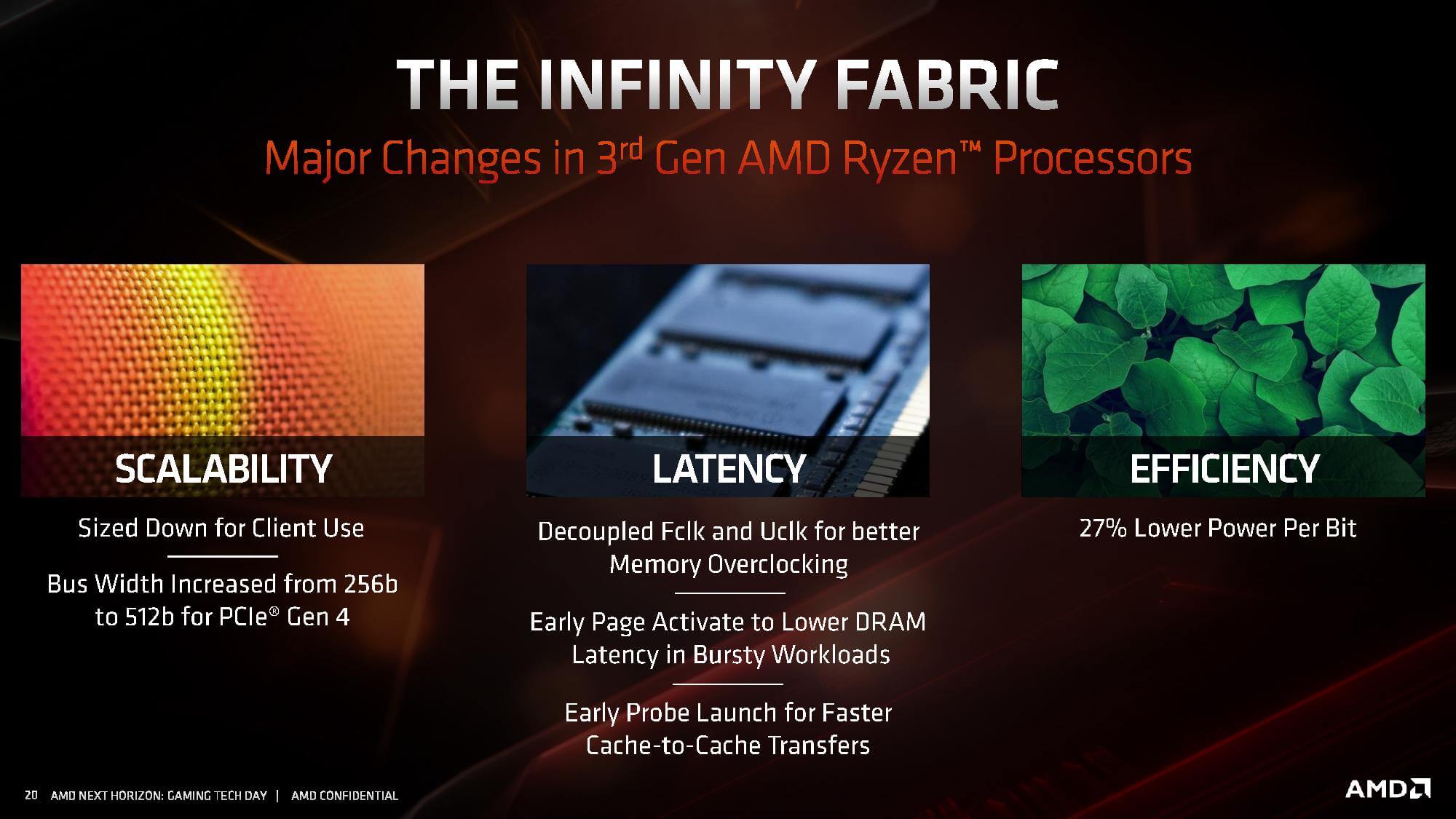
Technically, all of these elements have always existed on all AMD’s Zen-based processors, back to 1st generation Ryzen and the enterprise equivalents, but FCLK and UCLK were always locked to MEMCLK making them effectively one and the same. What differs with 3rd generation Ryzen and beyond is that rather than being tied to MEMCLK, FCLK can now be set totally independently and UCLK has a choice of two ratios to MEMCLK – 1:1 and 1:2 (UCLK:MEMCLK).
Although FCLK is now free to run at any speed, in practice there’s a performance bonus from running FCLK, UCLK and MEMCLK synchronized together.
At lower MEMCLK speeds this may be outweighed by overclocking/increasing FCLK independently, and when overclocking to very high MEMCLK it is simply no longer possible for FCLK to keep up, it must be run at a reduced speed.
AMD Ryzen owners now running DDR4-4000 RAM kits can expect much better performance and even higher overclocking capabilities when running a Vermeer Zen3-based desktop processor. The memory and fabric clock is very important and useful for users who want to overclock and tweak their Ryzen systems.
The leaked AMD slide details the following three memory related internal clocks that we already know, and I have also explained this before as well. These are:
- Infinity Fabric Clock (FCLK): Governs how quickly CPU cores can communicate across CPU dies and with SOC controllers (e.g. PCIe, SATA, USB)
- Memory Controller Clock (UCLK): Governs how quickly the memory controller can ingest/exgest commands from RAM
- Memory Clock (MCLK): The frequency of your main system memory
Some more official AMD slides for reference:
Stay tuned for more!

Hello, my name is NICK Richardson. I’m an avid PC and tech fan since the good old days of RIVA TNT2, and 3DFX interactive “Voodoo” gaming cards. I love playing mostly First-person shooters, and I’m a die-hard fan of this FPS genre, since the good ‘old Doom and Wolfenstein days.
MUSIC has always been my passion/roots, but I started gaming “casually” when I was young on Nvidia’s GeForce3 series of cards. I’m by no means an avid or a hardcore gamer though, but I just love stuff related to the PC, Games, and technology in general. I’ve been involved with many indie Metal bands worldwide, and have helped them promote their albums in record labels. I’m a very broad-minded down to earth guy. MUSIC is my inner expression, and soul.
Contact: Email