

NVIDIA header image 2

Rumor: NVIDIA’s flagship RTX 3000 series cards to feature a dual-sided PCB, having a Traversal Coprocessor

According to one recent video posted by Coreteks, coming via Wccftech, NVIDIA plans to introduce some serious design changes with the AMPERE flagship lineup of cards, like implementing a new dual-sided PCB, having a traversal coprocessor.

But you should take this entire leak and the contents posted in the Coreteks Video with a huge grain of salt. Nothing is officially confirmed by Nvidia yet, so treat this as a rumor for the time being. Though, it would be nice if this design prediction turns out to be true, based on the previous leaked photos of the RTX GPU.

According to the Youtube source, the reason why the GPU has fans on the opposite sides of the card is to push the air in different directions. Coretek guesses that the other chip might be something called a “traversal coprocessor” of some sort, which should help with dedicated Ray Tracing/RTX performance.

The YT source claims that this time the RTX cores should be placed on a separate coprocessor on the other side of the PCB, rather than the same die. Moving the RTX/raytracing cores onto a new die while at the same time keeping the original GPU core should allow NVIDIA to economically bin these chips, without too much wastage.

Coretek mentions the coprocessor could also be a standalone AIC card, similar to ‘PhysX’ cards of the older generation. If these leaks are indeed true, then we can expect much better Ray Tracing performance with these new Ampere RTX 3000 series cards.

It is important to remember that NVIDIA patented a traversal coprocessor design back in 2018, so the YT source does have some credibility. But like I have said before, take all of this as a rumor for now.

RTX 3000 series Traversal Coprocessor
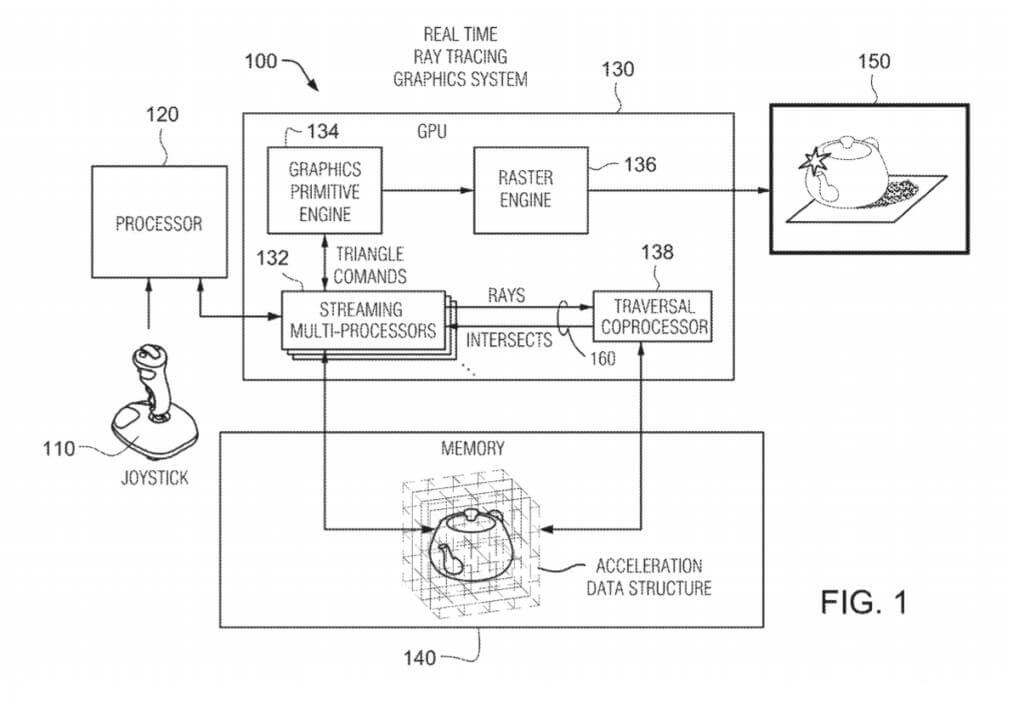
RTX 3000 series Traversal Coprocessor 1
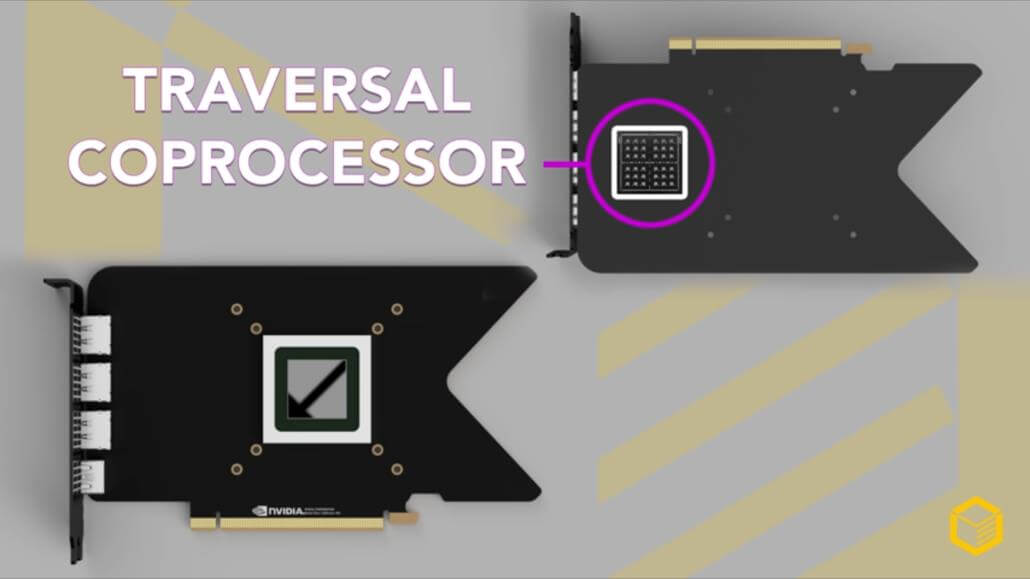
RTX 3000 series Traversal Coprocessor 2

24 thoughts on “Rumor: NVIDIA’s flagship RTX 3000 series cards to feature a dual-sided PCB, having a Traversal Coprocessor”

  1. That design change would indeed be interesting. Hopefuly and if it turns out to be true the cooling of both chips would be efficient.

    1. With the benefit of less to no binning compared to OG Turing RTX dies I would bet this is a reality and honestly 100% the way to go forward on so many levels.

      With this design you can also allow customers to add RTX add on cards that have 1080 Ti’s or anyone that just wants Ray Tracing at 1080p but does not want to shell out 700 – 2K for a new mega GPU. Also none Ampere RTX lines can 100% be a thing much like the 1600’s and also still allow gamers to adapt to RTX with a add on card when they feel it is worth it.

      Come to think of it they should of had this design from the get go for it would of provided so much more revenue and add on sales across the board. It really is an amazing concept going forward with ray tracing or any other tech that would need a specialized die. Just add X to the PCB in chunks. If you think about it you could have four separate PCBs chunks with 4 different dies: Main GPU, ray tracing die, NVMe direct IO die like the PS5, physics and AI combo die or what ever else they can come up with.

      The potential for this module type design and separate custom dies is almost like AMD chiplets and will really help drive the GPU forward in My opinion. I think it is amazing and pray it is true! I would go as far to say this is the future with out doubt.

    1. In theory, this should reduce the price, if anything.

      If RT and the other cores are on the same die, a defect in one or the other would waste the entire die. This way, a defected RT die won’t affect the rest of the GPU, and vice versa.

      That should improve production yields, and thus, reduce manufacturing costs.

      1. That’s all well and good but if AMD doesn’t step up their game in the high-end segment, you’re still likely to drop 4 figures on one of these babies

        1. I’m just going by the pricing of the Turing Titan. It was a little over twice as high as the RTX 2080 Ti. The Turing Titan launched for $2,500

          If the RTX 3080 Ti is indeed going to be $1,000 as reported in the TPU GPU database then maybe the 3090 will be around $2,000 and the 3080 (non Ti) could be around $700.

        2. The RDNA2 GPU in the new Xbox is able to match RTX2080 in real game performance, Digital Foundry got to see it running the Gears 5 benchmark at native 4K Ultra settings next to a PC.

          Surely on the desktop front they must have a powerful high end GPU if a 500$ console has this.

          1. Did they really have all on ultra or just cherry picked? Consoles often have cherrypicked high/ultra settings while the demanding ones are running medium or even low like the view distances and shadows.
            Im impressed if all ultra 4k 60fps, but i don’t believe it till i see it.

          2. Did you see me say Ultra 4K 60 fps? It takes a 2080Ti to average 60 fps on those settings, and it still drops to the 50s several scenes.

            They ran the benchmark on Ultra 4K next to a PC on same settings to compare performance.

            They had a separate showcase of 4K 60 fps gameplay which had some settings lowered to ensure constant locked framerate, with UE4’s new screen space GI applied on top.

          3. No i did not see the 60fps and said it because without 60fps it does not matter for me since 30fps is sh*t no matter how candy coated it is

          4. Do you have some sort of learning disability?

            The point is that the Xbox performed nearly identically as the RTX2080 in an actual game, at identical settings, that’s the takeaway…

          5. Well obviously could be my English skills, otherwise i could be a president like you too!

        3. At minimum, it would mean Nvidia wouldn’t have to crank prices up just to keep their margins from Turing.

  2. Huang said a while back that the Amperes would be around 50% faster than the Turings and much better at raytracing. We will know for certain when we start getting reviews.

    1. Man, I wish I could go into Cryosleep till September for I can’t wait to read what the real specs plus design are and benchmarks during pre-release official specs and benches.

      I have a feeling these new GPU’s are going to be monsters and ground breaking just like the 1000s if not more so. With AMD knocking at the door with RDNA2 which is almost a given to be the card to get AMD back on track I have a feeling Nvidia went all out on these 3000’s!

      September is going to be insane for everyone m/ 🙂 m/ !!!!!

    1. Hmm, you know what they could adapt a sort of NVMe add in slot just like they used to have with PCMCIA back in the day. Just add to laptop mobo’s another expansion slot going forward for RTX or a PS5 type IO controller or what ever.

      If they are really doing the double PCB design and the RTX die has been separated they can easily add another spot on the laptop mobo with a separate heat sink and fan or have an optional and slot like RAM, NVMe, PCIe etc slots. It be totally doable and also allow the price to be cut down when you build your laptop to opt for RTX or not.

      Will see hey, but I think they learned from the complexity plus binning of the combo die and the success of the 1600’s that separating them was the way forward. Well I think so, I can’t see it any other way you are going to continue to run issues if it remains a combo die.

  3. Man, I love reading your articles, Metal Messiah ! Very interesting stuff you have been posting till now ! keep it up

  4. I must say that this “theory” has a lot of sense! developing a chip completely dedicated to ray tracing would give the boost that this technology needs to make the appropriate quality leap.

    1. I believe that RTRT is the future of gaming. Some believe it to be a passing fad but with Nvidia, AMD, MS and Sony getting on board with it looks pretty solid that it’s here to stay. Intel will probably get on board with RTRT as well. Any company that won’t is going to be at a disadvantage in sales.

Leave a Reply

Your email address will not be published. Required fields are marked *