Lost Judgment feature

NVIDIA DLSS 2 is noticeably better than AMD FSR 2.1 in Lost Judgment

The modder behind the DLSS Mod for Judgment and Lost Judgment has released a new version that is compatible with AMD FSR 2.1. As such, we’ve decided to compare these two upscaling techniques in this game and although DLSS 2 is not officially supported by the game, it looks noticeably better than FSR 2.1.

For these comparison screenshots, we used an Intel i9 9900K with 16GB of DDR4 at 3800Mhz and NVIDIA’s RTX 3080. We also used Windows 10 64-bit, and the GeForce 516.94 driver. Furthermore, we set both AMD FSR 2.1 and NVIDIA DLSS 2 to Quality Mode.

Performance-wise, DLSS 2 and FSR 2.1 offer the exact same performance boost on the RTX3080. There is a 2-3fps difference between them, but this usually falls in the margin of error territory.

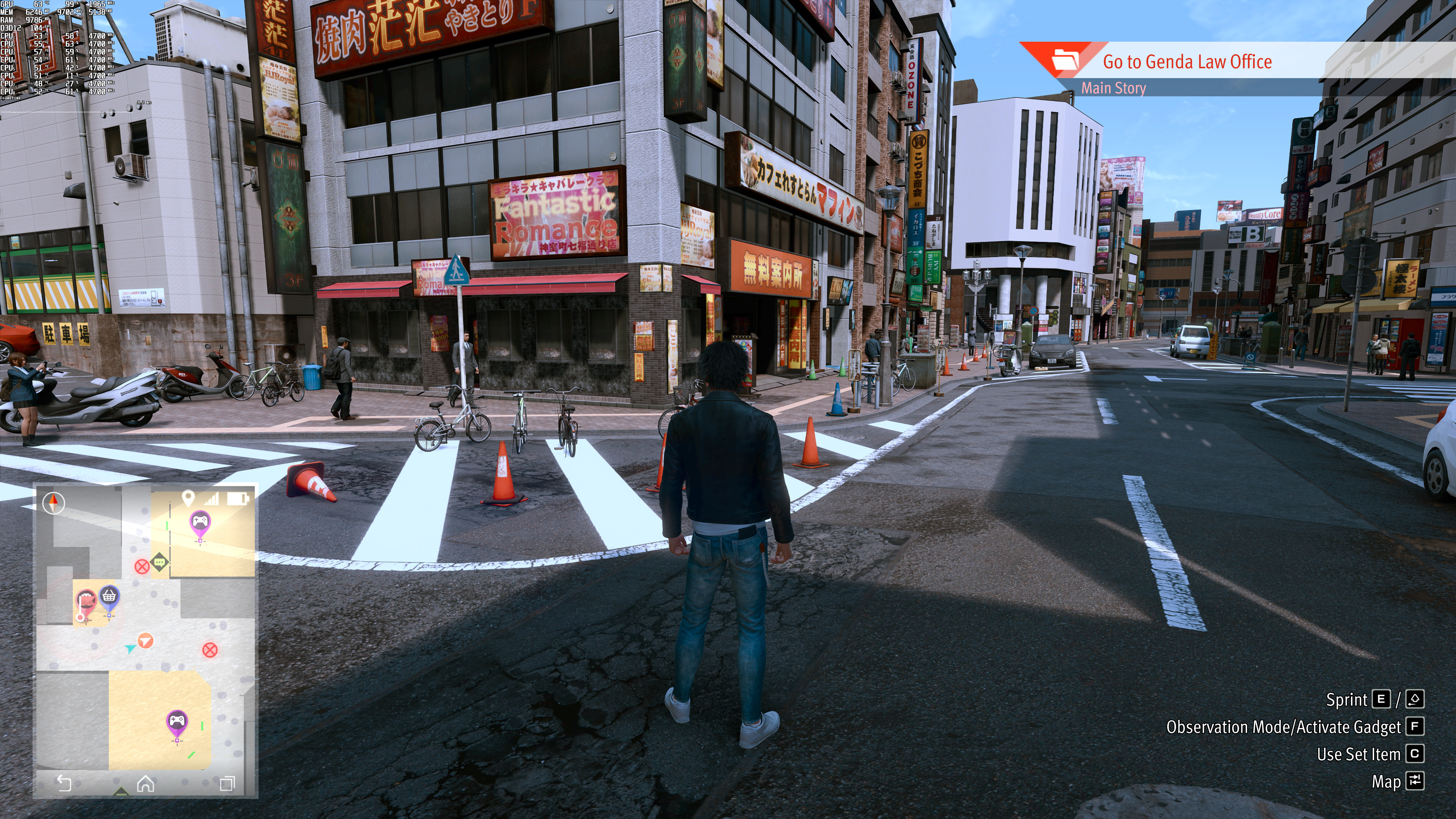
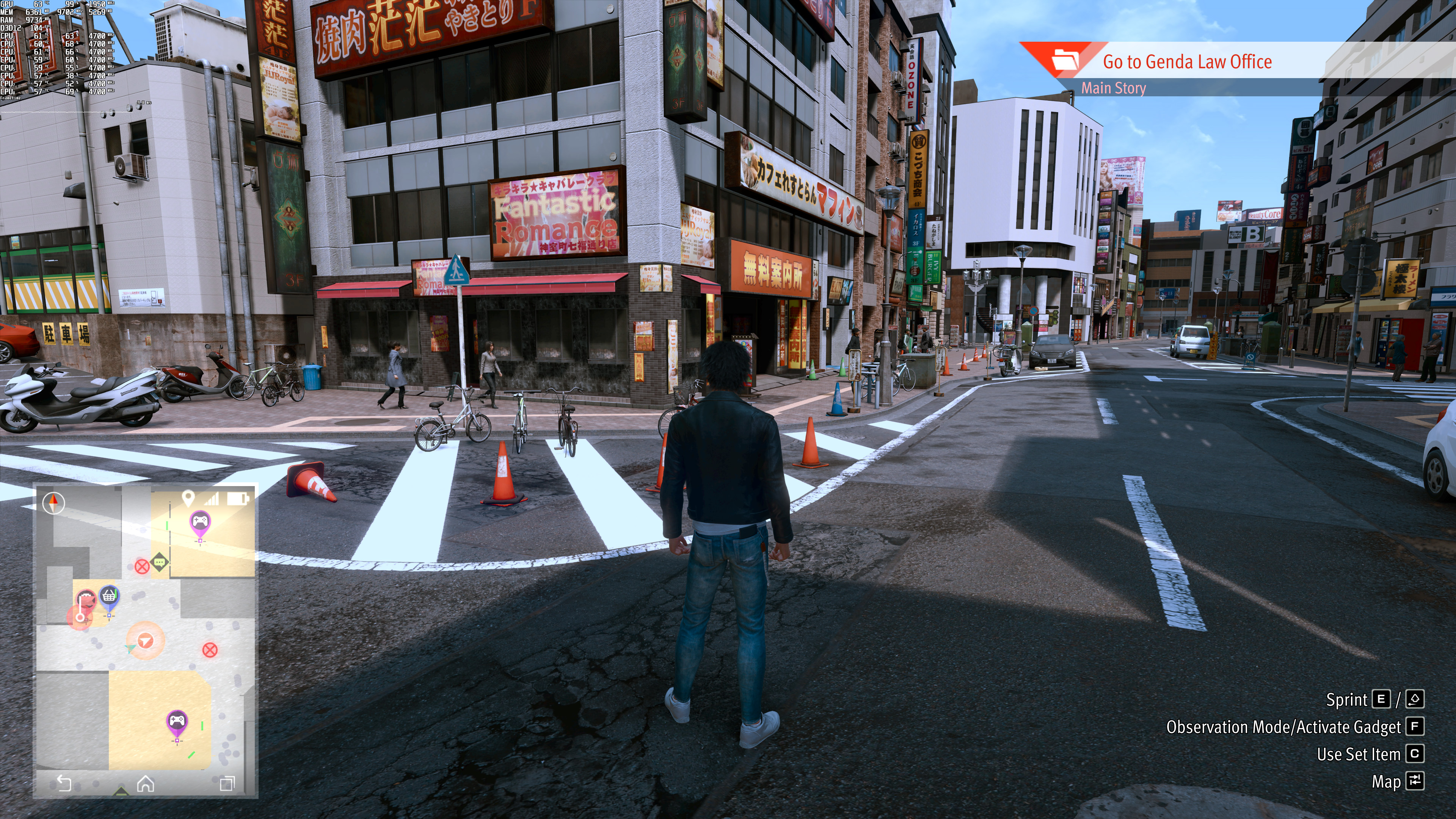
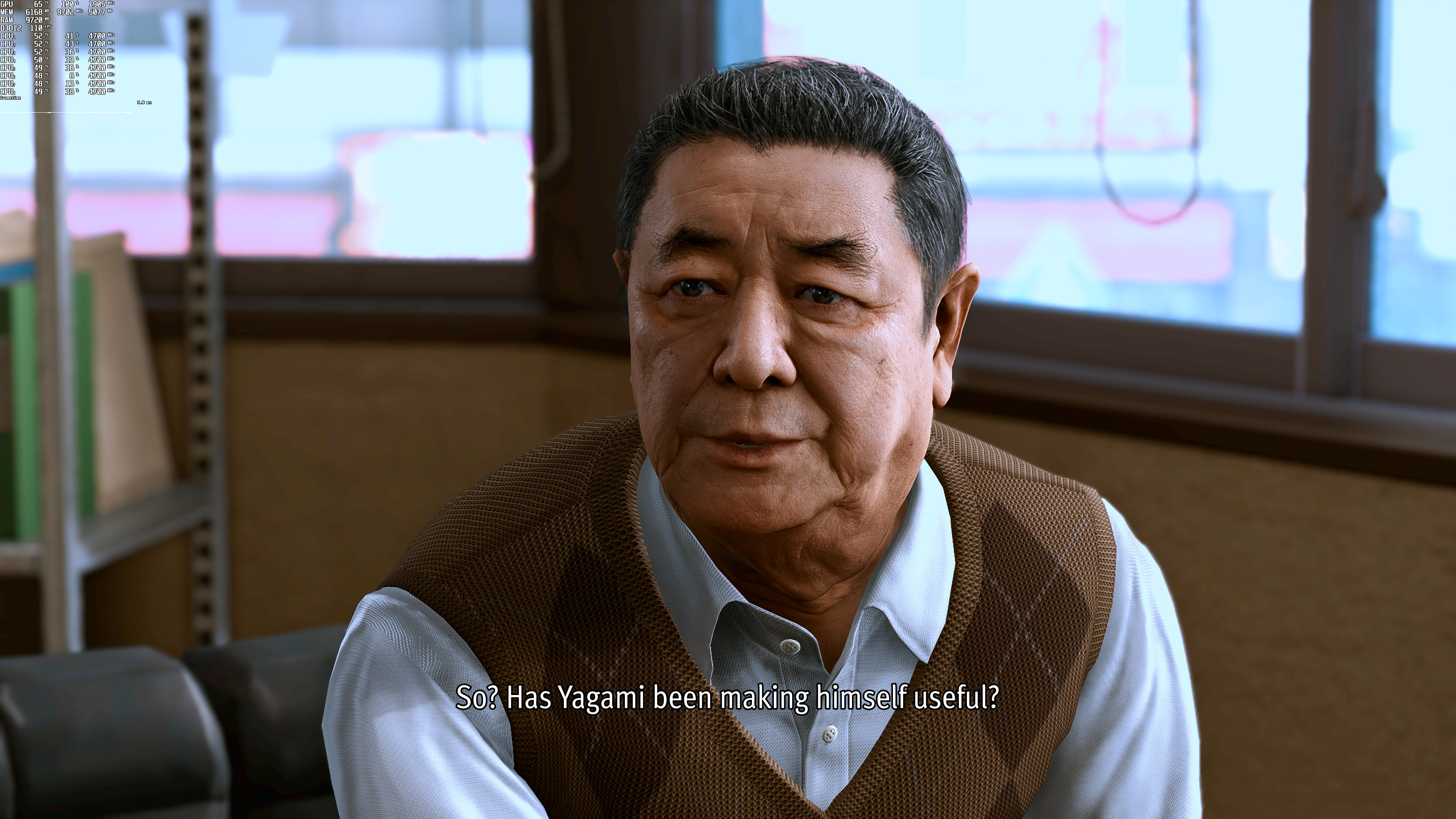
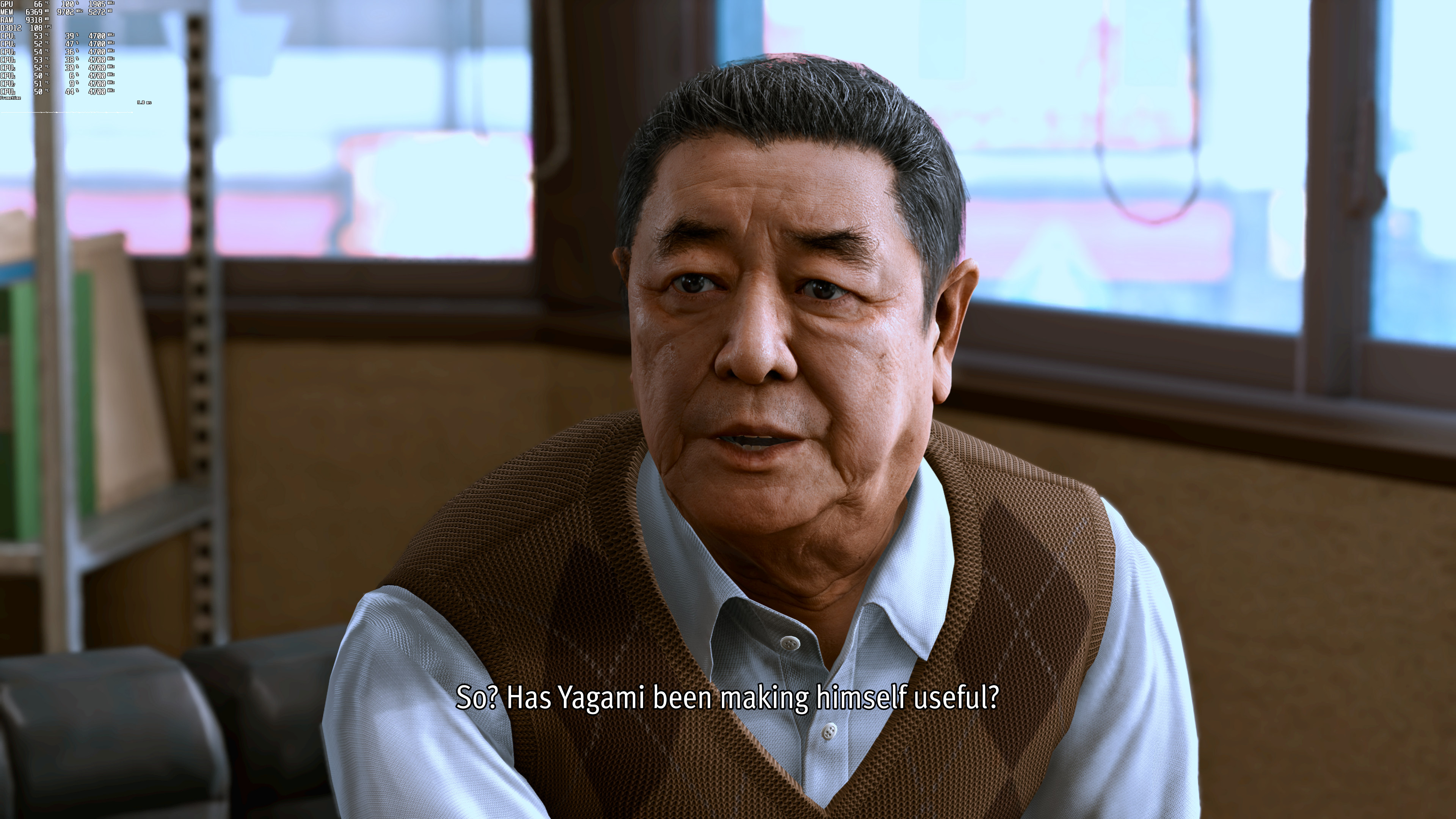
However, when it comes to image quality, DLSS 2 is far superior to FSR 2.1. Below you find some comparison screenshots between DLSS 2 (left) and FSR 2.1 (right).
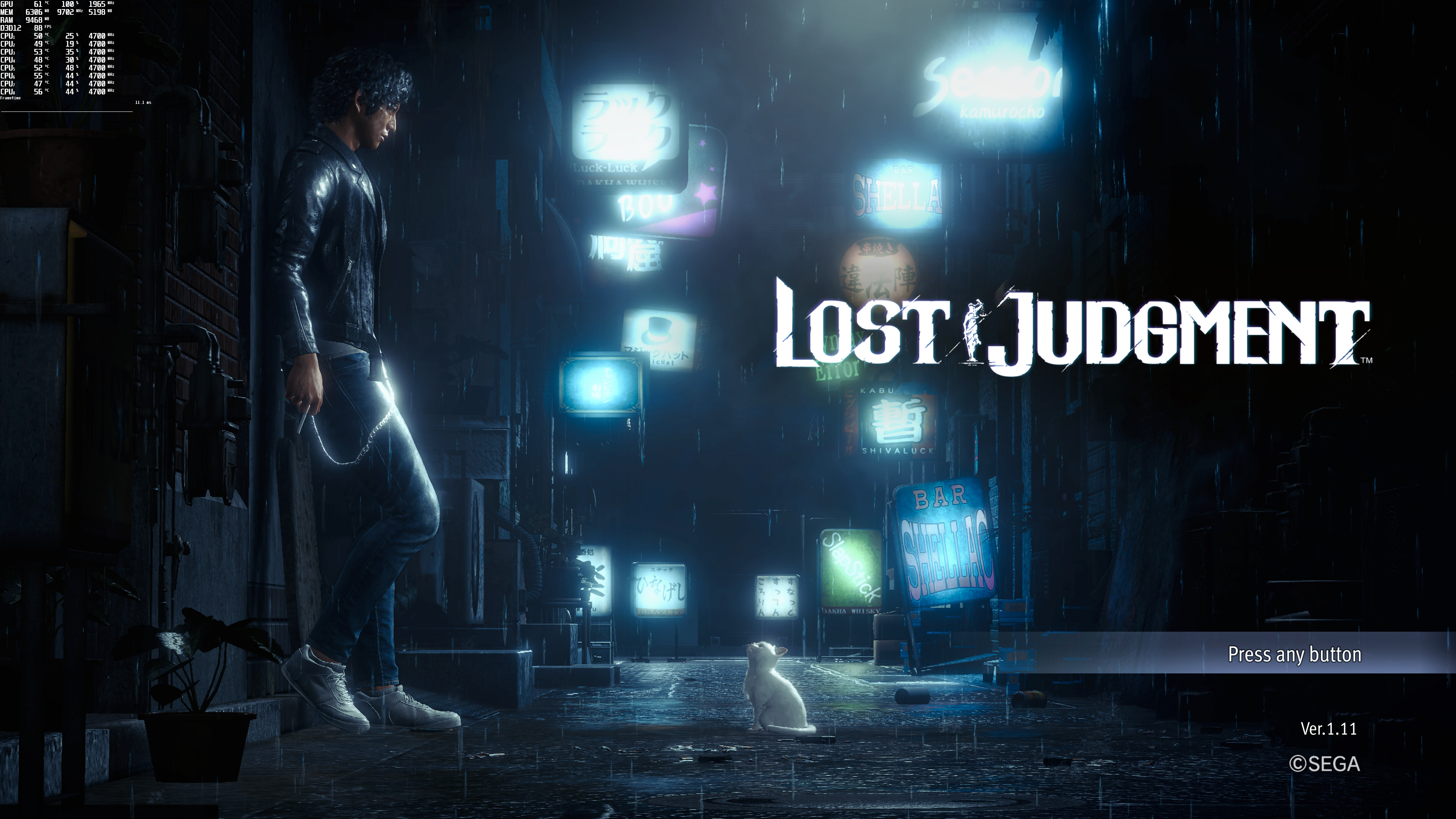
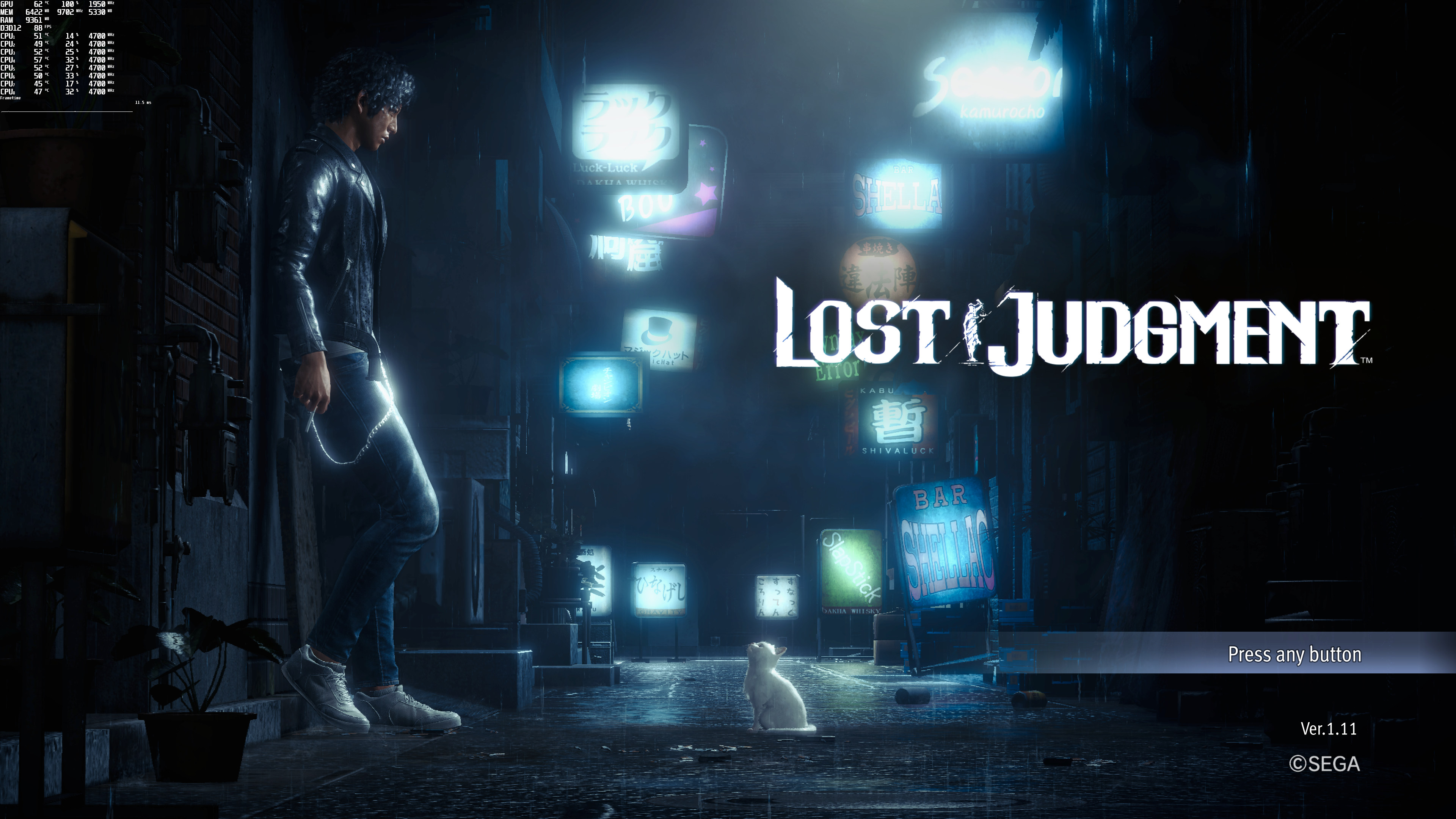
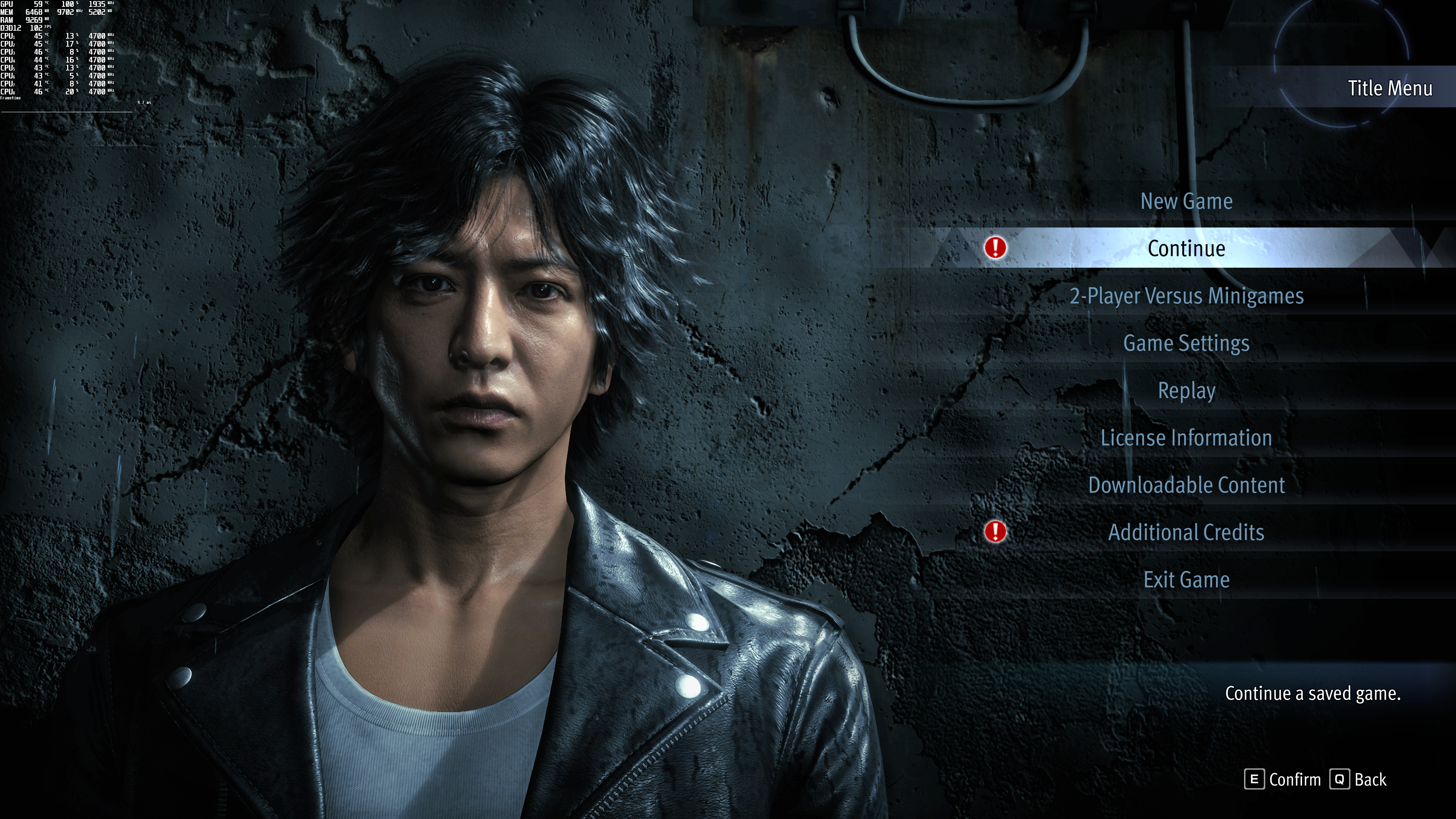
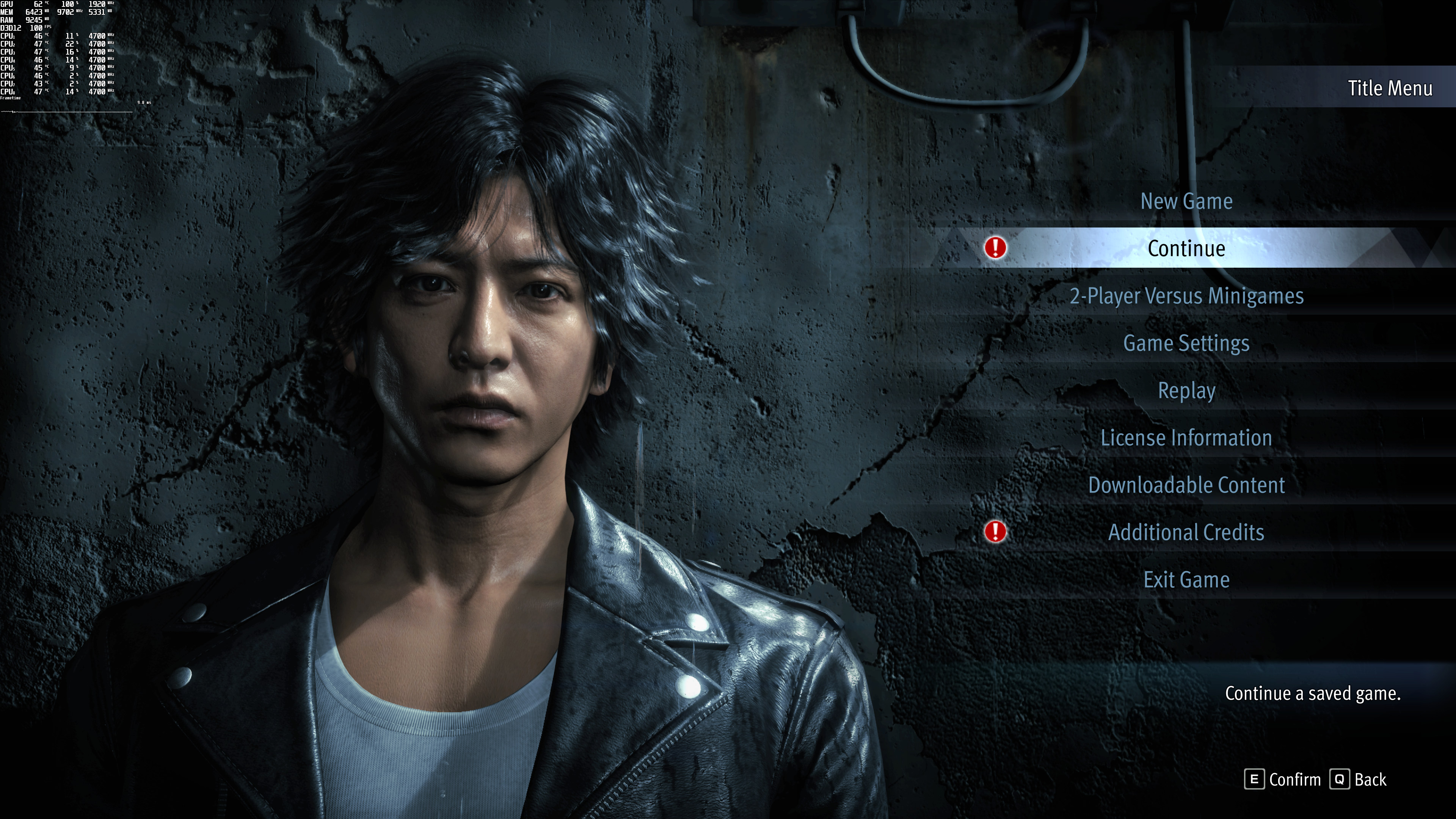
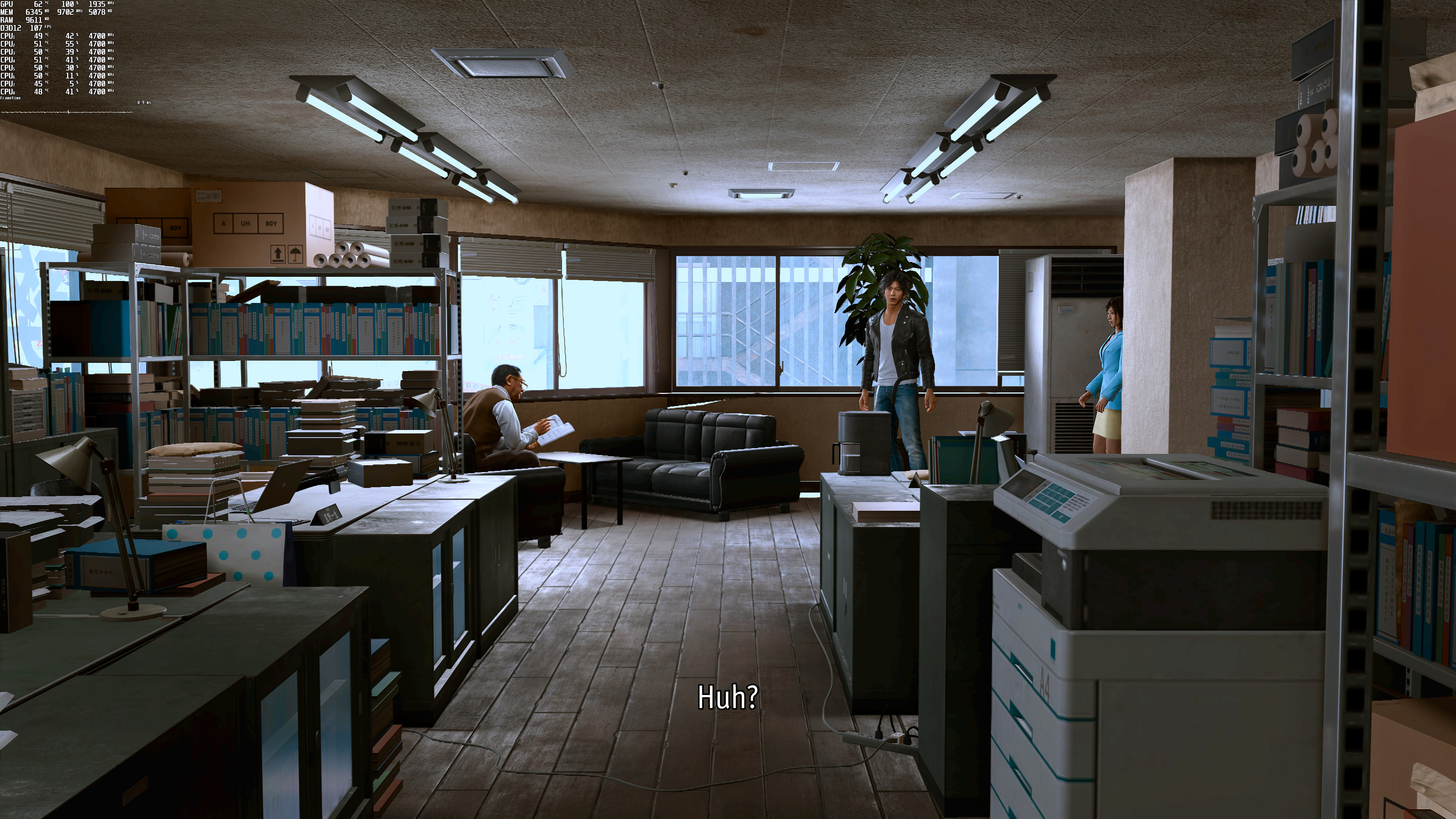
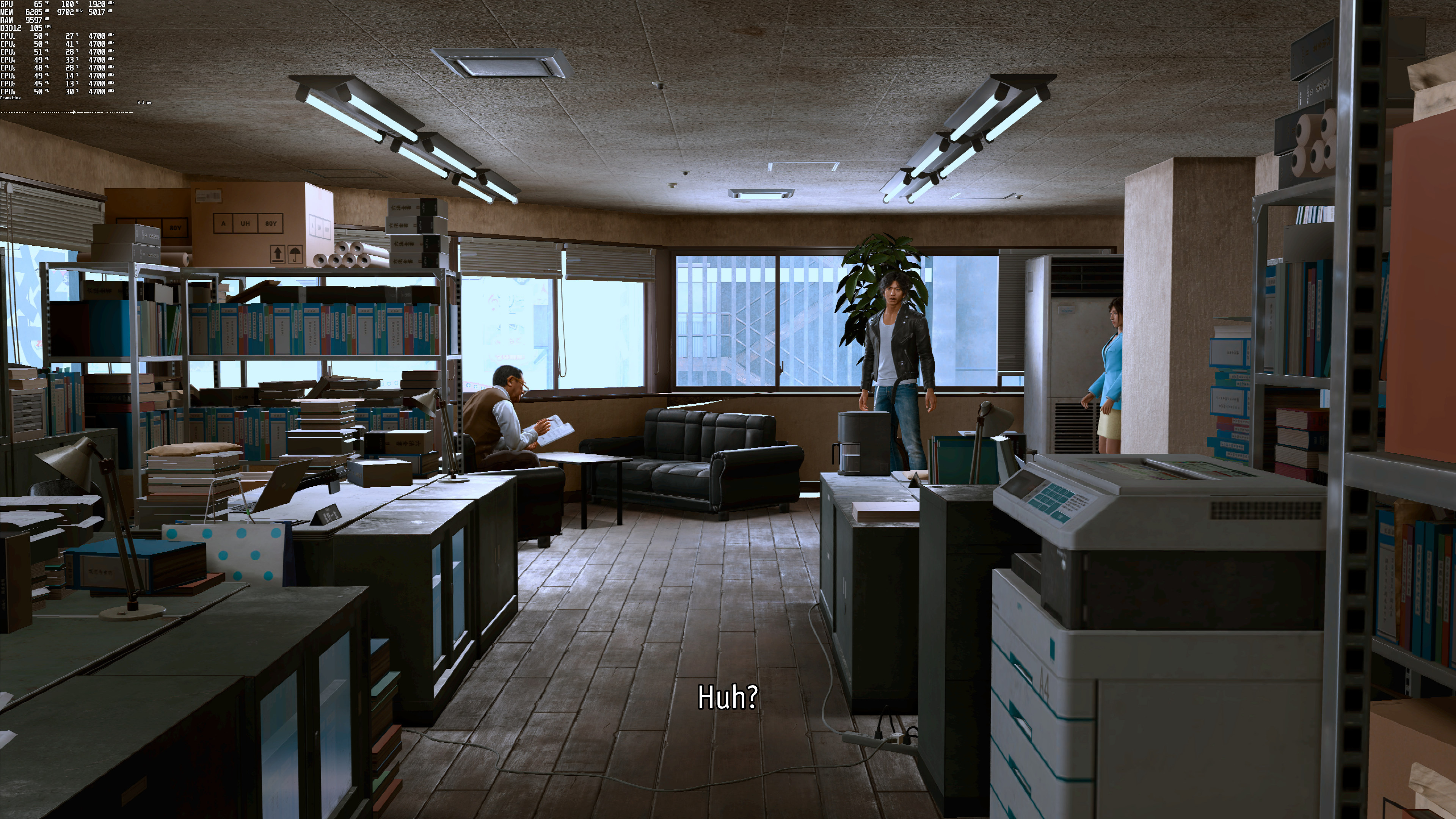
Lost Judgment DLSS Quality-1Lost Judgment FSR Quality-1 Lost Judgment DLSS Quality-2Lost Judgment FSR Quality-2 Lost Judgment DLSS Quality-3Lost Judgment FSR Quality-6 Lost Judgment DLSS Quality-4Lost Judgment FSR Quality-3 Lost Judgment DLSS Quality-5Lost Judgment FSR Quality-4 Lost Judgment DLSS Quality-6Lost Judgment FSR Quality-5

If you open these images in a new tab, you’ll see that there is more aliasing in the FSR 2.1 images. Since it may be hard for some to see, I’ve used ICAT in order to zoom in and better showcase it.
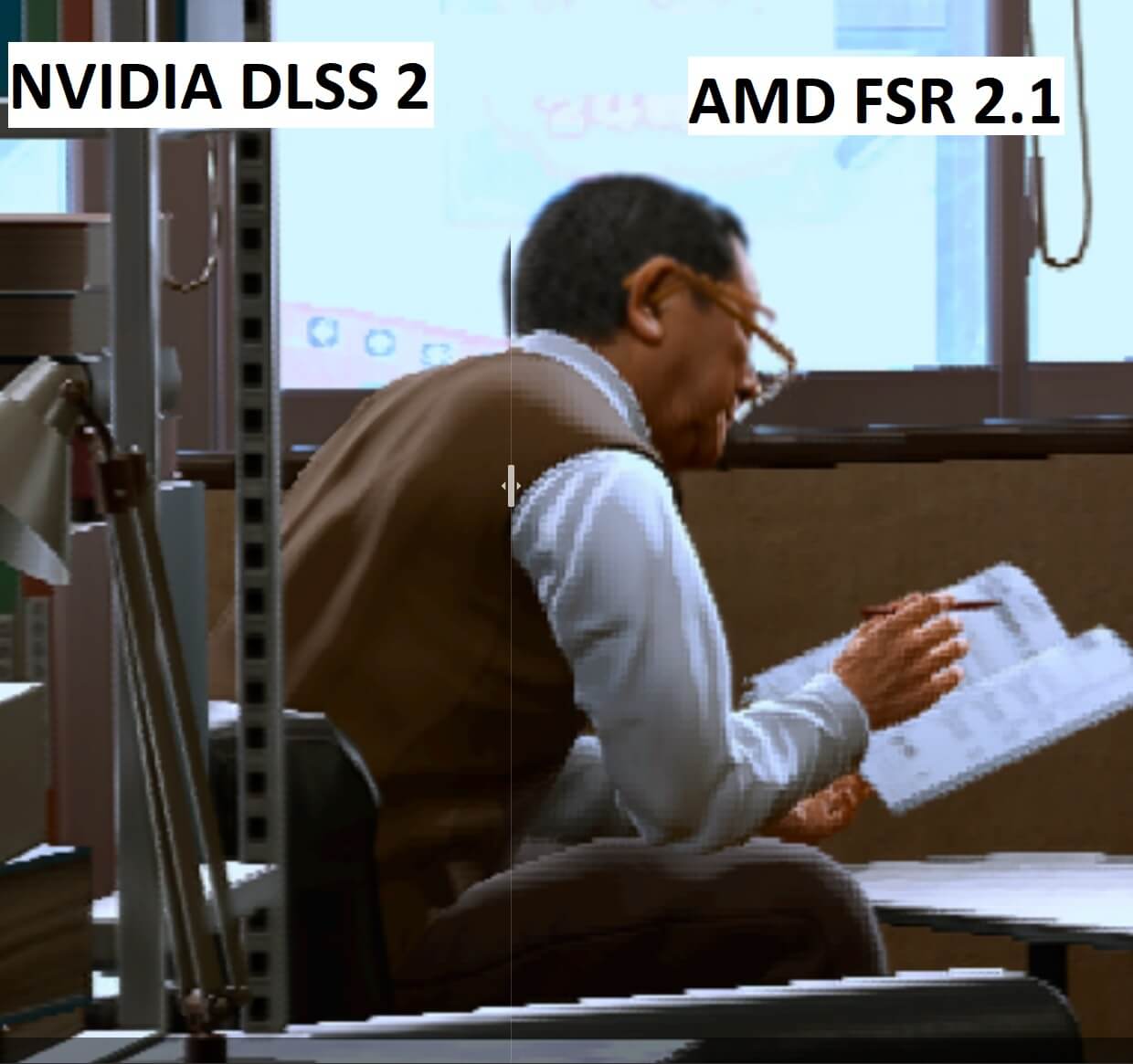
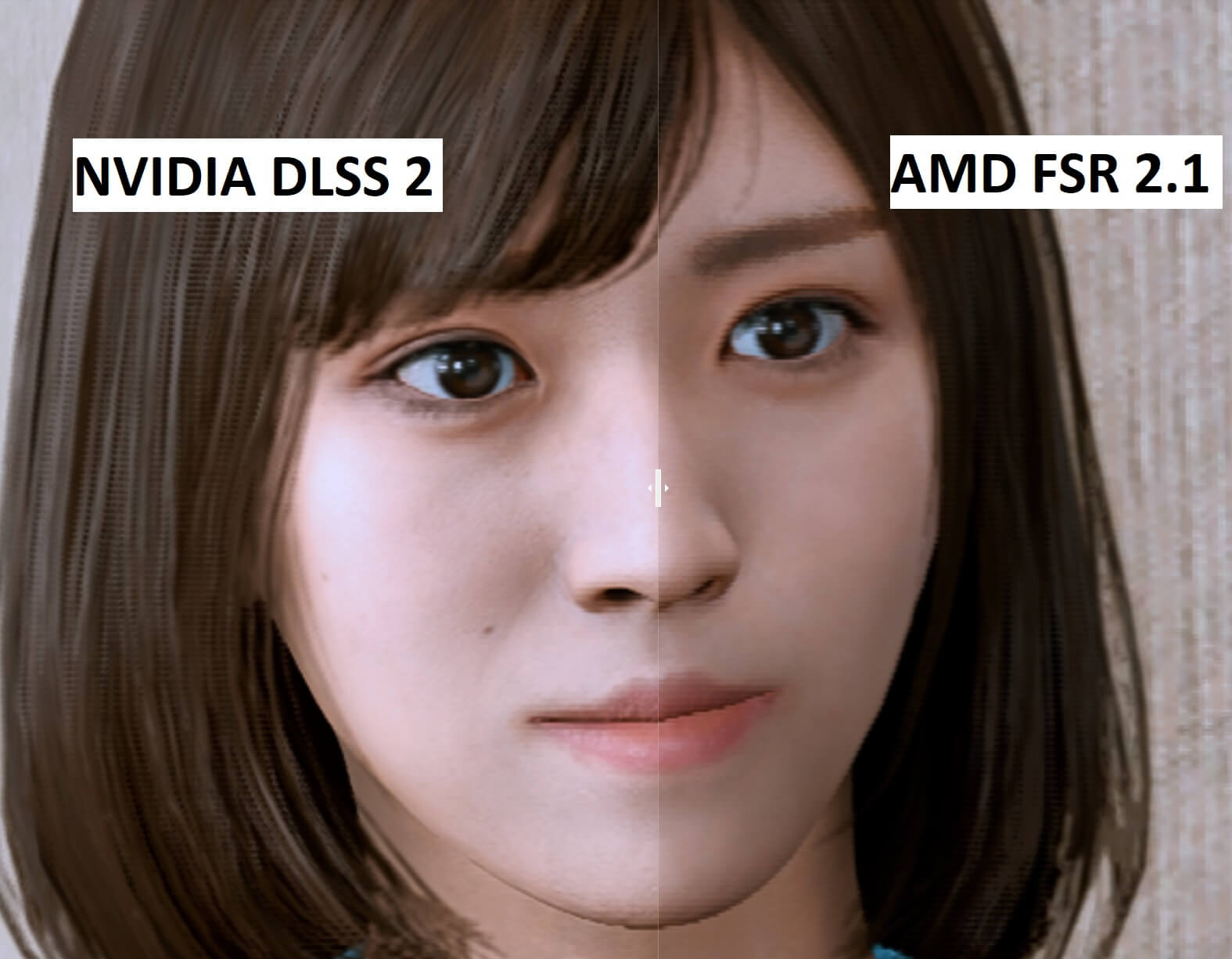
AMD FSR 2.1 vs NVIDIA DLSS 2 comparison zoom-1AMD FSR 2.1 vs NVIDIA DLSS 2 comparison zoom-2

Although DLSS 2 is better than FSR 2.1, there are some objects that are better defined in FSR 2.1. Take for instance this cable which is clearly more aliased in DLSS 2.
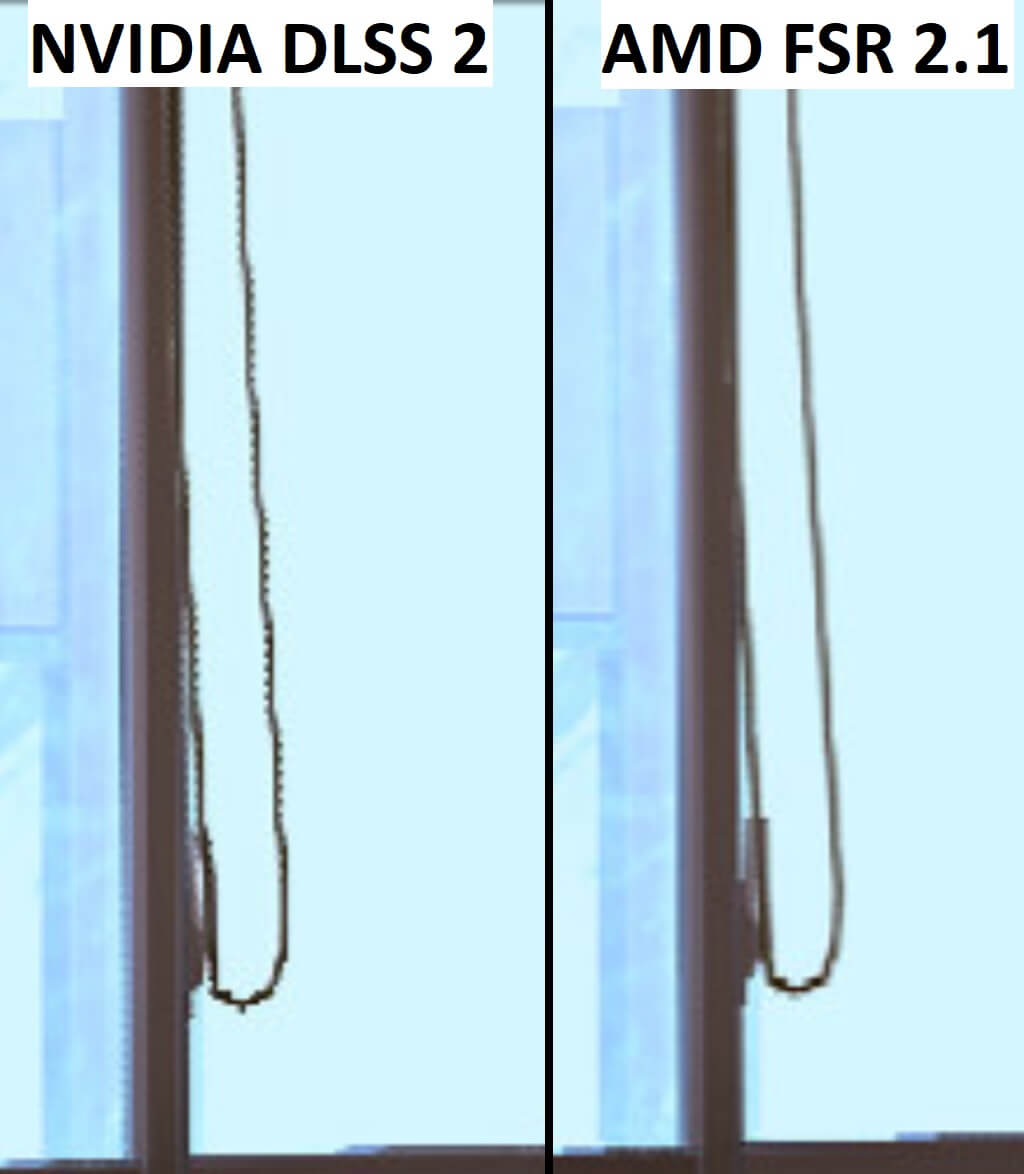
AMD FSR 2.1 vs NVIDIA DLSS 2 comparison zoom-3

Overall, though, NVIDIA DLSS 2 looks way better than AMD FSR 2.1. Thus, we strongly suggest using the DLSS mod for both Judgment and Lost Judgment (which you can download from here).

Have fun!

22 thoughts on “NVIDIA DLSS 2 is noticeably better than AMD FSR 2.1 in Lost Judgment”

  1. First, the quality issues with FSR 2.1 are not obviously visible in every scene you posted screenshots of. Secondly, there’s a noticeable difference in sharpness in peoples’ faces in some of the screenshots where it appears that the DLSS 2 mod has a higher sharpening setting than the game’s native FSR 2.1 does (it’s relatively easy to get additional sharpening in games with ReShade, the NVIDIA Control Panel, editing Unreal Engine 4 config files, etc. and is something I do in almost every game to counteract blurriness).

    Obviously I don’t know for certain, however this could just be that the developers of the game didn’t spend enough time fine-tuning FSR 2.1’s settings. I don’t have a GPU that’s capable of DLSS, and I only have one game that supports both FSR 2.x and DLSS 2.x anyway, so I can’t say for certain if it’s normal to have better quality with DLSS.

    1. You haven’t seen how bad FSR 2.1 is in Judgment if you haven’t seen what it looks like in Kamuro of the Dead vs how it looks like in DLSS. The different is as stark as night and day.

      The game gets extremely smeary and pixelated, likely caused by the particle effects (ash/dirt) that’s perpetually present. None of these problems are present in DLSS 2.4.

      There are already artifacts in this still image on the FSR 2.1 side that do not appear at all in the DLSS side, and it only looks worse in motion.
      https://uploads.disquscdn.com/images/988c273a51c01c27132b57af18c18ba6c6cf0ab86538f936ebdf0ac4a34e84e4.png

      1. I only have 2 games with FSR 2.x support. One of them is a VR game in closed beta, and it’s too difficult to tell image quality in VR like you would be able to in a flatscreen game. The other is Destroy All Humans 2: Reprobed, and FSR 2.x looks OK in that game (I don’t know what version of FSR 2.x it is).

        1. You couldn’t compare unless the game supported both. There’s a quite a few games have that natively like:

          – God of War
          – Chernobylite
          – Deathloop
          – Death Stranding
          – Spider-Man Remastered

          In most of those titles, motion in general is currently a challenge. Big mention to God of War where Kratos’ rapid combat movement causes severe artifacts not present in TAA and DLSS.

          1. I’ve seen video from Hardware Unboxed on detailed analysis of the quality difference between DLSS 2.x and FSR 2.0 in Deathloop. The quality was similar, however I don’t think they specifically looked for artifacting. They also didn’t look for ghosting, which I don’t understand as it is a major drawback of technologies like TAA, DLSS, and FSR 2.x and yet everyone just seems to ignore it…

          2. Yeah, definitely skip HU’s analysis, because so far they’ve been shilling FSR (even FSR 1.0) as if it’s a DLSS killer.

            Check out DF’s analysis on God of War, though. They do actually look out for both stills and motion artifacts/stability. While some might call it pixel peeping, it really isn’t since one’s tolerance for visual anomalies is a subjective thing.

            And while ghosting is indeed an issue with temporal technologies, currently the DLSS approach is currently the ‘gold standard’. This may change with XeSS if it gets wider adoption.

          3. I’m really not interested in third-party analysis, because they seem to ignore the one thing I care about the most. Ghosting. I absolutely hate ghosting, and technologies like TAA and DLSS cause plenty of it (although admittedly Epic’s TSR or whatever in UE5 is worse).

            I watched the analysis from Hardware Unboxed only to see if they had any slowed down video showing scenes with enough motion to see ghosting, and there was only one scene where they did that and there was enough motion to see ghosting in DLSS, and I didn’t see any ghosting in the FSR 2.0 footage in the same scene. This demonstrates the issue with videos of someone else’s analysis, as one of the complaints about FSR 2.0 was the fact that it caused more ghosting than DLSS 2.x.

            To be fair to Hardware Unboxed, they didn’t even mention ghosting (it wasn’t a focus of the review at all), however failing to discuss a major drawback of technologies like this is a fundamental flaw in any analysis on these types of technologies.

          4. Digital Foundry does cover ghosting and other temporal artifacts, though; that’s why I suggested them.

          5. There’s a certain subredit where people who absolutely hate TAA (Temporal Anti-Aliasing) share workarounds for games that don’t allow turning TAA off, and from what I’ve seen Digital Foundry is not particularly liked there. I assume it’s because they have a favorable view of TAA.

          6. Regular TAA can be terrible since a lot of implementations don’t do well. Both DLSS and XeSS seem to eliminate a lot of the usual issues with normal TAA.

            I don’t know what sub that is, but I personally view shimmering and flickering my most hated types of artifacts, and the fact that good Temporals fix that is a win in my book.

          7. Unfortunately I can’t say the name of the subreddit here, because the comment will be held for moderation and the name will be censored. I’ll post another comment with the link, which will also be held for moderation, but hopefully they will allow a direct link to the subreddit.

          8. At a glance, even the pinned comparison puts DLSS as superior to TAA, mainly because it eliminates quite a bit of the blur that TAA tends to have.

            And yes, I’m aware of the topic, just not from that Sub. And no, while I realize that you can’t directly compare DLSS to FSR for yourself, I can already tell you the results of FSR 2.0/2.1 are a lot closer to regular TAA that it does DLSS/XeSS, at least for the moment. Maybe it will improve in the future, maybe it won’t.

          9. My experience with FSR 2.x (possibly 2.0 but the exact version wasn’t specified) in Destroy All Humans 2: Reprobed was that while FSR did cause ghosting, it was noticeably less than the game’s TAA, and even less than my monitor was causing at the FPS I was able to get in game (anywhere from 90 to 110). If it wasn’t for the quality loss from FSR, I would have been OK with leaving it on, however there was no FPS boost from using it in that game (poorly designed game) and I could just set the Anti-Aliasing to “Normal” to switch to FXAA and inject ReShade for some extra sharpening and get no ghosting from the game at all (not that that solves the monitor ghosting problem).

            It’s important to note that some game developers were caught misconfiguring FSR 1.0 and DLSS in games that featured both in order to make one look better than the other, and it’s possible that issues like the one we see in the game this article was about are due to misconfiguration (probably accidental since it doesn’t have built-in DLSS support).

          10. Yet XeSS produces superior results as well in this game. It’s not misconfigured, the current implementation of FSR 2.x simply has a weakness with particular areas like particles and other post-processing effects. Once again, God of War has similar problems with FSR 2.0. So far, XeSS and DLSS are the leading solutions in the games they actually function in.

            This is likely to persist until FSR implements machine learning as well.

    1. You’re correct. I actually compared both since I was temporarily forced to use FSR 2.1 when the game updated and the DLSS mod wasn’t working yet.

      The smearing/trailing is extremely noticeable, especially when playing the Kamuro of the Dead shooter minigame – it’s so bad, you’ll wish you were playing in native. This issue does not materialize in DLSS at all. https://uploads.disquscdn.com/images/988c273a51c01c27132b57af18c18ba6c6cf0ab86538f936ebdf0ac4a34e84e4.png

  2. There is clearly something broken with their implementation of FSR into their engine (And how DLSS hooks in), as both options look completely terrible. The amount raw high frequency aliasing present suggests some part of the chain that reconstructs the final image from the lower resolution inputs isn’t working correctly. It looks more like checkerboard rendering where it’s only actually reconstructing part of the signal.

    1. They may have flaws, but FSR’s flaws are more significant. One need only look at Kamuro of the Dead in FSR 2.1 vs DLSS, and see how much issues FSR has with resolving motion.

Leave a Reply

Your email address will not be published. Required fields are marked *