Crytek’s Senior Cinematic Artist experiments with photorealistic textures in CRYENGINE

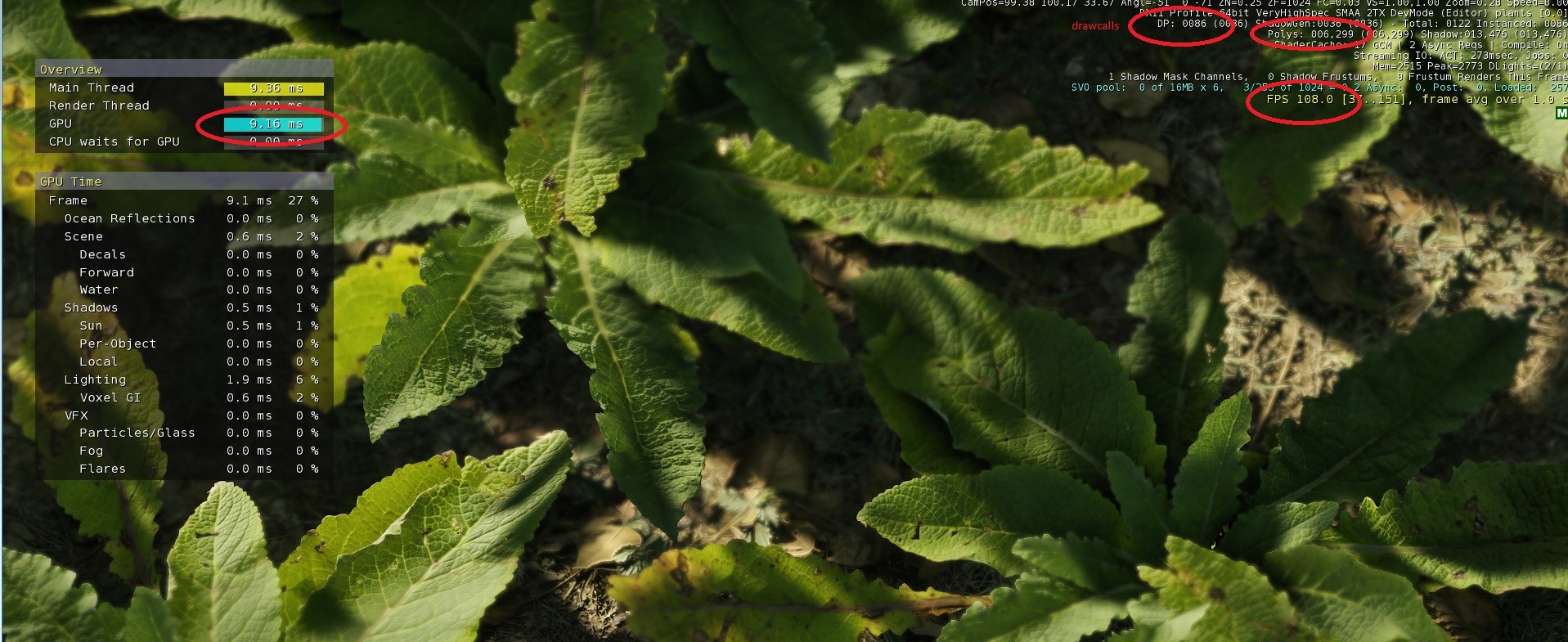
Crytek’s Senior Cinematic Artist, Joe Garth, has been experimenting with some leaves from Quixel Megascans in CRYENGINE, and shared some screenshots showcasing them. This scene was very light as it featured a few assets and very low amount of drawcalls/polygons, which is why it was running with more than 100fps (though we do not know the specs of the PC used).

As Joe stated:

“I try to keep my scenes and assets fairly light and not use any slower high end features. An optimized scene has lots of benefits, you can work much more quickly, render quickly (for pitchvis this is essential) and the scene could also be ported to lower spec devices (VR, low end pc’s etc).”

Kudos to Pritster5 for bringing this to our attention!

View post on imgur.com

18 thoughts on “Crytek’s Senior Cinematic Artist experiments with photorealistic textures in CRYENGINE”

    1. yea exactly, anyone can play around with textures .. tons of people play with the Unreal engine as well as Crytek , but actually implementing that in game.. don’t think we have ever seen that with the exception of Crysis.

    2. The cool thing about cryengine is it’s all real-time all the time so making a game with this fidelity would simply mean scaling up the amount of assets used. You will lose performance as you add more assets but it is possible with some beefy hardware.

      1. Not exactly, you can put the exact same assets into lets say cryengine and unity and unity for example will struggle to run any high end assets whereas cryengine can handle it well.

      2. Not all engines are realtime all the time like cryengine. Unity and Unreal are lightmap based so they won’t be capable of dynamic scenes with the fidelity shown above.

      3. It’s not really real-time all the time ever since consoles. They went back to baking things like static shadows to squeeze the last bit out of last-gen. Maybe they’ve revived the credo for current gen but I doubt it.

        1. Do you have a source for that? As far as I know cryengine has never ever gone the static “lightmap” route.

          1. Shadowmap, not lightmap. The lights were all real-time in C2 and 3 except for those “window reflections” hitting other buildings, those were probably baked, at least I don’t see a reason to do them in real-time, they couldn’t be interacted with in any way.

            And no, I don’t have a source on hand but Crytek did technical papers for siggraph about both games, the shadow trickery might be in there.

          2. Hmm, well if it’s from siggraph I’ll take your word for it because I do remember seeing something along those lines in their studies on Crysis 3.

  1. Not bad, still impressed to this day how good Crysis 3 looks even on low. Makes some games like Prey look like a joke.

  2. keep in mind that those are baked using lightmaps whereas Cryenghine is pure realtime, which imo makes cryengine more impressive

      1. Ahh true. When you said “in Unreal Engine” I thought you were implying that it was more impressive because of the fact he’s used Unreal Engine

        1. No way man. CE beats UE by a significance, especially in the lighting department. Rens De Boer just has his way with photogrammetry and models, probably look even sicker in CE.

Leave a Reply

Your email address will not be published. Required fields are marked *