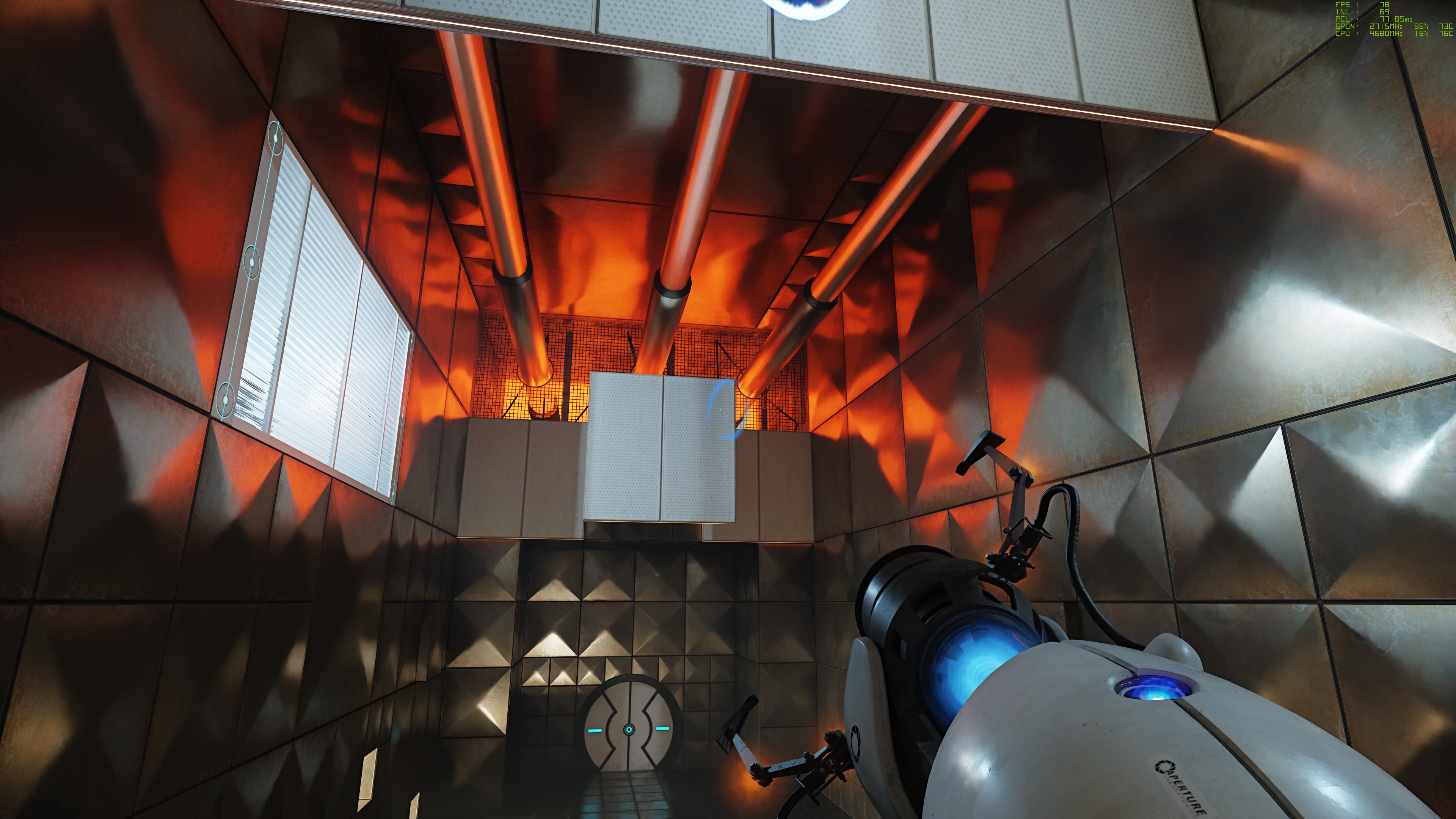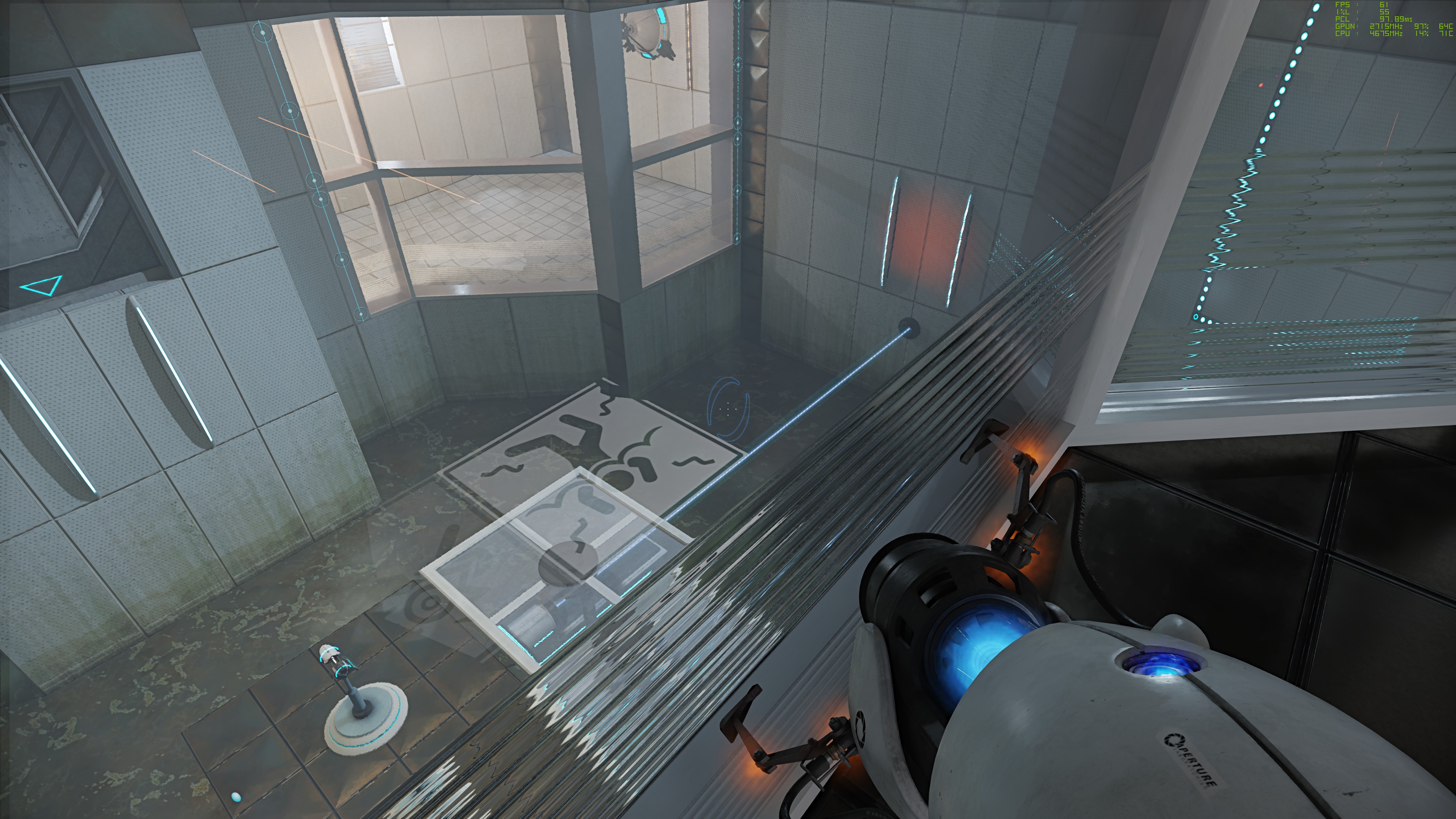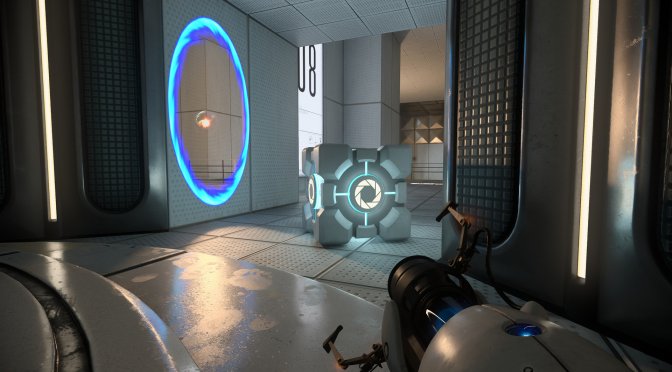
Portal RTX feature

Fully path-traced Portal RTX runs with constant 60fps on NVIDIA RTX4090 in 4K with DLSS 3 Quality

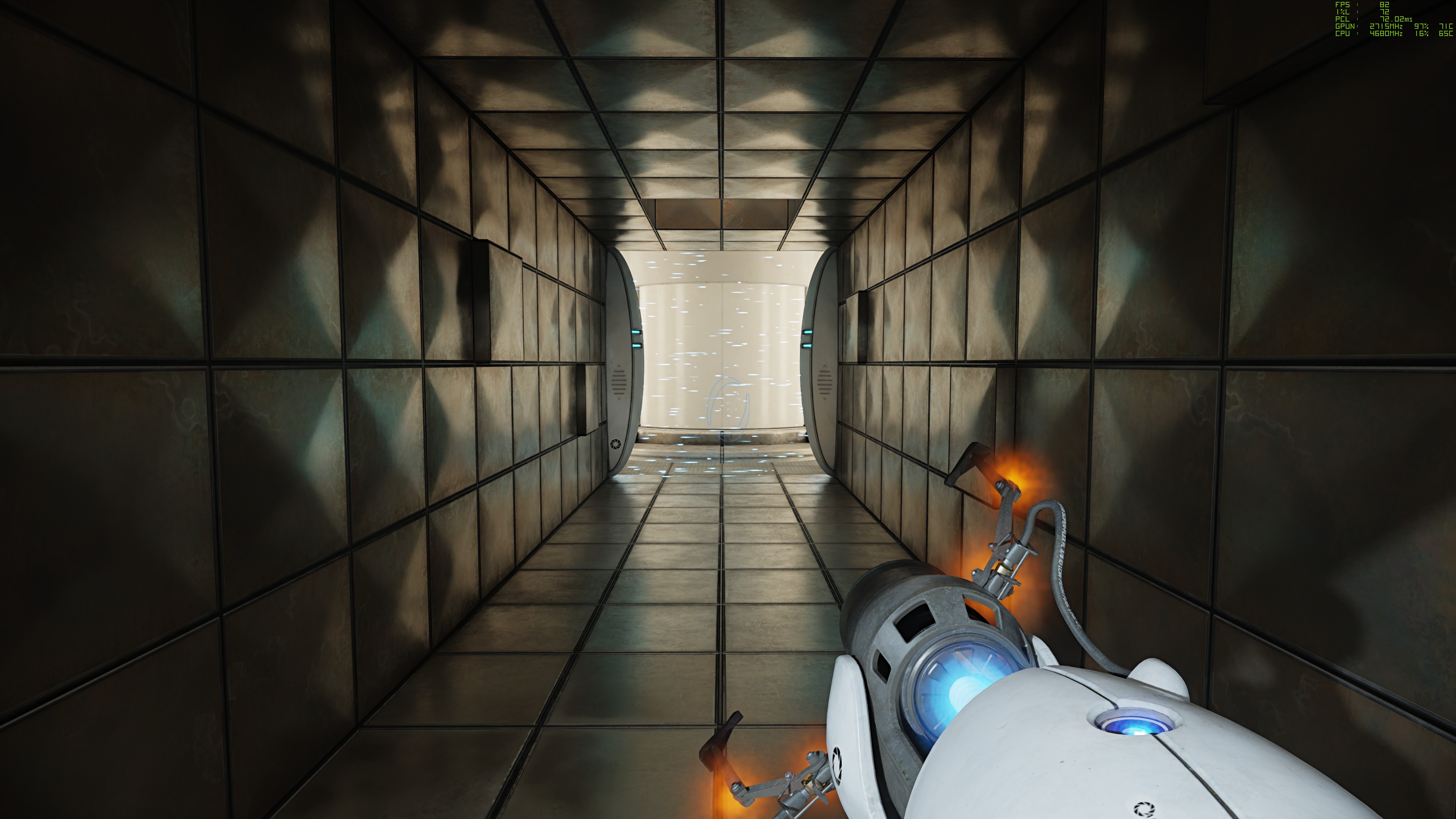
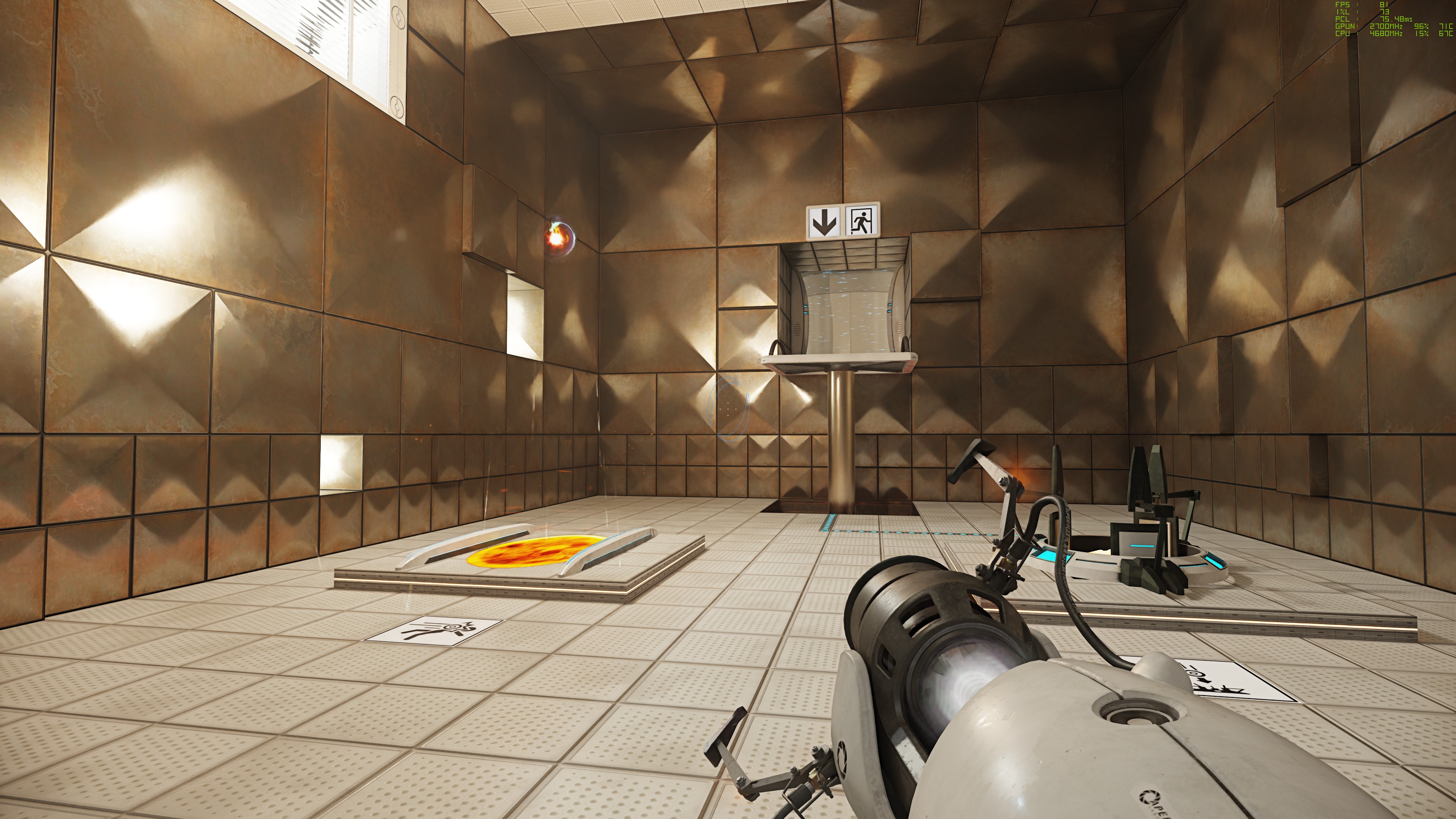
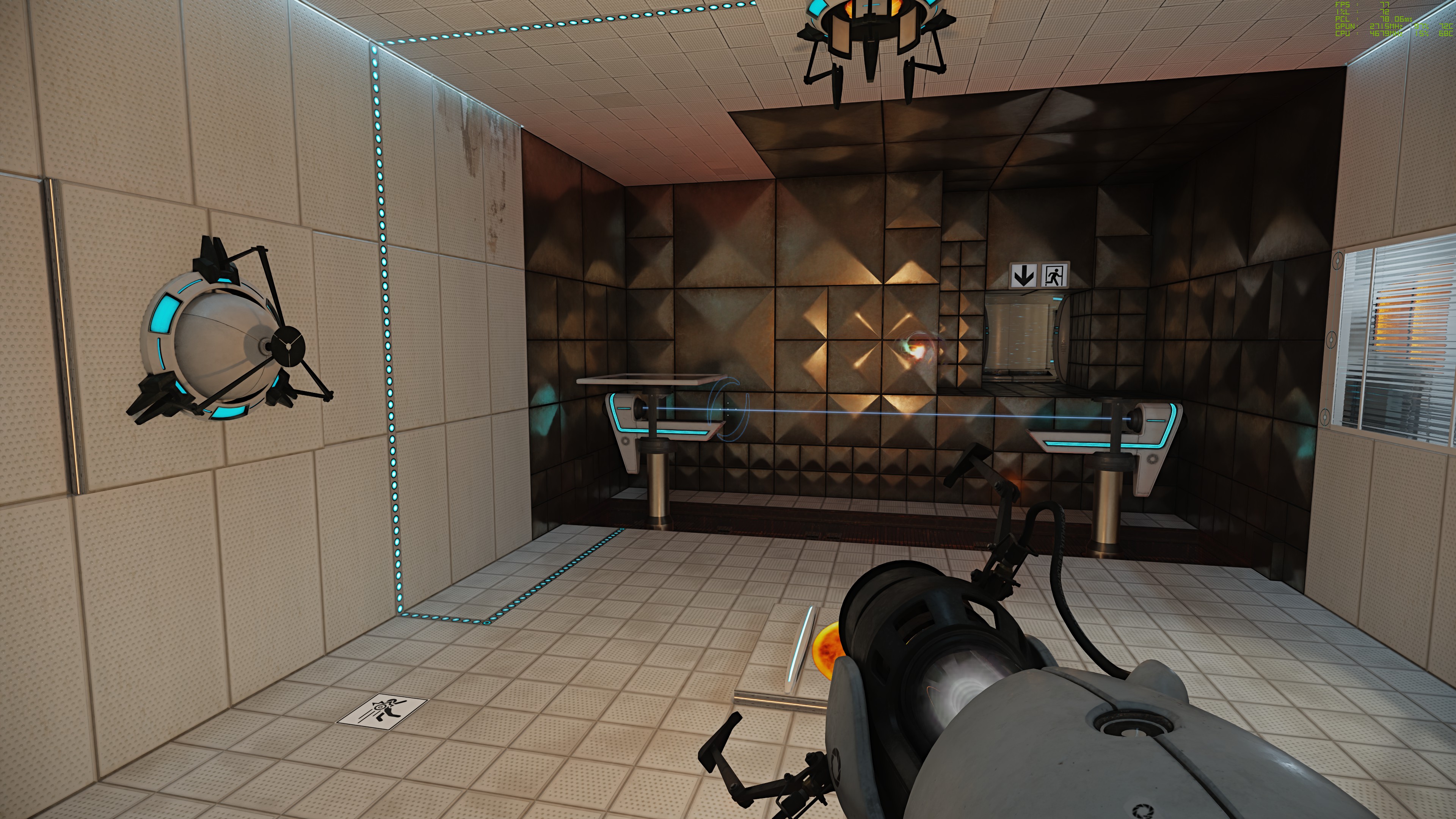
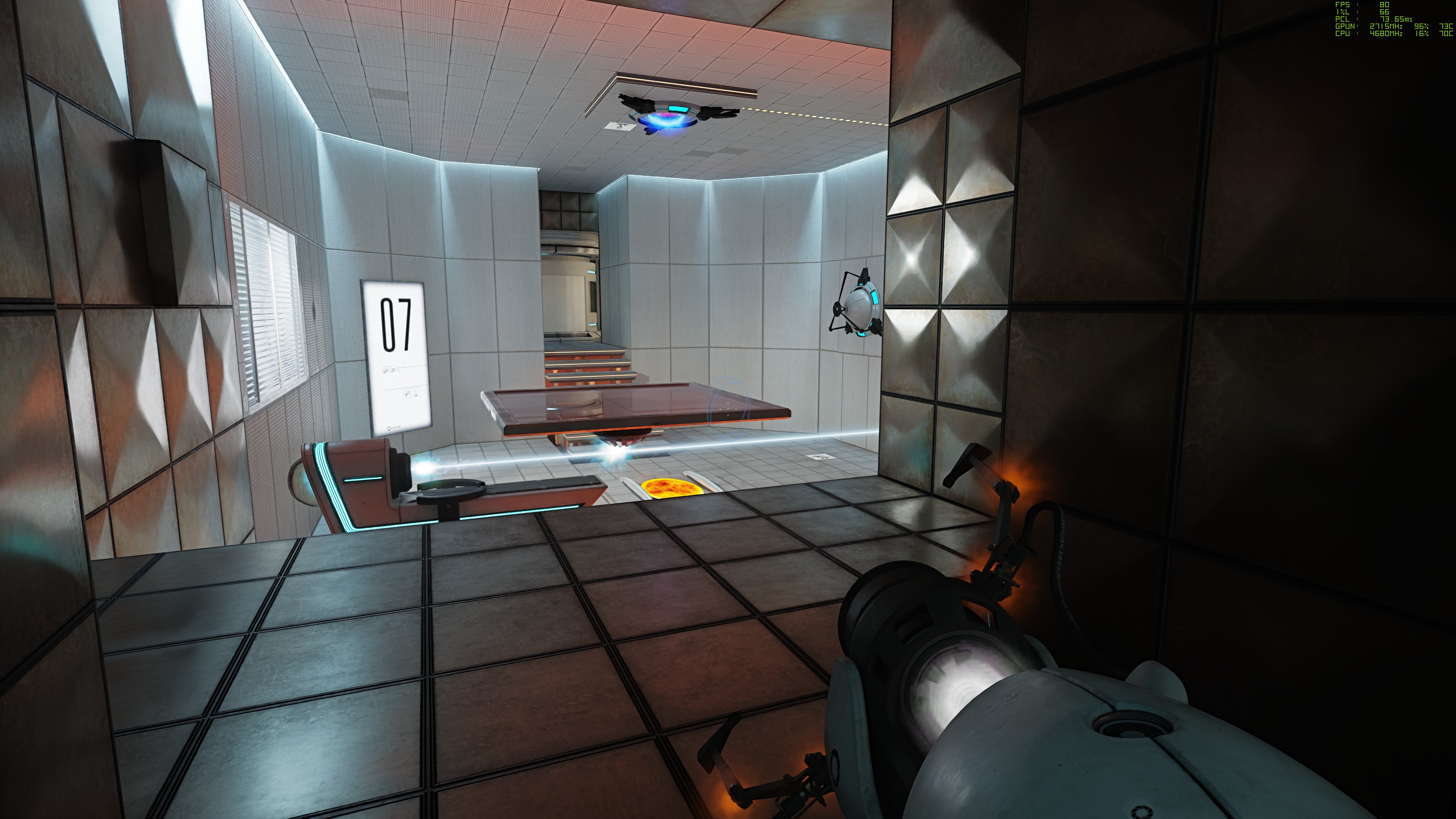
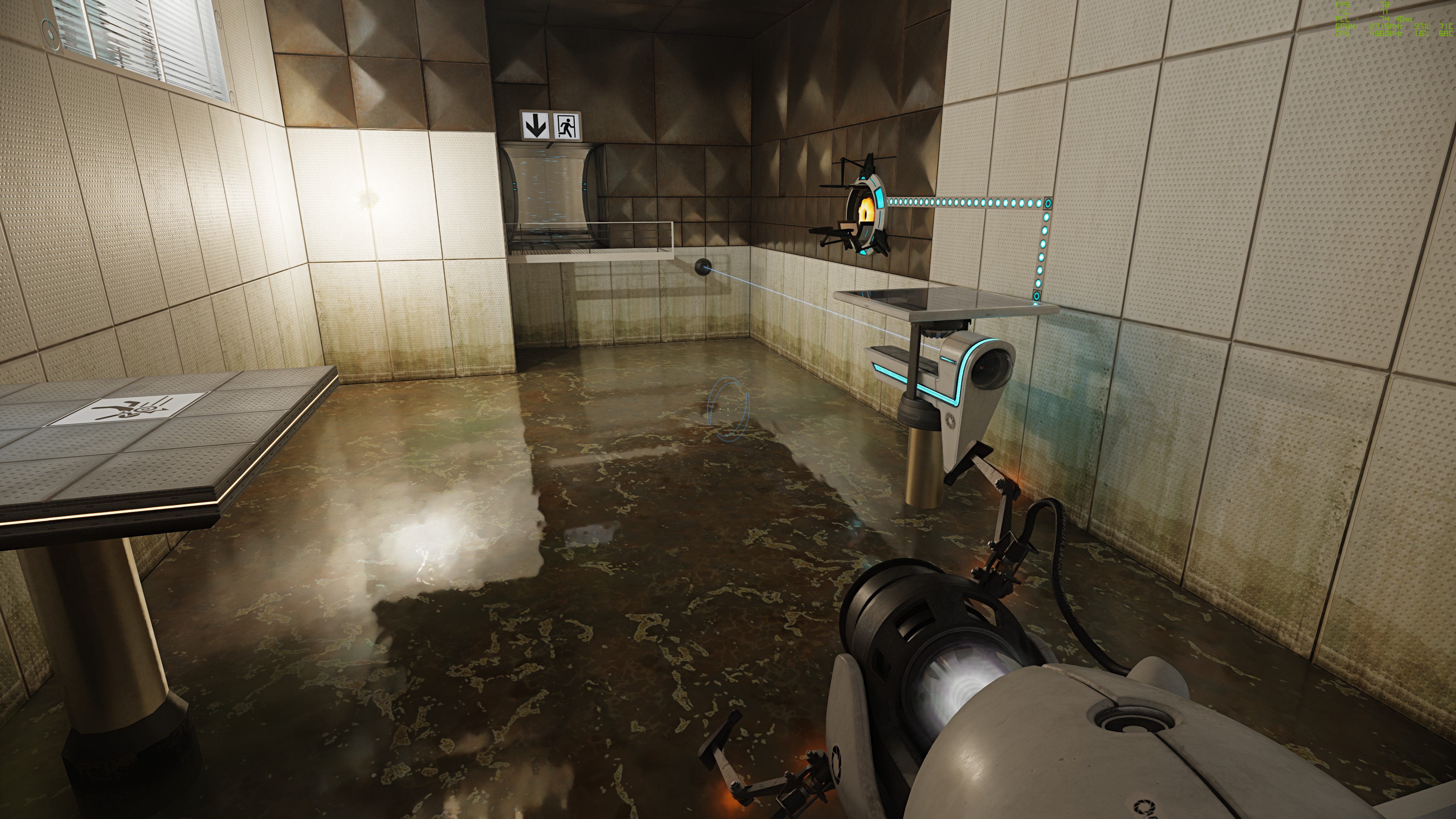
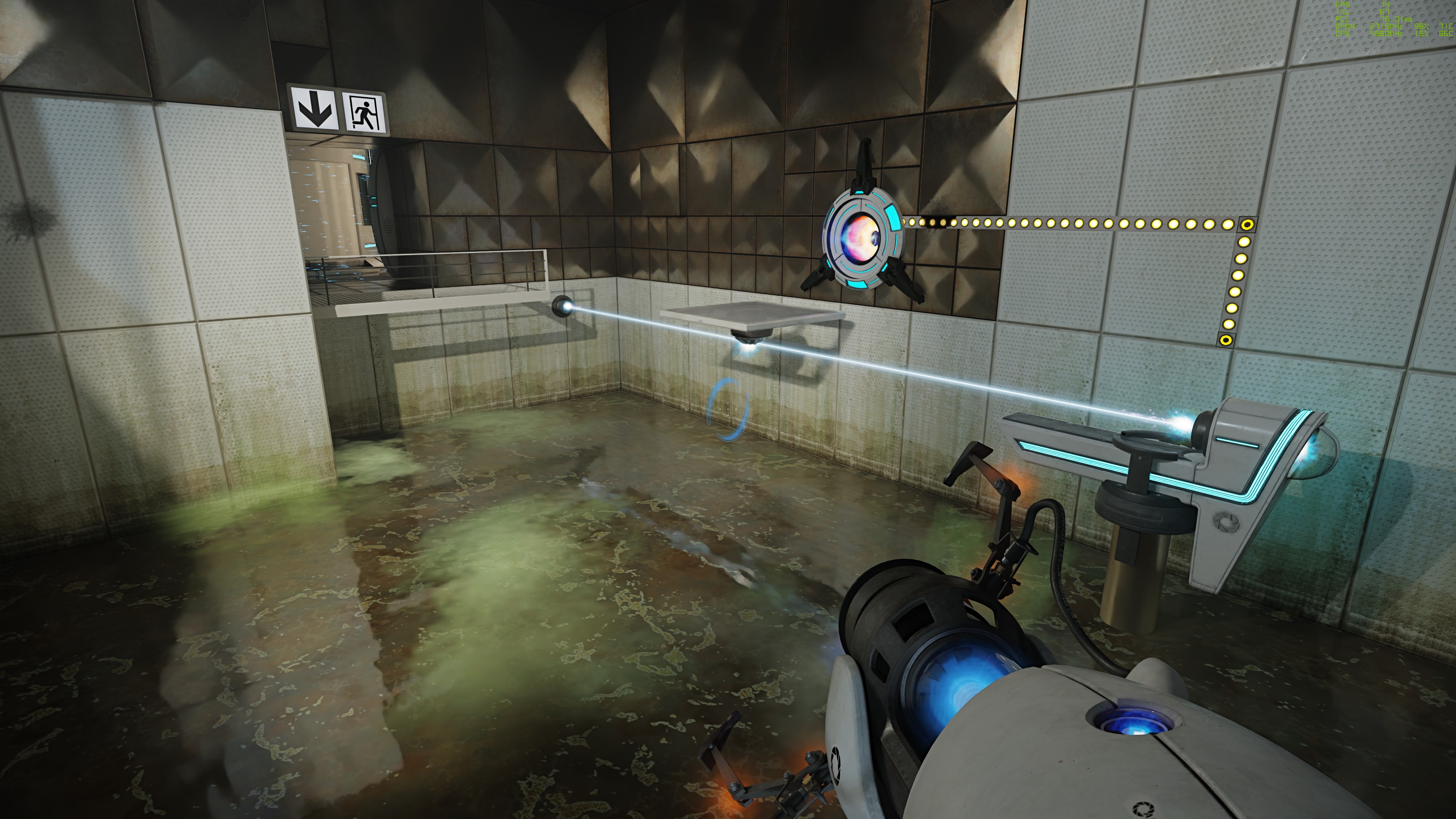
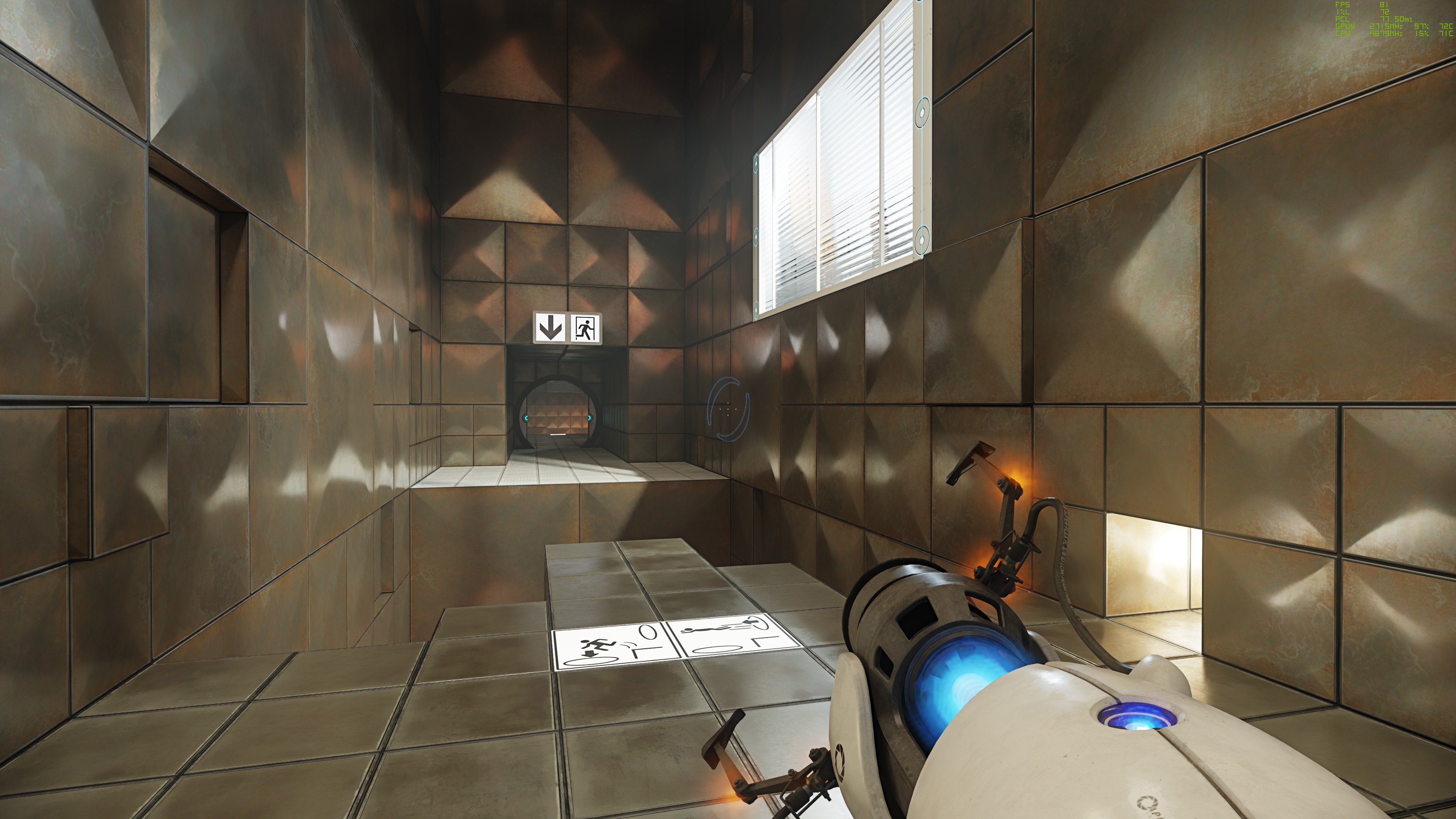
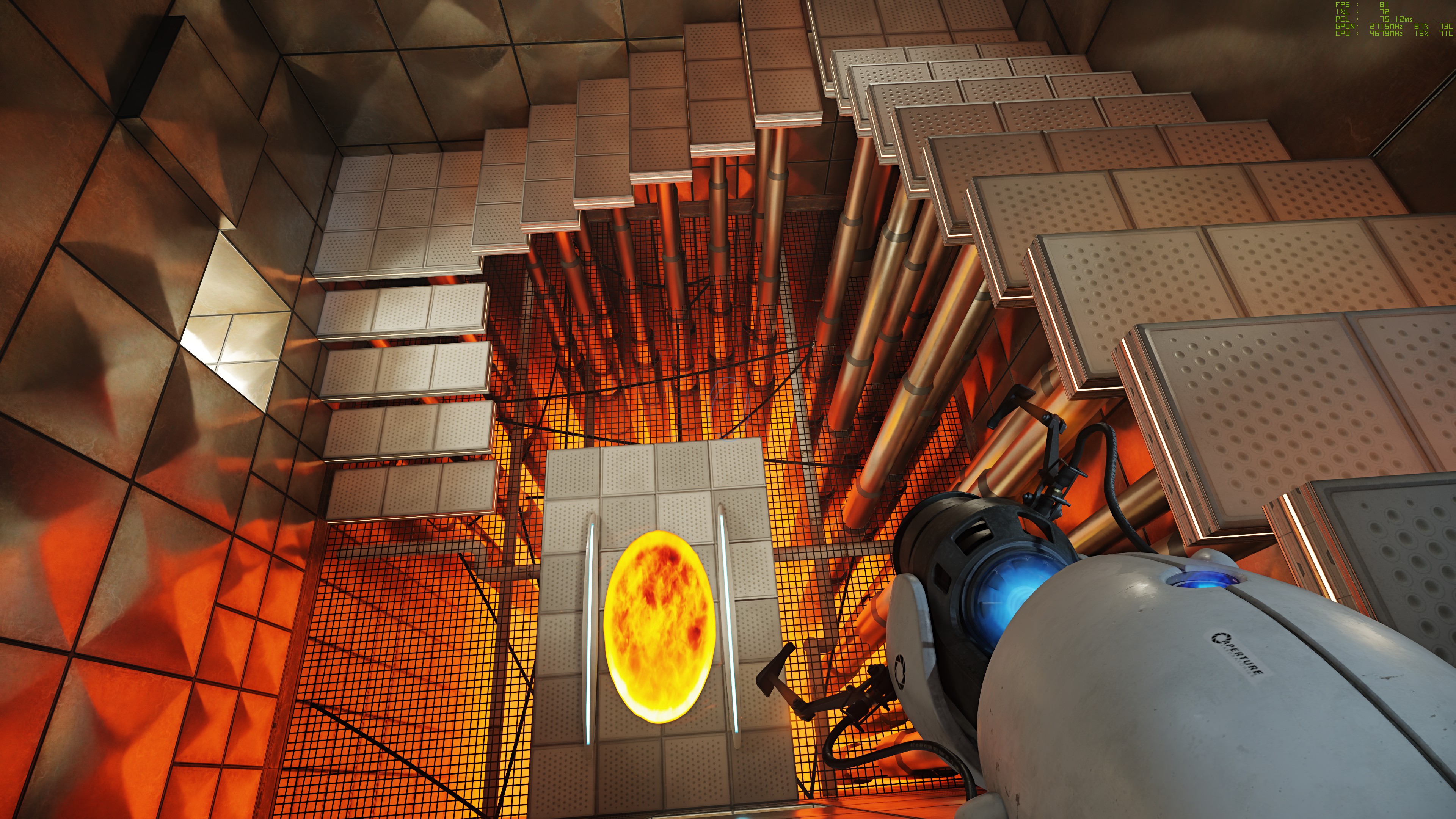
NVIDIA has provided us with a review code for the fully path-traced version of Portal, Portal RTX. And, since the green team has lifted its embargo, we can finally share our initial thoughts.

In order to capture the following screenshots (and test the game), we used an NVIDIA RTX 4090 Founders Endition. We paired the RTX4090 with an Intel i9 9900K, and 16GB of DDR4 at 3800Mhz. We also used Windows 10 64-bit, and the GeForce 526.86 driver. And as always, we set DLSS 3 to its Quality Mode.

For starters, Portal with RTX uses a ray tracing technique known as path tracing or full ray tracing. This technique unifies all lighting effects, such as shadows, reflections, refractions and more, into a single ray tracing algorithm.

Below you can find the key features that Portal RTX supports:

  • NVIDIA RTX Direct Illumination (RTXDI) allows for countless direct light sources, regardless of their size, to cast path-traced light and shadows.
  • NVIDIA Reservoir Spatio-Temporal Importance Resampling Global Illumination (ReSTIR GI) enhances indirect light, enabling it to bathe a scene and illuminate dark corners that are not lit directly. And it also works smarter than previous ray-traced global illumination techniques, improving the efficiency of our ray tracing denoiser.
  • NVIDIA Real-Time Denoisers (NRD) is a new spatio-temporal ray tracing denoising library that assists in converting raw ray-traced output in real-time, with superior performance and quality. Portal with RTX, RTX Remix, and other new ray-traced games and game updates leverage NRD for maximum quality and performance.
  • NVIDIA DLSS 3 – DLSS is a revolutionary breakthrough in neural graphics that massively boosts performance. Powered by fourth generation Tensor Cores and new Optical Flow Accelerator on GeForce RTX 40 Series GPUs, DLSS 3 uses AI to generate additional high-quality frames with great image quality and responsiveness.

For those unaware, it takes a lot of GPU power to run a fully path-traced title. So, with that in mind, we are happy to report that the NVIDIA RTX4090 can run Portal RTX with constant 60fps at 4K with DLSS 3 Quality.

We’ll be sharing our native 4K vs DLSS 3 Quality vs DLSS 2 Quality benchmarks later this week. Until then, enjoy the following screenshots!
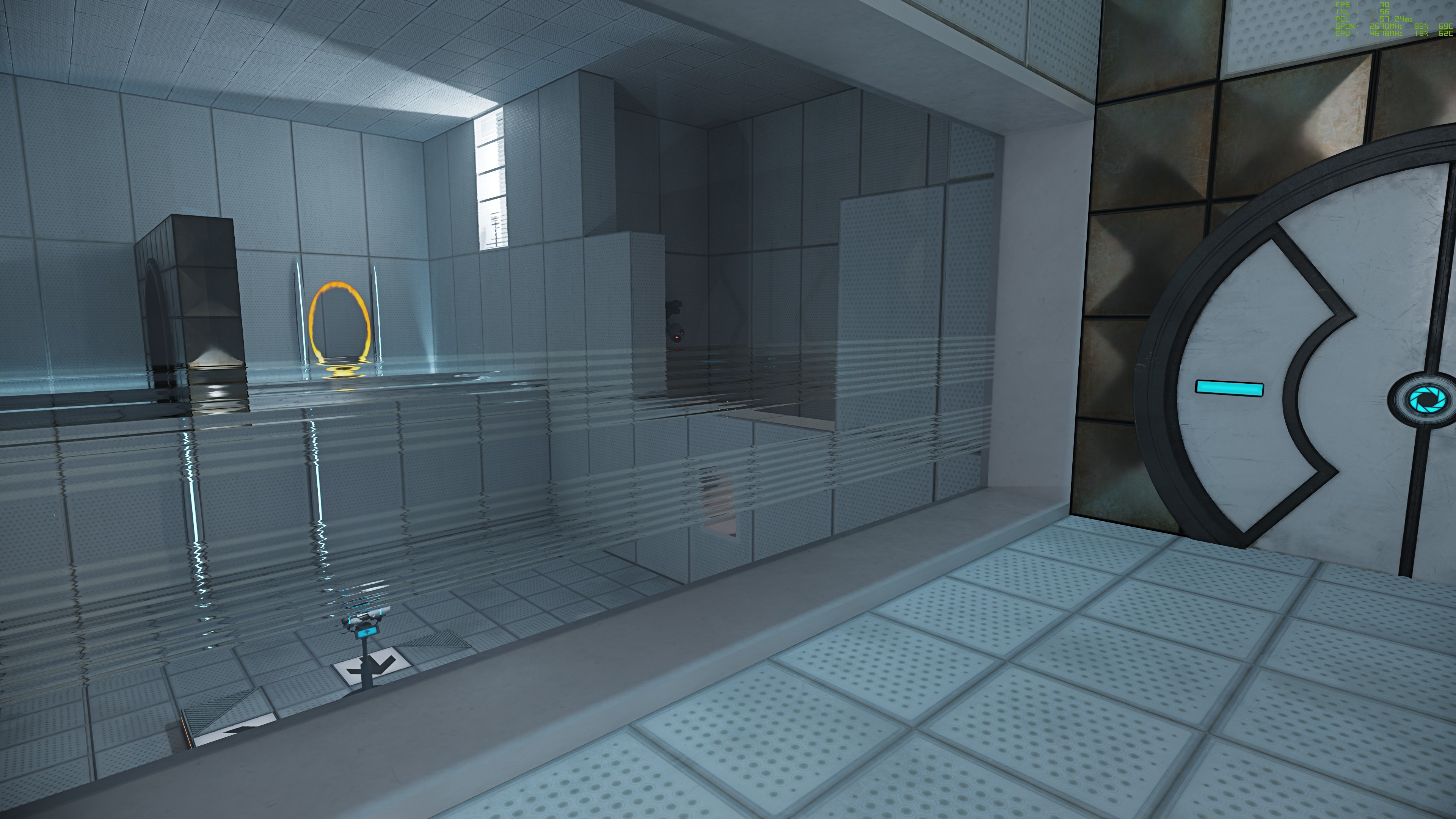
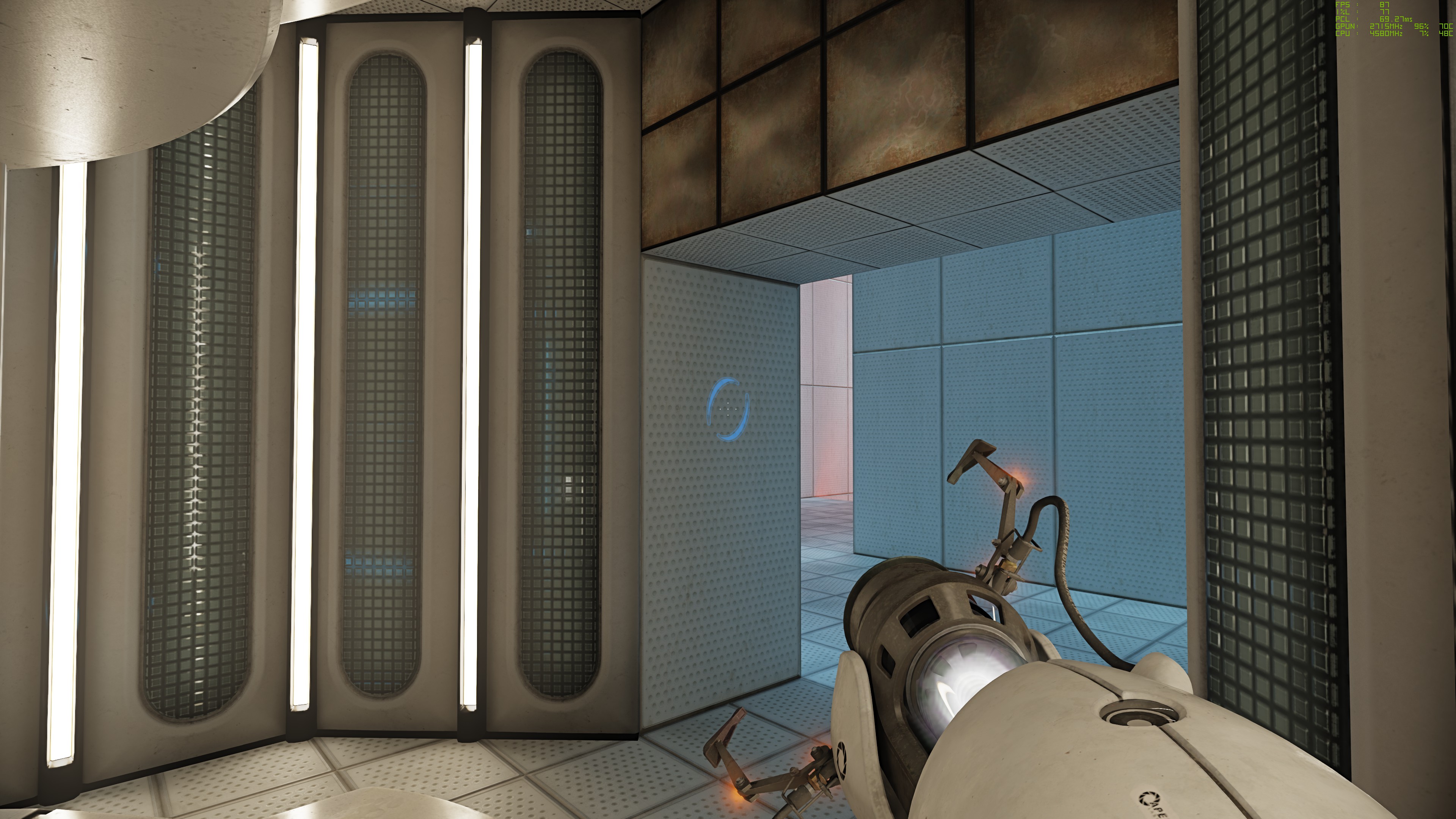
Portal RTX DLSS 3 4K screenshots-1Portal RTX DLSS 3 4K screenshots-2Portal RTX DLSS 3 4K screenshots-3 Portal RTX DLSS 3 4K screenshots-4Portal RTX DLSS 3 4K screenshots-5Portal RTX DLSS 3 4K screenshots-6 Portal RTX DLSS 3 4K screenshots-7Portal RTX DLSS 3 4K screenshots-8Portal RTX DLSS 3 4K screenshots-9 Portal RTX DLSS 3 4K screenshots-10Portal RTX DLSS 3 4K screenshots-11Portal RTX DLSS 3 4K screenshots-12 Portal RTX DLSS 3 4K screenshots-13Portal RTX DLSS 3 4K screenshots-14Portal RTX DLSS 3 4K screenshots-15

52 thoughts on “Fully path-traced Portal RTX runs with constant 60fps on NVIDIA RTX4090 in 4K with DLSS 3 Quality”

      1. This is just a texture on flat wall. Portal RTX use Direct 8 API from Windows 98. This is why game have flat walls instead 3D geometry like on DirectX 9 hardware from Windows XP

        1. The game has full PBR textures. Complaining the walls are flat in this version is some kind of special inbred BS. I would guess the more advanced version was rejected due to the use of shader code, actual program code, being used to simulate geometry. Using the same inbred BS I could argue that games that use shader code are producing fake frames as it’s not real geometry… Face meet palm…

          1. Texture is just a texture. Wall is flat because this is version for Windows 98 (DirectX 8)

          2. Texture is not just a texture. Yes ‘wall is flat’ but you fail to understand why this version was chosen. It doesn’t matter how much detail is added to ‘wall is flat’ it won’t change the performance of a path tracer.

      2. This is just a texture on flat wall. Portal RTX use Direct 8 API from Windows 98. This is why game have flat walls instead 3D geometry like in DirectX 9 hardware

    1. “Nvidia Remix don’t support DX9 games” This is simply not true. RTX Remix supports both D3D8 and D3D9 titles. No misinformation please. Plus, those textures are fully PBR.

      1. RTX Remix support only games that don’t use programmable shaders. You can use DirectX 8 or Direct 9 for fixed hardware – old hardware released before 2001. This is DirectX 8 emulation layer in DX9 API

        “supported DirectX 8 and DirectX 9 games with fixed function graphics pipelines”

        “From the early 1980s to the late 1990s, the leading performance graphics hardware was fixed-function pipelines that were configurable, but not programmable”

  1. Good god what is this a thing, add RT to perfomance-lite games and make out it its a good thing. On a 4090 with Frame Gen on, the FPS should have been a lot higher than 60.

    No, its a novelty at best.

  2. its obviously overdone ray tracing just to make AMD look bad and only a 1500+ card to be able to run it. Metro did it with logical performance penalty but its nvidia here.

    1. It’s a path tracer. You can’t over do it. AMD is just that bad with RT. Metro Exodus Enhanced was the rasterised game with RTGI on top.

      1. MEE, SotTR, Doom Eternal, The Witcher, Arkham Knight, etc. should’ve been the titles that deserved NVIDIA’s next-gen update. Not this cartoon-ish relic Steam’s mess.

        Edit:

        Yeah, I see why this cartoon-ish title was cherry-picked now. Nothing in a window within the last 8-years can render this already DOA of features. Another GameWorks debacle all over again.

        1. You’re missing the point of this title. This is to show off Remix, a path tracer that sits on top of a title capturing the geometry and textures used. It allows the user to alter the textures on the fly and then renders the game using a full path tracer. The only reason it is currently limited to old titles are that it is very difficult to interpret shader code, used in more modern titles such as those you listed, which has no geometry. It’s also worth noting that a path tracer isn’t really effected by the amount of geometry and so in theory could render these newer titles, without shader code, given enough RAM/VRAM.

        1. If you took the time to learn about RT rather than just spreading BS you would understand why it’s so intensive.

          1. 3rd generation of rtx cards and we still on DLSS, i care about facts not excuses. if you are fine with beta testings expensive products, good for you. i want results.

          2. What is wrong with DLSS? At 1440p I used it with a 3080 since launch and now a 4090. It’s fantastic tech which I turn on to both reduce power and reduce shimmer. DLSS is here to stay.

            Do you want to spend upwards of 12 grand for a GPU to play without DLSS, not to mention the huge power bill?

        2. Right, the new 8k 4090 24gb, allowing you to play remastered 15 year old titles at 4k with 60fps, if you choose to allow fake info smear your screen.

  3. Portal was a fun game for me but it was short. Portal 2 was great. So why won’t there be a Portal 3? Because Gabe Newell has a serious issue with the number 3

    No Half Life 2 Ep 3
    No Half Life 3
    No L4D3
    No Portal 3

    1. The flat management structure is to be blame. You likely got a lot of people sitting around with thumbs in their a**es, collecting pay cheques. The company will likely go to absolute shxt once Gabe retires or croaks. The types of communist, ideology driven losers you have in tech can’t run a company to save their lives.

    2. Until steam,their money maker, going collapse, Valve wont have the urgency to develop another game. That flat structure also to be blame, because why bother commit on creating full blown sequel while you can just iterate many unnecessary st*pid little ‘economic’ feature on Steam that can be done in shorter time and still feels like you achieve something as seen by Gaben

    3. Until steam,their money maker, going collapse, Valve wont have the urgency to develop another game. That flat structure also to be blame, because why bother commit on creating full blown sequel while you can just iterate many unnecessary st*pid little ‘economic’ feature on Steam that can be done in shorter time and still feels like you achieve something as seen by Gaben

    1. Portal with RTX, RTX Remix, and other new ray-traced games and game updates leverage NRD for maximum quality and performance.

      Clearly, the above statement is a lie. So, not even the 50 series, but it will take the 60 series (2026) cards just to run full path-tracing titles at a native 30fps @ .01%, huh?! ? Almost there, folks!
      /s ?

      1. Raytracing is memory intensive, this issue will be avoided with DirectStorage but until then we’re doomed.

  4. John, I’ve read the game supports both DX12 & Vulkan.

    Have You compared the two here?
    And which API did You use to take those screenshots?

    Thanks in advance!

  5. All the shiny reflections just make it look worse.

    I am increasingly starting to dislike raytracving.

    Outside of a mirror, the world is not very reflective and raytracing just makes scenes looks artificial.

    Light doesn’t really bounce around several times in real life, it mostly just fades away after the second bounce, it doesn’t have the energy to bounce several times.

    Yes if you put 2 mirrors in front of each other, light will bounce many many times because the energy is mostly retained, but the world is not built with mirrors, the world is not very reflective.

    Specular highlights are not reflections. You don’t need raytracing for specular highlights, you just need to do a single dot product with the lightsource vector.

    Raytracing makes light bounce 10, 20 times, until there is a wash of lights everywhere. Raytracing algorithms are forced to do this because raytracing works in reverse, each pixels needs to find the lighsource it is lit by. So you get way too many light bounces that don’t really happen in real life, and because of that, raytracing makes everything look too colorful, too reflective, etc.

    In theory there would be accurate material properties that define how much light each material absorbs and reflects, but game designers have no time to do that, and due to the amount of bouncing rays used in raytracing to find the lightsource, even a minor mistake in material properties, makes something look too shiny or colors the material in the wrong way.

    1. If only there were a company out there that could take the time to develop all the material sources for assets, and license them to the devs so that we could have better RTX implementation….

    2. I dont know why many dislikes you, but Im also feeling the same. Many raster technique already mimicking RayTracing quite well. In racing game for example, GT 7 and FH5 already did the right thing by limiting RT reflection only at Photo Mode and Forza Vista because it mostly didnt need it during fast tempo of a racing game, cube map in car surface is enough to create the illusion of reflection. Keep RayTracing at Global Illumination is enough while other part utilising traditional raster technique to keep performance.

    1. RTX 7000 GPUs will probably be listed as 16/32k, but will be rendered at 4k and upscaled, and then we will have true 4k GPU’s capable of high fps on Native resolutions. Sad part is we will be being sold monitors of 16k+ without native solutions much like today. Still think it is funny that the 4080 has less Cuda cores than a 3080 ti. Grant it the cores are more efficient, but that would be like saying new 6 cylinders are more efficient than 8, so we will sell you the cost of what used to be 8 at the cost of what was 6…. times 2.5

    1. I love all my PS5 friends with their huge 4k televisions, running 1080p games checkered and upscaled to “4k”. I will stick with 1080p true to resolution pixel perfect high fps, thank you very much.

  6. No it does not run at “constant 60 fps” at 4k with quality DLSS. Right there on techpowerup they only averaged 64 fps even with balanced. That means even balanced would have minimums well below 60 fp and quality would not even be able to average 60 fps.

    1. TechPowerUp used DLSS 2, not DLSS 3. We are also using a more demanding area for our upcoming benchmarks. For instance, in our benchmark scene we have 18fps/24fps on the RTX4090 at native 4K.

Leave a Reply

Your email address will not be published. Required fields are marked *