
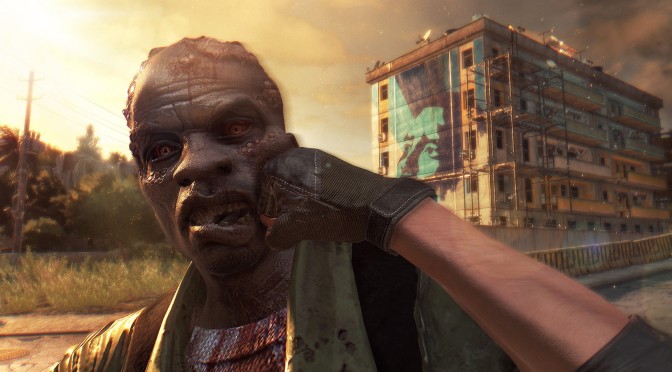
Techland have announced that they used Simplygon, the leading automatic 3D optimization solution for digital content creation, in the continuing development of their game. This tech allowed Techland to reduce the polycount of some of the game’s key assets by 70%.
Rafa? Zerych, Asset Manager at Techland, said:
“We have used Simplygon mostly to reduce polycount on character models and to prepare shadow casting geometry for them. In most cases the size was reduced to less than 30% for LODs and less than 25% for shadow casters. Simplygon helped us to prepare our main character assets that generate 99% of the NPCs in Dying Light, and weeks of work was done in just a few days.”
Dying Light’s main character assets consist over 20 character models with over 100 elements each. Each element had to be made in a Level Of Detail (LOD) version and an additional 24 had to be made in shadow casting versions. That was just one character model, with animation skinning and fully mapped textures.
For Techland, there was no time for remapping and reskinning and no place for errors. In numbers, Dying Light’s most complicated character asset, with all elements, comes in at 144,988 triangles. Simplygon reduced that to 34,849 in total.
Shadow casting geometry was created in just few clicks with geometry of 28,241 triangles. All 20 character models have about 800,000 triangles in total and this was reduced to around 240,000 triangles in total.
In case you weren’t aware of, Simplygon helps digital content creators save important resources where artists would otherwise need to manually re-create large amounts of content by automatically generating lower-polygon models that are required for different levels of detail (LOD).

John is the founder and Editor in Chief at DSOGaming. He is a PC gaming fan and highly supports the modding and indie communities. Before creating DSOGaming, John worked on numerous gaming websites. While he is a die-hard PC gamer, his gaming roots can be found on consoles. John loved – and still does – the 16-bit consoles, and considers SNES to be one of the best consoles. Still, the PC platform won him over consoles. That was mainly due to 3DFX and its iconic dedicated 3D accelerator graphics card, Voodoo 2. John has also written a higher degree thesis on the “The Evolution of PC graphics cards.”
Contact: Email