
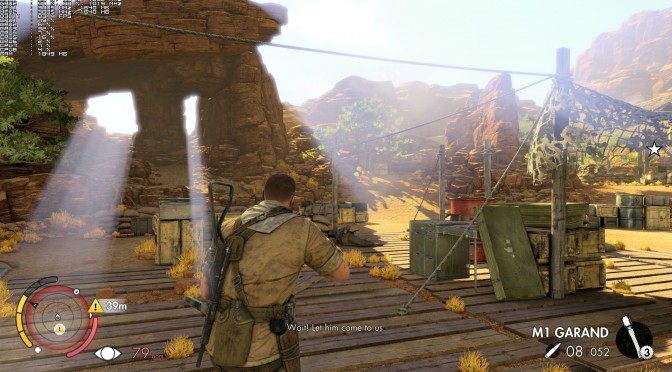
A couple of days ago, we had the pleasure of interviewing Kevin Floyer-Lea, Head of Programming at Rebellion. Kevin shared some new details with us about the tech features of the Asura Engine, its Multicore CPU capabilities, and the ‘Obscurance Fields’ setting (that most of you didn’t know for what it was responsible for). In addition, Kevin shared his thoughts on Mantle, DX12 (as well as DX11.2), a possible new Aliens vs Predator game and the advantages/disadvantages of self-publishing a PC game. Enjoy the interview after the jump!
DSOGaming: Before we begin, please introduce yourselves to our readers.
Kevin Floyer-Lea: Hi, I’m Kevin Floyer-Lea, Head of Programming here at Rebellion. I’m the architect of our in-house Asura engine. I’ve been at Rebellion for 19 years now – back in the 90s I was lead programmer on the original PC version of Aliens vs Predator. I’ve been making PC games since before these new-fangled GPUs became fashionable, and have vague memories of writing software rasterizers in machine code.
DSOG: Sniper Elite 3 will be powered by the Asura engine if we are not mistaken. Can you share some tech details about the engine and its features?
Kevin Floyer-Lea: The Asura engine has been under constant development for over 14 years now – we’re continually adding, removing and refining. We went to a fully deferred approach about 8 or 9 years ago, and our rendering tech has been steadily improving over that time, based on the needs of the games we’re developing. For Sniper Elite 3 for example, we needed a system that could cope with dynamic shadows and bounced light from a bright, desert sun. In day levels the sun and sky are pretty much the only light sources, with everything lit procedurally. In night time settings the deferred approach means we can have hundreds of light sources dotted around as well as the gentle moonlight. I don’t think we actually have any hard limit to the number of light sources; it’s left to the artists’ discretion!
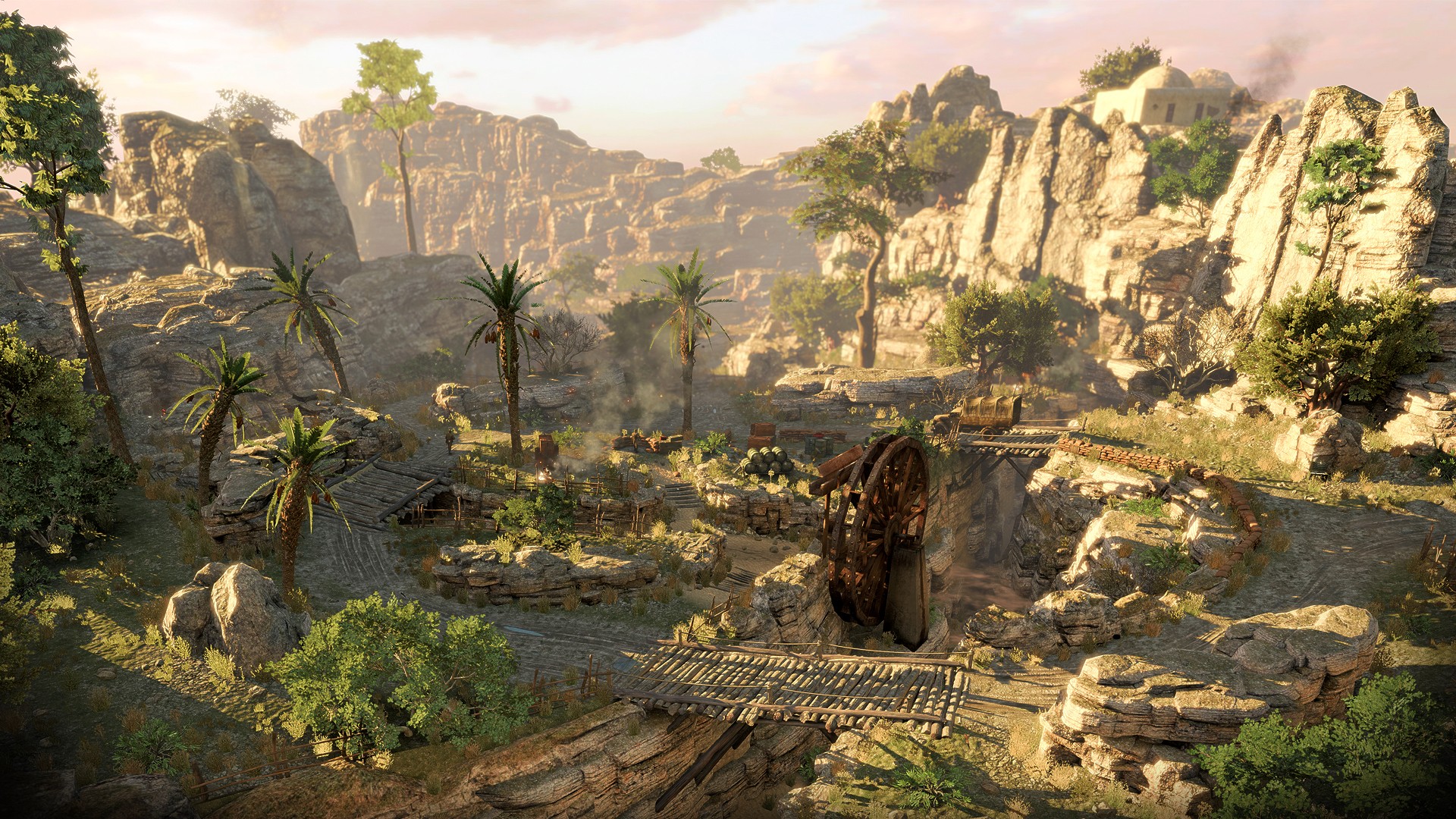
DSOG: With Sniper Elite V2 we noticed that there wasn’t any performance difference with the number of CPU cores. In our analysis of Sniper Elite 3 we saw performance differences between dual-cores, tri-cores and quad-cores. Hell, the game even benefits from penta-cores, something that really surprised us. What’s changed?
Kevin Floyer-Lea: Yes, Sniper Elite 3 should definitely scale to any number of CPU cores. We have a task system that creates as many worker threads as the machine has logical processors. Work for culling, rendering, animation, AI, physics and so on is split into smaller jobs and all thrown at the task system. So as long as the number of tasks is high enough, the engine should in theory just keep scaling as you add more and more cores. On Sniper Elite V2 a lot of the AI and animation work was to a large extent single-threaded – now on Sniper Elite 3 it’s multithreaded via the task system. That makes a huge difference, and was a definite requirement now we have bigger, more open levels where 60 to 80 NPCs may be roaming around simultaneously.
DSOG: Sniper Elite 3 will take advantage of the new API, Mantle. Can you share your thoughts on this API? Why did you decide to support it? Is the performance boost significant? Did you have any trouble programming for that particular API and how different is it compared to Direct 3D?
Kevin Floyer-Lea: We’re always keen to be on the forefront with our technology – we shipped one of the very first D3D11 games for example. For years we’d been asking for a lower level approach to PC graphics much like we have on consoles, so Mantle fits the bill perfectly.
The speed difference on CPU is startling – the driver overhead we’re used to has disappeared. We can now easily construct command buffers multithreaded and then submit them to the GPU with the minimum of fuss, which makes us even more multi-core friendly and scaleable.
It’s also made apparent just how much work was going on behind the scenes with Direct3D and the associated drivers – memory being copied around, duplicate buffers holding data as it’s moved into different areas of VRAM, that sort of thing. Suddenly we have direct control over that – and that leads on to new optimisations which wouldn’t have occurred to us before. It’s not so much the immediate improvements that excite us as the potential for future advances.
DSOG: What’s your opinion on OpenGL and Direct 3D? OpenGL is said to support a lot of low-level access commands. On the other hand, MS introduced DX12 (an API that will most probably allow low-level access) at this year’s GDC. Do you feel that Mantle is in danger from the get-go?
Kevin Floyer-Lea: Whilst we’ve always used Direct3D on our PC titles, we’re very familiar with OpenGL as Asura uses it on other platforms such as mobile. Because we have a very flexible engine architecture and are very experienced at supporting new platforms, new rendering APIs on PC don’t faze us. The bottom line is that we’ll support and use whichever APIs give our players the best performance. D3D12 is definitely a step in the right direction in that regard. As it currently stands there is no reason to see why D3D12 and Mantle can’t co-exist – especially if it turns out that D3D12 is limited to newer versions of Windows. If nothing else Mantle is establishing the importance of low-level, minimal APIs, for which we’re very thankful.
DSOG: Tech wise, what’s the key graphical feature of Sniper Elite 3 that you are mostly proud of?
Kevin Floyer-Lea: It would probably be one of our compute shader techniques we call “obscurance fields”. This is the tech which allows us to have soft shadows from characters on any surrounding geometry. As well as shadowing against the world it also means characters have natural self-shadows – e.g. the inside of the legs, under the chin, an arm moving across the body. It’s one of those effects you just stop noticing after a while because from real world experience you expect lighting to look like that – it’s only when you turn it off that you notice how big a difference it makes!
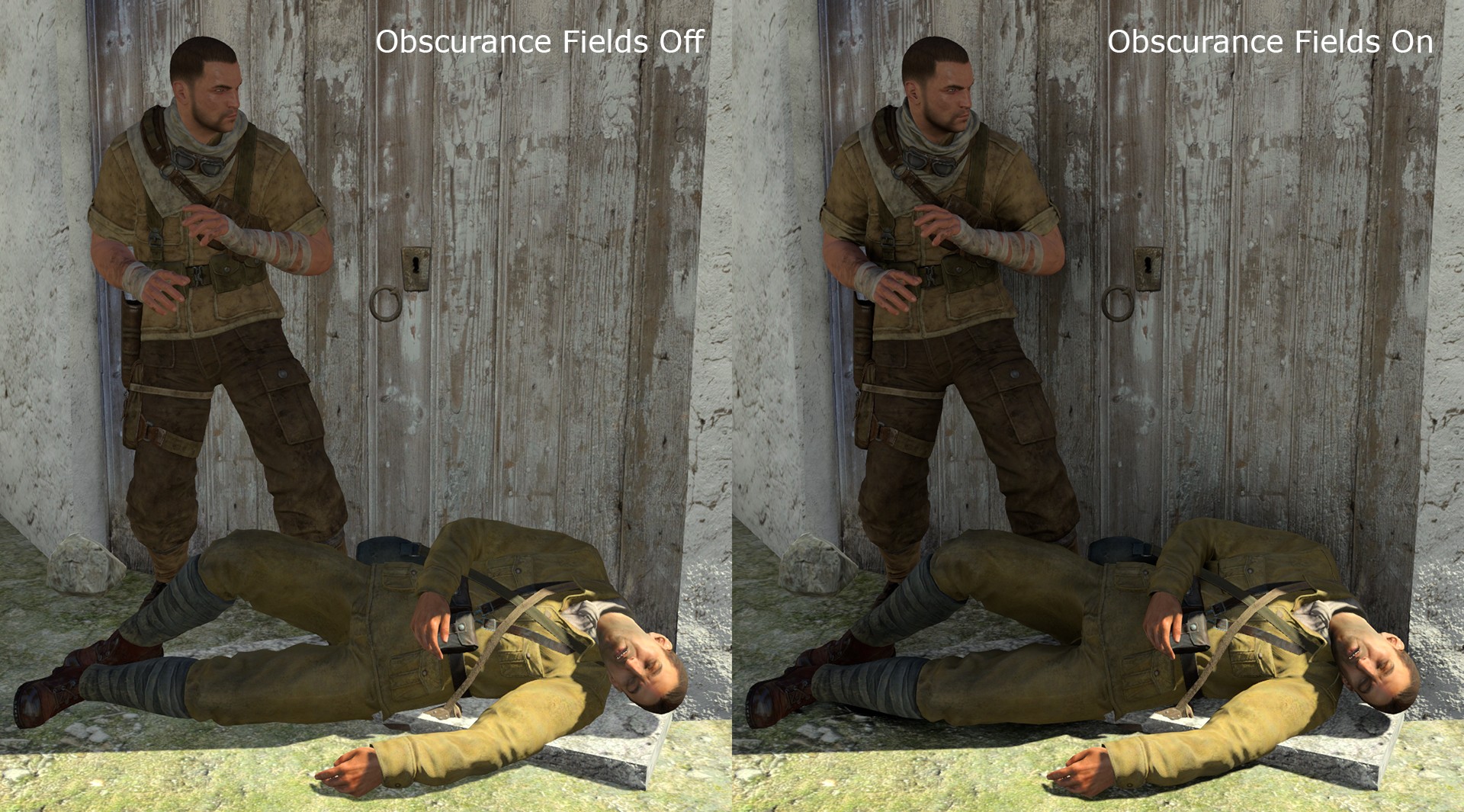
Internally each character model has a simplified representation made of spheres and ellipsoids. For each pixel on screen we work out a shadowing factor for every obscurance sphere/ellipsoid in the world, which is based on the size of the obscurer and the pixel’s relative distance/angle to it. In essence it’s an analytical form of ray tracing.
If that sounds extremely costly – working out how obscured each pixel on screen is by potentially hundreds of objects – it would be if it wasn’t massively parallelised. Thanks to compute shaders this runs on thousands of threads simultaneously, and costs a similar amount to other ambient occlusion techniques. However, there are great differences between this and the more traditional “screen space ambient occlusion” methods – for a start with SSAO a pixel can’t be occluded by anything which is off screen or hidden, as the depth buffer is used to work out the occlusion.
With our obscurance fields a character can be off screen or hidden behind something else and will still generate shadows. The other big difference is that most SSAO techniques are taking probabilistic samples and thus the output needs to be smoothed or blurred to look good. With obscurance fields because we have an exact analytical answer to how obscured each pixel is by a given object, we can just use the results as is and have the correct soft falloff you’d expect to see in the real world.
DSOG: What were the challenges of creating an open-world environment for Sniper Elite 3?
Kevin Floyer-Lea: The more open environments affect every aspect of production – they take longer to design and build, and much longer to test. We changed our production methods and pipelines quite a few times as we adjusted to problems and bottlenecks we found along the way.
Obviously in terms of the engine, open worlds mean we need to render so much more and can’t easily restrict the number of AIs which are active at any one time. It’s particularly difficult when it comes to streaming tech, since the player can at any time suddenly zoom in to an area hundreds of metres away – in any direction around them. Textures can be a real problem, because we have hundreds of high detail textures and if the user doesn’t have a great deal of VRAM we have to constantly juggle what’s on the GPU. It’s one of the areas we need to improve on in the future.
DSOG: What are the advantages and disadvantages of self-publishing the PC version of Sniper Elite 3?
Kevin Floyer-Lea: One of the biggest advantages from a developer’s point of view is that we’re more in control of updates and patches, and can react to players more directly. We don’t have to seek approval from a third party every step of the way. The Mantle work is actually a good example of this – an external publisher might not see the benefits of it, but for us it’s all part of a long term plan. Similarly for Sniper Elite V2 we made a point of periodically releasing new multiplayer levels for free, so as not to split up the multiplayer community – something we’ll be doing again with Sniper Elite 3.
As for disadvantages – well we’re still learning and making the transition from indie developer to indie developer-publisher. Some things we have to discover the hard way.
DSOG: Will Sniper Elite 3 support tessellation? And if so, have you experimented with it (adaptive tessellation) in order to eliminate the pop-up/pop-in of distant objects?
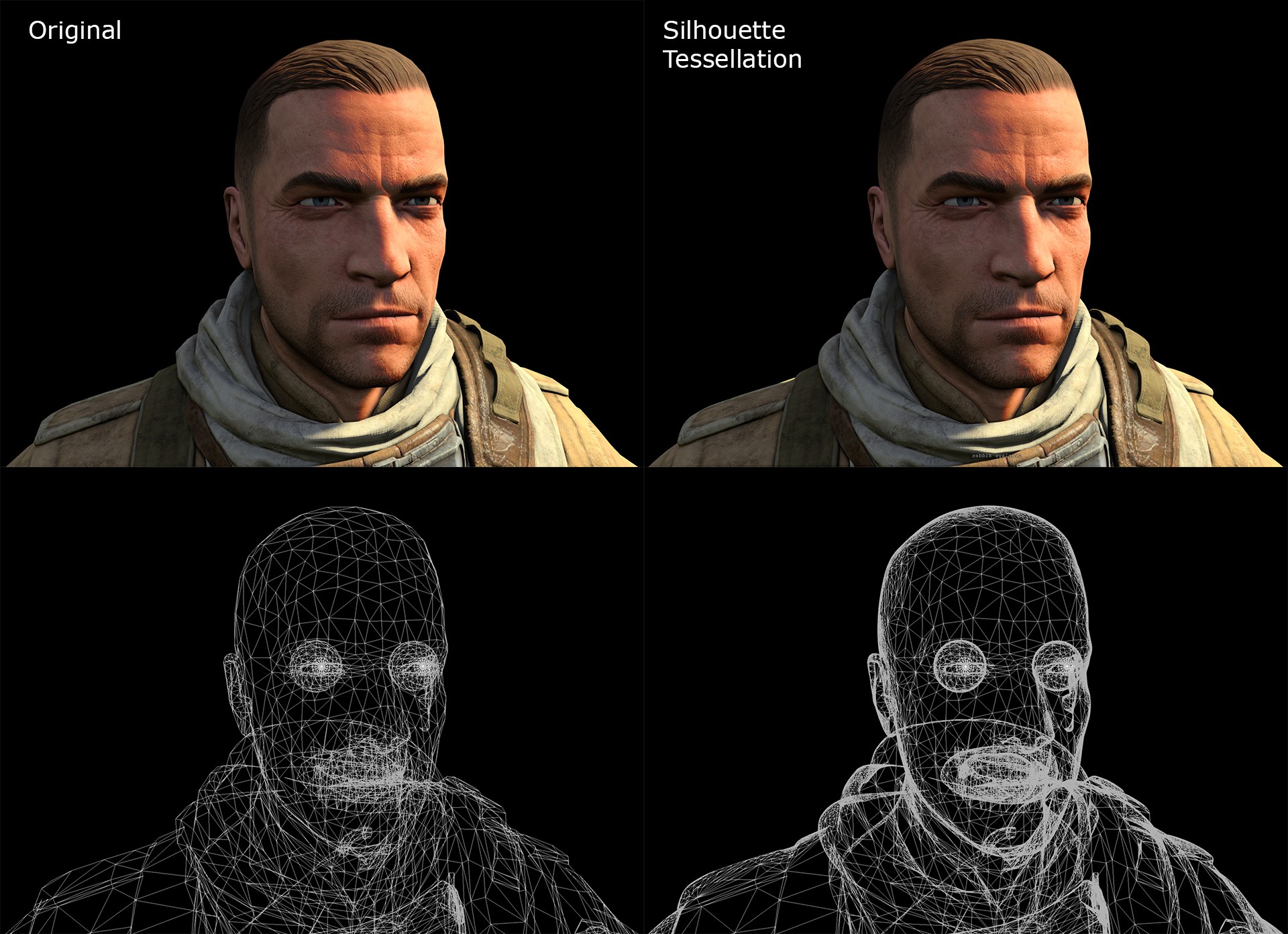
Kevin Floyer-Lea: Tessellation is something I think we’re finally doing “properly”. It’s taken a few years to get a working art pipeline and a rendering approach we’re happy with, but for Sniper Elite 3 we have a form of adaptive silhouette tessellation – which only tessellates those polygons that cause a visual difference. It’s all too easy to subdivide something into millions of tiny triangles and say you support tessellation, but you’ll find that won’t run very well on any GPU! Our approach dynamically tessellates based on distance, surface curvature and orientation relative to the camera – it makes a huge difference on obvious things like wheels and gun barrels, but also on organic shapes like human faces.
DSOG: What’s your opinion about Windows 8 and DX11.2? Have you experimented with DX11.2 and can we expect your future games to natively support 64-bit systems?
Kevin Floyer-Lea: Windows 8 is fine, but D3D11.2 is not really of interest to us. We’re likely to keep supporting D3D11 (and therefore Vista and Windows 7) and jump straight to D3D12 when the time comes.
The engine happily compiles in 32 or 64 bit configs, and we’d love to *only* support 64-bit – internally we all use 64-bit builds simply because we need access to as much memory as possible. However there are a surprising number of people out there with 32-bit versions of Windows, so for now we need to keep supporting them.
DSOG: One of your most successful games was Aliens vs Predator. Both the Jaguar and PC versions of it were stunning. Would you ever return to that franchise?
Kevin Floyer-Lea: Here at Rebellion we’ve got a particularly strong attachment to the AvP universe, so it could happen. We had a lot of fun playing with people’s minds on the original game by randomising spawn positions so what was a health pack turned out to be an Alien on your next play through. So personally I’d love to see an AvP game with fully procedurally generated levels, where you literally never know what’s around the next corner.

John is the founder and Editor in Chief at DSOGaming. He is a PC gaming fan and highly supports the modding and indie communities. Before creating DSOGaming, John worked on numerous gaming websites. While he is a die-hard PC gamer, his gaming roots can be found on consoles. John loved – and still does – the 16-bit consoles, and considers SNES to be one of the best consoles. Still, the PC platform won him over consoles. That was mainly due to 3DFX and its iconic dedicated 3D accelerator graphics card, Voodoo 2. John has also written a higher degree thesis on the “The Evolution of PC graphics cards.”
Contact: Email


Excellent work. I’ll probably be waiting for a sale to pick up V3 as while I liked V2, I’m not in a hurry to run out and get it (Waiting for Santa Gabes Second Christmas) but I’m glad to see there’s a developer who respects the PC platform and lets it run at it’s full capability.
And doesn’t downgrade it for consoles.
Shame they don’t respect the industry as a whole.
This is the same company suing Ironclad for using the word “Rebellion”
but sniper 3 doesn’t look like next gen to me its small step forward from last gen
the obscurance field is pretty cool though.
It’s cool when you know what it is but be honest: Could you have told from the screenshot alone that this was some new revolutionary approach to ambient occlusion? The left image is without any type of ambient occlusion so of course it looks outdated today, every game has ambient occlusion. A better comparison would have been with a high quality screen space ambient occlusion effect like HBAO or Crytek’s SSDO. I doubt that the effect is worth the performance cost tbh, it looks like high quality AO to me but nothing more.
That isn’t true at all. If you knew better, you’d regret posting this comment.
“it looks like high quality AO to me but nothing more.”
It’s amusing that you used the word “looks”, further proves you are simply basing your opinion on a screenshot combined with some imagination.
Are you critisizing me for judging a GRAPHICS effect by looking at it? lol
I am fully aware that this technique is more accurate and seamless than screen space approaches. But the result is not breath taking. It just isn’t. I suggest you take another LOOK at it 🙂
Are you having a hard-time with your reading comprehension? I don’t want to argue semantics, I pointed out the word “looks” because I inferred that you hadn’t played the game yourself. Ambient occlusion techniques should not be judged by looking at compressed screenshots. By your logic, baked lighting looks better than dynamic lighting just because we’re looking at screenshots, right?
The game also has global illumination, they mentioned it in the article. But that’s baked and unimpressive, too because screenshots. /s
Lots of newer games don’t have it. It makes the game even more impressive.
Unless the ambient occlusion runs at a capped framerate lower than the game itself – which would look absolutely hilarious – I don’t see why I would need to see it in motion. It’s not a motion based effect. It’s calculated for every individual image the game outputs.
YES, the “halo” effect around objects is bad. Most ambient occlusion is not very nice to look at even if it’s still better than nothing. I actually agree with that sentiment but I’m sure you’ve seen Crysis 3’s ambient occlusion. It’s not like that. It produces a quality very similar to Rebellion’s approach and before I believe their marketing I would rather see a direct comparison and more importantly I would like to know exactly how taxing both effects are on common current GPUs.
But Crysis 3 uses SSDO. It’s still a screen-space technique so you’re going to see the halo either way. Obscurance fields completely eliminates that obnoxious looking halo. Not only that, but this is perhaps the best imitation of indirect shadows calculated based on radiosity.
Those screenspace AO techniques simply have nothing on this. If you examine the example, you can see why: Those screen space techniques mostly create some shadows “around” the object as if on a 2D plane, result being a very unrealistic halo around the object. HBAO remedies some of it but it’s still not up this quality. Here you’ll see that there are soft shadows affecting the wall even tho it’s several pixels away, because it’s not simply looking at a depth map to create the effect. The way I see it, this is very innovative.
I know right? They kept going on about how the game looks great and the technology behind it but honestly it’s nothing impressive to look at.
and still some last gen title looks batter than this
What are you talking about? It’s definitely up there with those “next-gen” games you’re talking about. The geometry is complex, probably using a physically-based shading model and the textures are worth praising.
Hell, I’ll even say this looks a lot better than some next-gen games. Thief, Wolfenstein, Watch Dogs, AC4 etc.
Game has really awful textures, static trees, nothing really dynamic going on.
“Hell, I’ll even say this looks a lot better than some next-gen games. Thief, Wolfenstein, Watch Dogs, AC4 etc.”
lol……..WUT
There’s a difference between inconsistent graphics and awful graphics. I could post shitty textures from even Crysis 3, but does it make the rest of the game look like shit? No.
“nothing really dynamic going on”
Thank you. Now I have a reason to not participate in arguments with trolls like you.
The textures are excellent quality on ultra, you just need 2GB of VRAM.
Yep. Guy got a garbage PC and yet say out loud that its no beautiful…
Last gen would even start a game with that rocks textures…
Damnnn
And how do you know he’s got a garbage PC? You don’t.
“awful textures, static trees”. Medium settings probably!
i respect your opinion BUT sniper graphics are decent it future a lot of next gen stuff that’s it
Digital Foundry did a comparison of the versions and they discovered the shadows on PC are worse quality than they are on PS4, maybe due to some kind of bug.
And PS4 is missing Tessellation, SSAO, only has x8 AF and the game frequently dips to 30FPS.
Buggy shadows is nothing to worry about in the grand scheme of things.
From the Digital Foundry article:
“tessellation is implemented on consoles but in a significantly pared-back manner compared to PC”
“the PS4 and PC appear to utilise a more advanced [SSAO] implementation known as obscurance fields”
PS4 version stays at 40-60 fps most of the time according to the framerate analysis video. In fact it only drops to 30 fps for 1 second in the entire video, not “frequently”.
More lies and ignorance.
Still though, PS4 is behind my 2 year old GTX 660 and 2 year old CPU.
http://i.imgur.com/AWL2a1s.jpg
http://i.imgur.com/7sfGTV0.jpg
That’s cool. Not the point of my post though.
You can’t resist defending a plastic box though.
Like you hating on a plastic box is any better.
I don’t hate on them, showing they’re weak compared to my 2 year old cheap PC just brings those console fanboys down to earth.
your posts don’t make sense, you don’t have any points, the only point that i’m seeing is a donkey trying to type with a keyboard
do you honestly believe that a closed-box, static console with a piss poor cpu and a 2 and half year old low-mid end GPU can outdo a gaming PC? what fucking reality is this?
peasant reality :))
console peseants do.
You have peasant level spelling skills.
lean the diffirence betwen spelling and typos, but tell me, how many languages you speak grammar nazi? Just english eth? i thought so!!
Wow! Comparing really low compressed images to a high quality image.
It’s a frame-rate comparison not an image quality comparison.
they don’t know the diffrence between frame rate and quality
Glaringly obvious it’s a frame-rate comparison, duh Lol.
Good going posting a lower res screenshot from a compressed youtube video for the console versions. Totally fair bro…
It’s a frame-rate comparison, my shot and the consoles all have frame-rates on them. If it was a screenshot comparison I wouldn’t have used youtube shots from DF, LOL moron.
stupid #8,000,000
Oh wow, you show one instance where your PC is 5.7 frames ahead of PS4. For all we know, your PC runs the game at 31fps for the majority of scenarios..
That’s my shot at the same place, I can can confirm that it runs better than the PS4 consistently or matches it.
Are you serious or do you know how frame-rate works? If I was getting 31fps “majority” of the time it wouldn’t get near 60fps on that shot, you can clearly see the XB1 getting 45fps at the same place so your comment doesn’t make any sense.
If you need any more proof I can post lots of shots at 60fps in the same places as the PS4, though I’m not capped so I can get more than 60fps.
YOu are wasting your time with a console peasant who doesnt even want to login to disqus. When someone brings “hate to consoles” argument, you know you should stop there, cause they dont have anything else to bring to the discussion. So let them be.
what the F ? game runs always 60fps, where 31fps came from ? how much stupid a console gamer can be ? i guess there is no end to your kind
Idiot, it isn’t even running 60fps on the PC version in that comparison screen.
stop using so much user names you moron, every body knows who the F you are. i don’t give a s**t about that comparison, i am running the game my own, so shut the hell up and gtfo
and we all know you are a clueles idiot.
And we all know you’re a Gabe Newell idolizing pleb, about to reach the Guinness World Record title for being the fattest, oldest, virgin.
My god kid, how old are you? Gabe newel changed gaming and pc gaming, thats that.
How about you go suck some liying sony hype junk instead?
how stupid you can be ?
Typical fanboy reacting to facts, reality, and reason by flinging feces and screaming like an animal.
You just described yourself
shut up parasite and go back to your hole (mom)
Derp every time you post your damage control I laugh then hate the PS4 some more. Just for you.
Don’t see that, look at my shot below, shadows on ultra, textures on ultra and all options on high, 1920×1080. Console versions has less tessellation but in the end the PS4 still doesn’t quite match my GTX 660 on same settings.
Get on my level 780 Ti!
I don’t pay silly money for PC hardware any more, just good quality. Lian Li PC60-FN, Corsair RM550 PSU, Crucial M500 240GB SSD is my limit now days.
Post your speccy or Dxdiag, derp.
you and chimps like you don’t even know how a PC works and what is 780ti
Wow. Someone got very defensive.
PS4 doesn’t have tessellation ?
it’s better that the game on console doesn’t have tessellation, because without tessellation it feels more cinematic, compair it to cinematic frame rate and cinematic sub HD resolution, it’s better than PC :))
digital fluffery is a joke. they’ve become another shitty click-bait site and people really need to stop bringing these idiots into discussions.
There’s more money in massaging the egos of Sony Peasants from Neogaf nowadays.
DF in 2010-2012 used to be “PC wins, get the PC version” and assblasted console fanboys arguing who got the worst version (It was usually PS3). Now it’s all completely soft damage control about “The PS4 is missing all these graphical features, runs between 30FPS and 60FPS and yet compares admirably to the PC version”. How can it when it’s missing features and dropping frames like Xtreme_Derp drops peoples braincells when they read his posts?
But then DF is pointless nowadays since the PC version is just going to be the victor every time so they have to create some sort of conflict and get those clickbait views (Like Dualshockers, Gamepur, Cinemablend, Gamingbolt and the other console damage control sites). So they throw two peasants in a ring to fight for scraps. It’s rather pathetic now.
Good interview John and great information.
Imagine if they shipped the game with working multiplayer?
OF is really impressive, they’re probably using an ellipsoid as an occluder. This is definitely a big step above the more popular and inferior Screen-space ambient occlusion. I don’t know what kind of performance drop this has, but it’s probably better than even HBAO.
Speaking of performance, I’m surprised there haven’t been any benchmark articles on this game.
dude,theyhave a benchmark article for this game:
http://www.dsogaming.com/pc-performance-analyses/sniper-elite-3-pc-performance-analysis/
@disqus_gqfuA0S0Wi:disqus
I was talking about other sites, DSOG does make good performance articles, though. I mean, you search for “Sniper Elite 3 benchmarks” on Google Images and doesn’t show you graphs like with other games.
I hope this game is atleast moderately successful so Rebellion gets to make that AVP game with procedurally generated levels. But not so successful they make another Sniper Elite game in the near future. This new one seems almost identical to the last one, put the franchise on hold until new technology exists or you have real new ideas.
We need more triple-A title developers like Rebellion 🙂
this game sucks ball great