
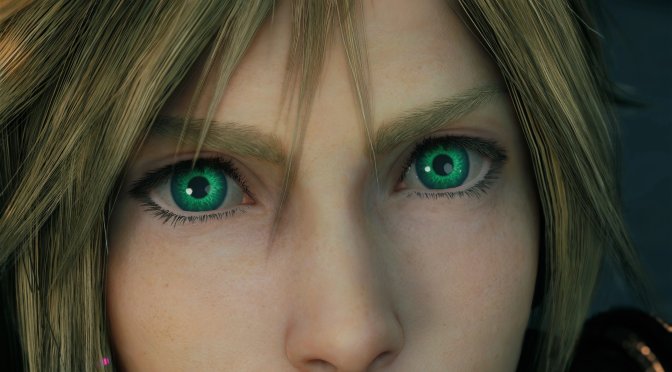
In an interview with Gamespot, Naoki Hamaguchi confirmed that Final Fantasy 7 Remake Part 3 will not be using Unreal Engine 5. Instead, the devs will stick with Unreal Engine 4, which was used for the previous parts of the remake.
As Hamaguchi said when asked about it:
“We’ve been using Unreal Engine 4, but we’ve made a lot of modifications to fit our needs. It’s more beneficial to have something we’re already familiar with and have customized to fit our needs.”
And there you have it. Final Fantasy 7 Remake Part 3 will not take advantage of the new features of UE5. I’ve played both FF7 Remake and FF7 Rebirth, and I can tell you that they could benefit from both UE5’s Nanite and Lumen. And no. The devs will not be using RTGI to enhance the game’s lighting. Yes, Unreal Engine 4 supports it. But since the previous parts did not have it, we can safely assume that Part 3 won’t have support for it either.
The good news is that at least the game will run with high framerates on a lot of PC systems. Well, that is if Final Fantasy 7 Rebirth is anything to go by. Personally, I don’t expect FF7 Part 3 to look that much better than Final Fantasy 7 Rebirth. So, this could be good news for those with mid-tier hardware.
Let’s at least hope that Square Enix will do something for the shader compilation stutters that plagued both FF7 Remake and FF7 Rebirth. Realistically, I don’t expect the devs to address the traversal stutters. The game will still have them. And yes, you can expect Square Enix to also use Denuvo.
In November 2025, Square Enix added support for NVIDIA DLSS 4 and Multi-Frame Gen in FF7 Rebirth. So, it will be cool if FF7 Remake Part 3 supports them at launch. Let’s also hope that the devs will add support for both AMD FSR 3.0 and Intel XeSS 2.0.
There is currently no ETA on when Final Fantasy 7 Remake Part 3 will come out. From what we’ve heard, though, Square Enix plans to release it on multiple platforms at launch. In other words, this may not be exclusive to PS5 when it comes out.
Stay tuned for more!

John is the founder and Editor in Chief at DSOGaming. He is a PC gaming fan and highly supports the modding and indie communities. Before creating DSOGaming, John worked on numerous gaming websites. While he is a die-hard PC gamer, his gaming roots can be found on consoles. John loved – and still does – the 16-bit consoles, and considers SNES to be one of the best consoles. Still, the PC platform won him over consoles. That was mainly due to 3DFX and its iconic dedicated 3D accelerator graphics card, Voodoo 2. John has also written a higher degree thesis on the “The Evolution of PC graphics cards.”
Contact: Email