
AMD releases TressFX 4.1, featuring optimized physics simulation shaders & new rendering features

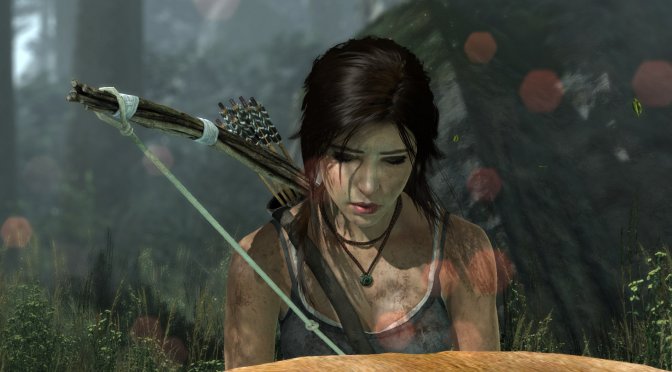
AMD has released a new version of its TressFX tech, TressFX 4.1. In case you were unaware of, the TressFX library is AMD’s hair/fur rendering and simulation technology. Therefore, TressFX is designed to use the GPU to simulate and render high quality realistic hair and fur.

According to the press release, TressFX 4.1 features further optimization of the physics simulation shaders. It also packs new rendering features, as well as documentation and tutorials. Not only that, but it comes with an updated TressFX Exporter for Autodesk Maya.

This release also demonstrates TressFX integration with Unreal Engine 4.22. According to AMD, this is a minimal integration to improve ease-of-use with multiple TressFX components, features, and rendering and simulation materials.

Here are the key features of TressFX.

  • Hair and fur support, designed for high quality anti-aliasing
  • Animation/skinning support
  • Unreal Engine (4.22) integration
  • TressFX/Cauldron implementation (source code)
  • Maya plugin provided for hair/fur and collision authoring

Here are also the key features of TressFX 4.1.

  • TressFX/Unreal engine integration (patch under Epic Games Unreal GitHub repository) with multiple components, rendering and simulation material support
  • TressFX/Cauldron implementation with source code (DirectX® 12 and Vulkan®)
  • Optimized physics simulation shaders can allow more hair to be simulated in real-time
  • New rendering features (StrandUV and Hair Parameter Blending)
  • New Level of Detail (LOD) system
  • Documentation and tutorials
  • Updated Maya Exporter with new UI and new features/error checking

14 thoughts on “AMD releases TressFX 4.1, featuring optimized physics simulation shaders & new rendering features”

    1. Yes you can that’s what makes it great man. It makes Hairworks look like a freakin Joke. Another great thing about it was, on the week of it’s debut in Tomb raider 2013, Nvidia had trouble running it and AMD made it open source. By the end of the week nvidia GPU’s were ale to run TRESSFX Flawlessly. Can’t say that about any of Nvidia’s garbage tech that’s just loaded with Blur. I remember when Hair works Debut. for years not even Nvidia could run their own tech properly. That rubbish was loaded with Tessellation x64 to the max, so unneeded, When all it needed to be was x16. nvidia did that to stiff AMD and like always STIFFS themselves.

      1. As an NVIDIA owner, 100% agree, Gameworks features are most of time uselessly demanding, i remember on TW3 everytime a wolf or a bear appears with Hairworks activated, the framerate goes downhill, and it’s still demanding for Geralt’s hair, which was partially fixed by modders, never had a problem with Tomb Raider, which was fixed really quick to run TressFX on Nvidia GPUs without any issue

        1. Yeah man, after my Titan X Died, i jumped off the Nvidia Train really quickly. Wanted to leave for years especially when i realized how they gimp the competition and it just ends up making nvidia’s own product even run worse. There is a video of AMD talking about the TW# and tessellation. They went in depth about how Nvidia purposely gimped the by overtesselating Hair Works. You can’t see any difference from 16x to 64x, it’s just an unnecessary tax on the system.

          Ain’t saying AMD is all great and zero complaints, it’s just the lesser of 2 evil for me. AMD picture quality have always been better to me as well. Nvidia is very washed out.

          1. I always used some of Gameworks features such as Hairworks, HFTS, HBAO+, VXAO or PCSS and they works great. There is nothing about them which could ruin games. Thats really BS. Of course there are also some types of Antialiasing which realy are blury, but you don§t have to use them. You know, that all Gameworks features are optional, right? 🙂

      2. TressFX is not open source until AMD made their GPU Open initiatives. And GPU Open only exsit after nvidia gameworks. Back in 2013 nvidia able to optimize tressfx performance even without source code for tressfx. AMD richard huddy also has confirmed this. Not defending Nvidia here but i see some fact needs to be told. Because of misconception like this many people think you can do any graphical effect wihout performance hit. Even ray tracing some people believe it can run very fast purely on GPU shaders.

        But ultimately it is very rare to see stuff like tressfx being adopted by game developer. Because most often game developer rely heavily on in house solution for certain effect.

        1. Of course there is no performance free visual effects, especially Ray Tracing which is obviously extremely demanding, but sometimes Nvidia make them demanding on purpose, like limiting Physx multithreading to force 1 CPU core usage, or uselessly forcing 64x Tesselation on Hairworks, obviously to push for high end GPUs
          Look what happened to Physx, everyone forgot about it and almost every engine has now in-house tools for that, it had great potential but Nvidia almost killed it just for marketing decisions

          1. Yeah sometimes nvidia indeed forcing absurd things. But in case of physics engine even in reality game developer try not to be crazy with it even when have quad core for years. In case of project cars before the developer was accuse to force physics peocessing to be done on cpu only when the system are using AMD GPU while for system with nvidia gpu the physics processing has been onload to nvidia gpu making performance faster when the game running on nvidia gpu. But the reality is the game never use any kind of GPU physics. All physics processing is done on cpu. And slightlly mad studio specifically mention that they only dedicate 1 cpu core at 600mhz for physics processing.

            Yeah everyone forget about PhysX. Bit that’s because when talking about PhysX mostcpople only think about GPU PhysX. CPU based PhysX is very successful. to say almost all game engine have in house solution for physics engine probably wrong. To date Nvidia PhysX is one of the most successful third party game engine in world for being second only to Havok. Market share wise they were almost equal with slight advantage to havok. But for several past year we saw more and more game engine are migrating from havok to nvidia PhysX because it is cheaper to license and yet perform just as good as Havok. In fact right now Havok are more proprietary than PhysX because nvidia has been open PhysX source code to the public for free (except GPU Physx that is no one really care about). If not for Nvidia PhysX would never able to go this far.

          2. I’m talking about GPU Physx of course, obviously, that’s what is sold as an NVIDIA’s advantage and not classic CPU Physx which can be used by any platform including consoles, there is no reason to criticize it as it’s not intended to be a killer app

          3. The thing about GPU accelerated physics is even if there is open source option available out there game developer are not interested with it. Bullet has been offering one for a decade now. The initiative was started by Bullet with cooperation with AMD back in 2009 as an alternative to nvidia proprietary PhysX. Fast forward 10 years later we saw bullet being adopted even by triple A games (GTA V) but none ever implement it’s GPU accelerated feature.

          4. I agree with tesselation, but no with PhysX. NVIDIA never forced PhysX to run only on 1 CPU core. CPU PhysX always support multithreading, but in the beggining it was not native. But there was ways for developers to use it like that. This limitation was valid for PhysX SDK 2.x (and comes to NVIDIA from Ageia, it was not purposly downgraded). But NVIDIA reworked whole PhysX API to be native multithreading from SDK 3.x.

      3. Yes but no!
        AMD or NVIDIA only work on effects that their hardwares can run it better!
        TressFX is on the DirectCompute approaches which is runs better on AMD GPU’s, Hairworks does the same in the tessellation way!
        open source or not AMD GPU’s were bad at handling tessellation and that was a architecture matter that sofware side couldn’t help it much!

Leave a Reply

Your email address will not be published. Required fields are marked *