
When Star Wars Jedi: Fallen Order was released back in 2019, I wasn’t initially very interested in it. I ended up getting it at a good price and enjoyed it, so I’ve been looking forward to Star Wars Jedi: Survivor. After 30 hours spent playing through the story and some side content, here are my thoughts.
Story
Jedi: Survivor takes place five years after the events of the first game. The fight against the Empire continues, and the core cast makes a return in this adventure. This time, though, Cal and his allies are searching for a safe place where they can hide from the Empire. As usual, I’m not going to talk about any specifics regarding the story since I don’t want to spoil it. Suffice it to say, Cal has grown both as a Jedi and a person who faces his own internal struggles.
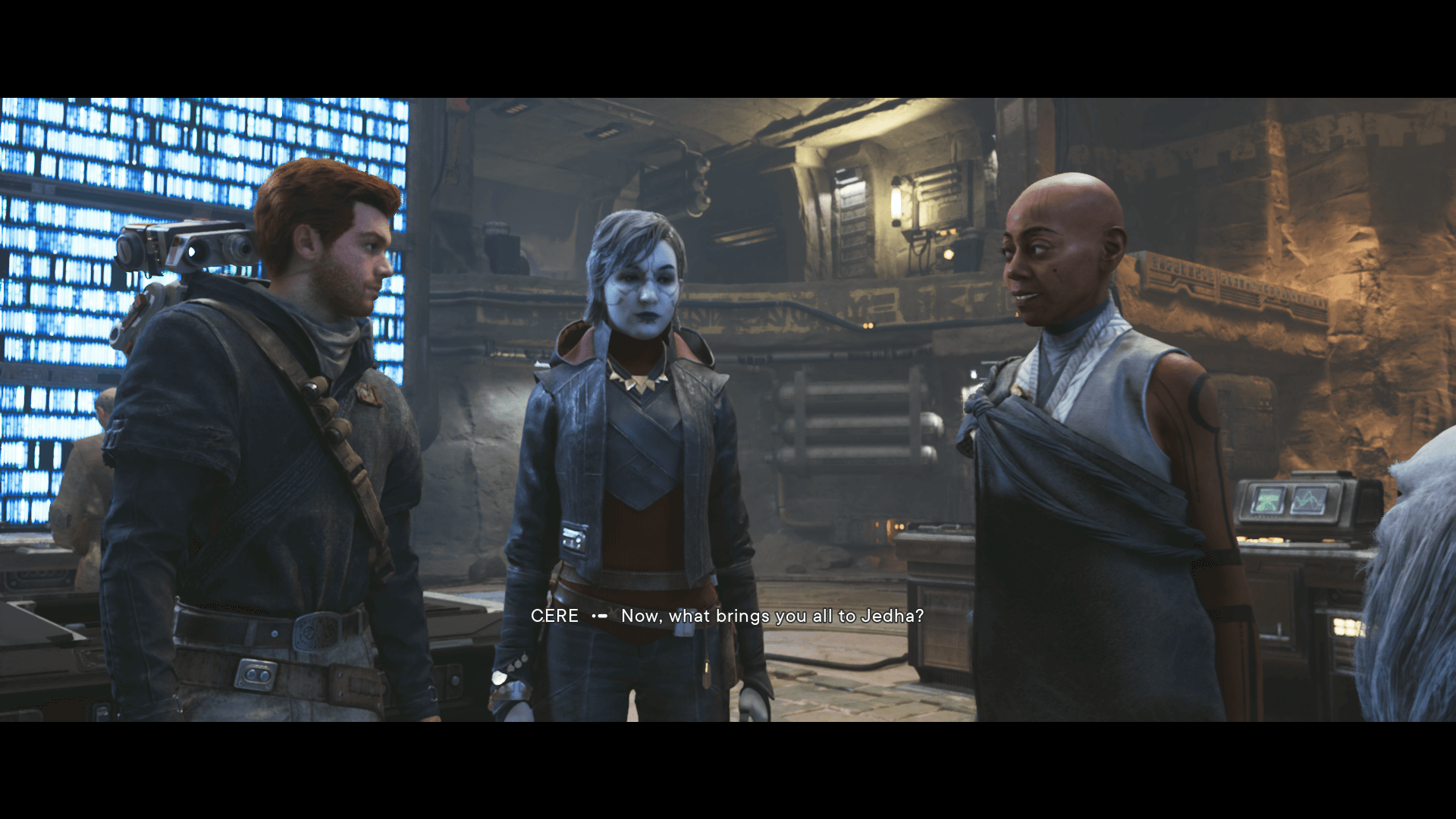
However, the narrative is not the most original, and the story beats have been seen before. Still, the great set pieces, good voice acting, and more fleshed-out characters keep things interesting. As a result, the story doesn’t lose momentum, and I found it enjoyable.
Graphics & Audio
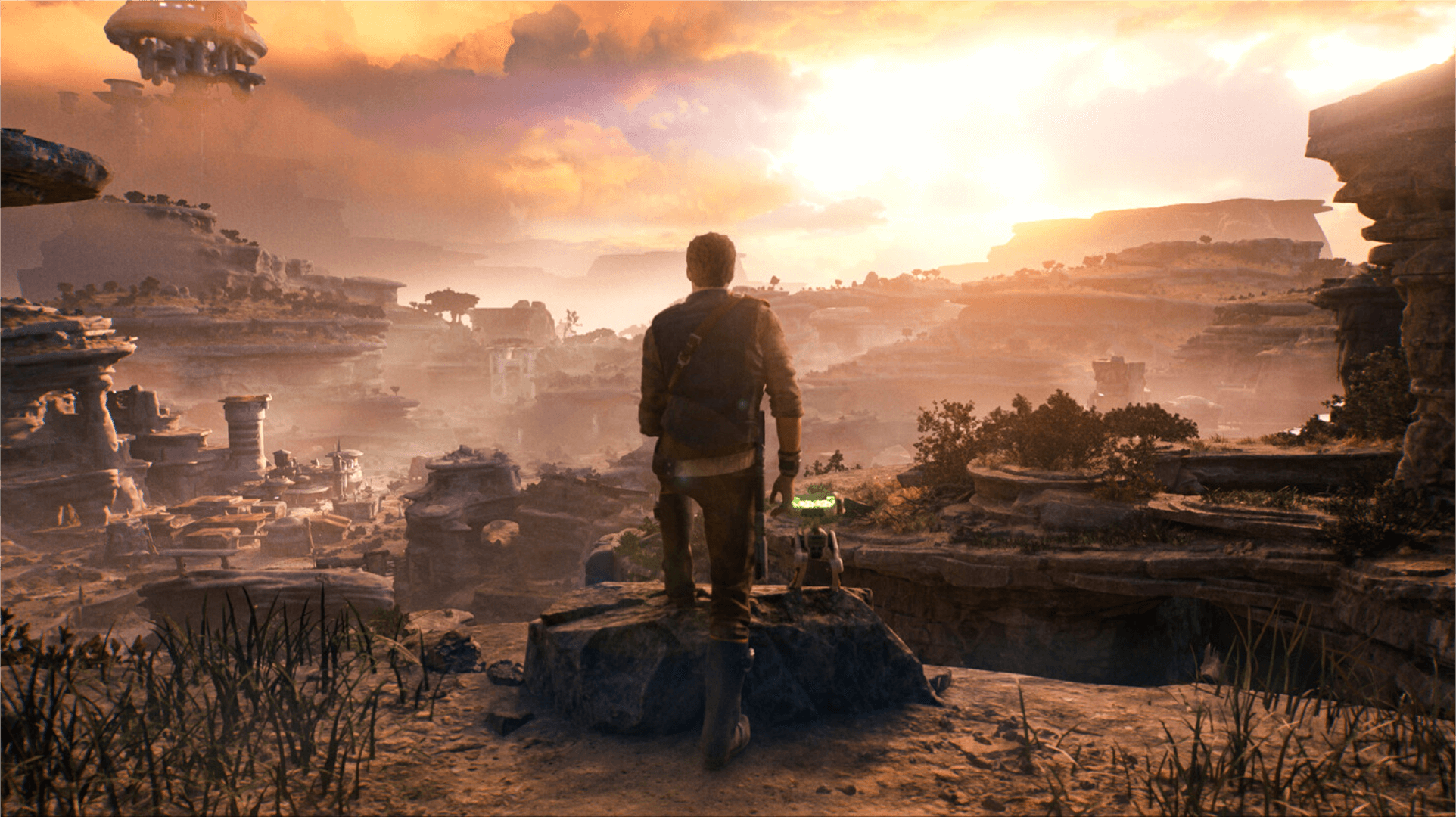
The game is visually impressive with great vistas to behold in the various locations that you visit throughout the galaxy. It’s a step up from the previous game, which should come as no surprise since it’s been four years.
The audio is great as well. Blaster fire and lightsaber swooshes are powerful. Ambient sounds in the different worlds create a sense of presence. The Star Wars thematic music lends immersion.
Gameplay
The gameplay loop of Jedi: Survivor follows the same formula as its predecessor. You have a choice of planets to travel to via the Holomap on your ship, the Mantis. The available locations depend on where in the story you are. The play areas in general are larger in this sequel, especially Koboh, which acts like a hub of sorts.
Two of the planets also allow you to use mounts, as well. However, you don’t get to customize or “own” them. Once you’ve tamed a type of beast, you can ride any you find in the wilderness or store one in the pen for later use. This feature makes travel a little faster.
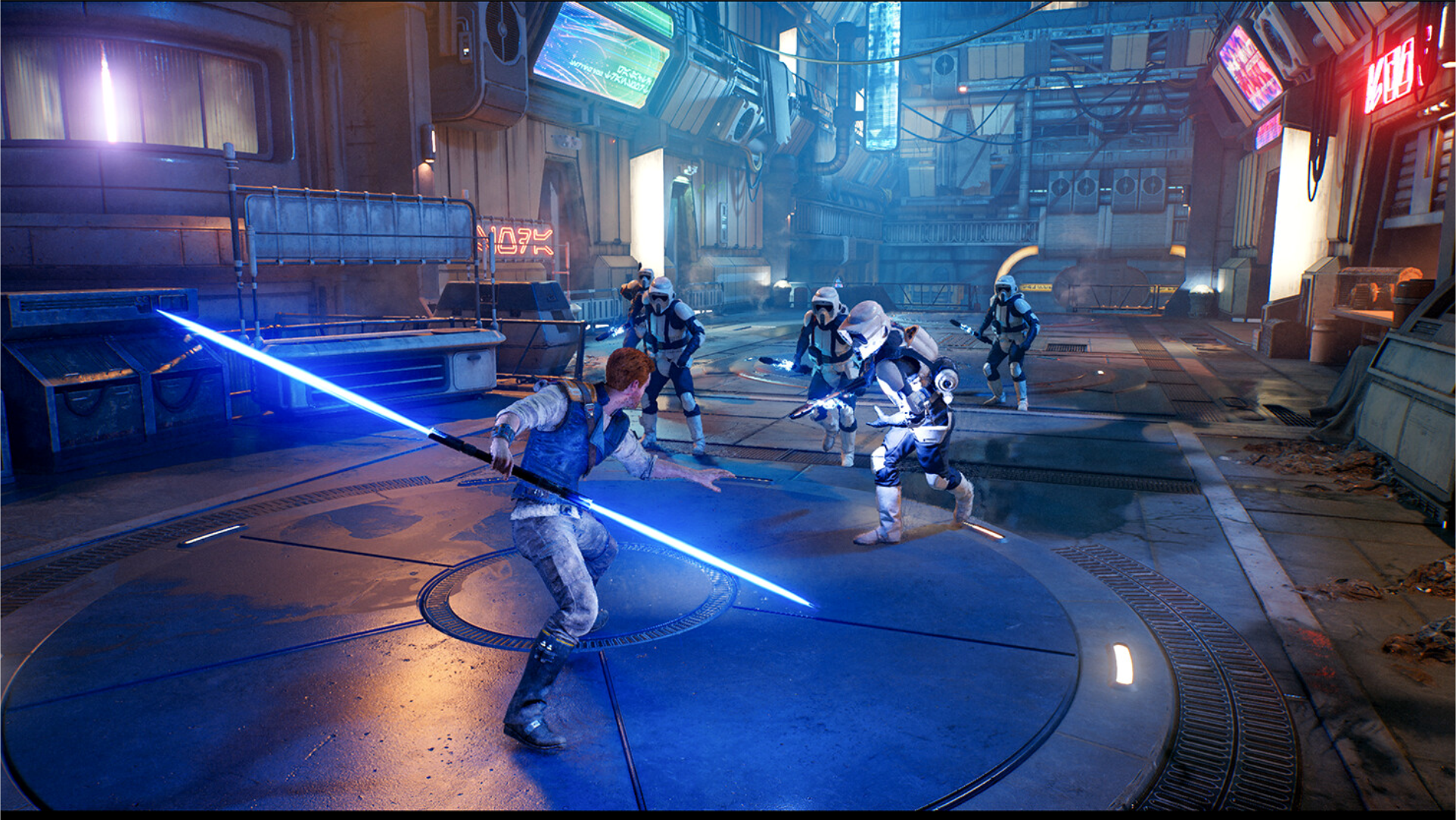
The combat is what you would expect and is mostly the same as the first game. Both you and your enemies have a stamina bar. Blocking attacks depletes stamina, but blocking just before a hit will parry. If you block too early or late, Cal will take damage. Pulling off a perfect parry opens the door to a counterattack that will either kill an enemy outright or cause substantial damage. Parrying a blaster shot will deflect it back at the enemy. There is an evade as well. Some attacks (highlighted in red or gold) cannot be blocked and require you to move out of the way.
There is a decent enemy variety, many making a return from the original game, but there are some new ones thrown into the mix here as well. As the game progresses, enemies get shuffled, which requires you to adjust your strategy. Most encounters outside of the boss/legendary/bounties are pretty easy to deal with unless you are playing on a much harder difficulty. For me, most bosses weren’t particularly hard, but a handful required several tries. Of course, you can always decrease/increase the difficulty in the menu.
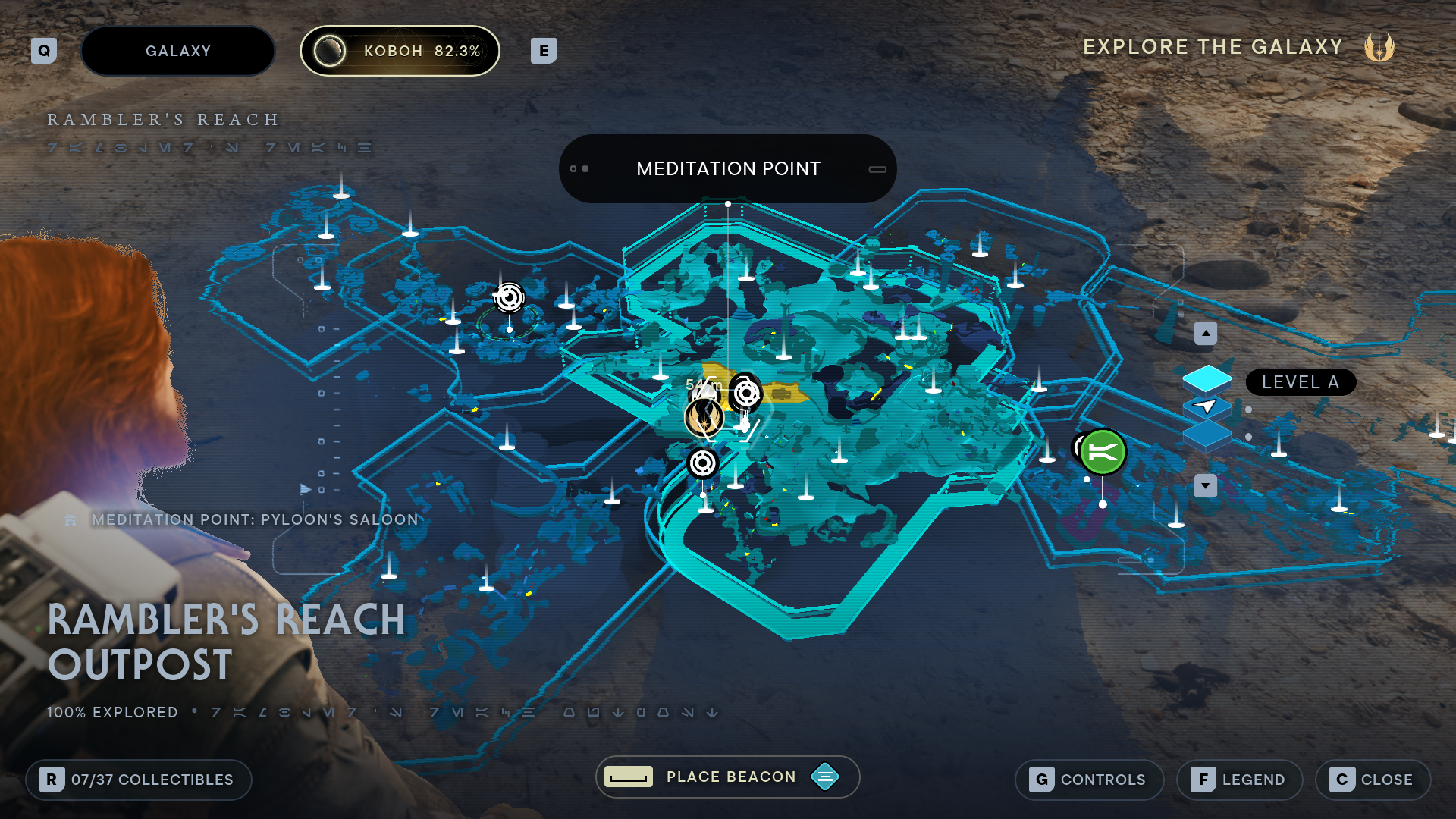
Meditation points (save points) are scattered around each level. Resting at these points will replenish health, refill stims, and cause enemies to respawn. Here you can also switch out perks, change lightsaber styles, or add skills to skill trees. Workbenches can also be found as you play. Like the first game, they act as places to customize your lightsaber, but now you can also customize your droid, BD-1, as well.
Every region has several areas that will only be accessible once you have unlocked certain traversal abilities. The air dash, the grappling hook, and the double jump are all unlocked as you continue the story. To explore all the locations on each planet fully, you’ll need to return after having acquired these upgrades. The air dash is also quite useful in some combat encounters to get distance from enemies.
I appreciate that the game increases the complexity of traversal and exploration as you unlock new abilities, requiring you to combine them all frequently as part of your toolset to navigate to hidden areas and many sections found in the game’s later stages. The pacing at which the game introduces new mechanics and adds them into the gameplay loop is good. I never felt things took too long or that I was overwhelmed by new stuff.
Overall, both the combat and platforming sections of the game are very enjoyable. They are fluid, feel great, and can be quite rewarding. The pacing of the entire game is excellent, too. However, the encounters toward the end seemed lazy as far as design went. You enter a room and fight waves of increasingly difficult enemies in a variety of combinations. Then you move to the next section and repeat. Ordinarily, I wouldn’t be bothered by this, but it started to happen enough that it became noticeable.
Collectibles & Extra Activities
There are tons of hidden and off-the-beaten-path areas to explore in each stage, some leading to chests with cosmetics or various currencies. The different currencies (shards, data discs, and pucks), are used at vendors to buy new perks, perks slots, blaster & droid upgrades, and a variety of cosmetics.
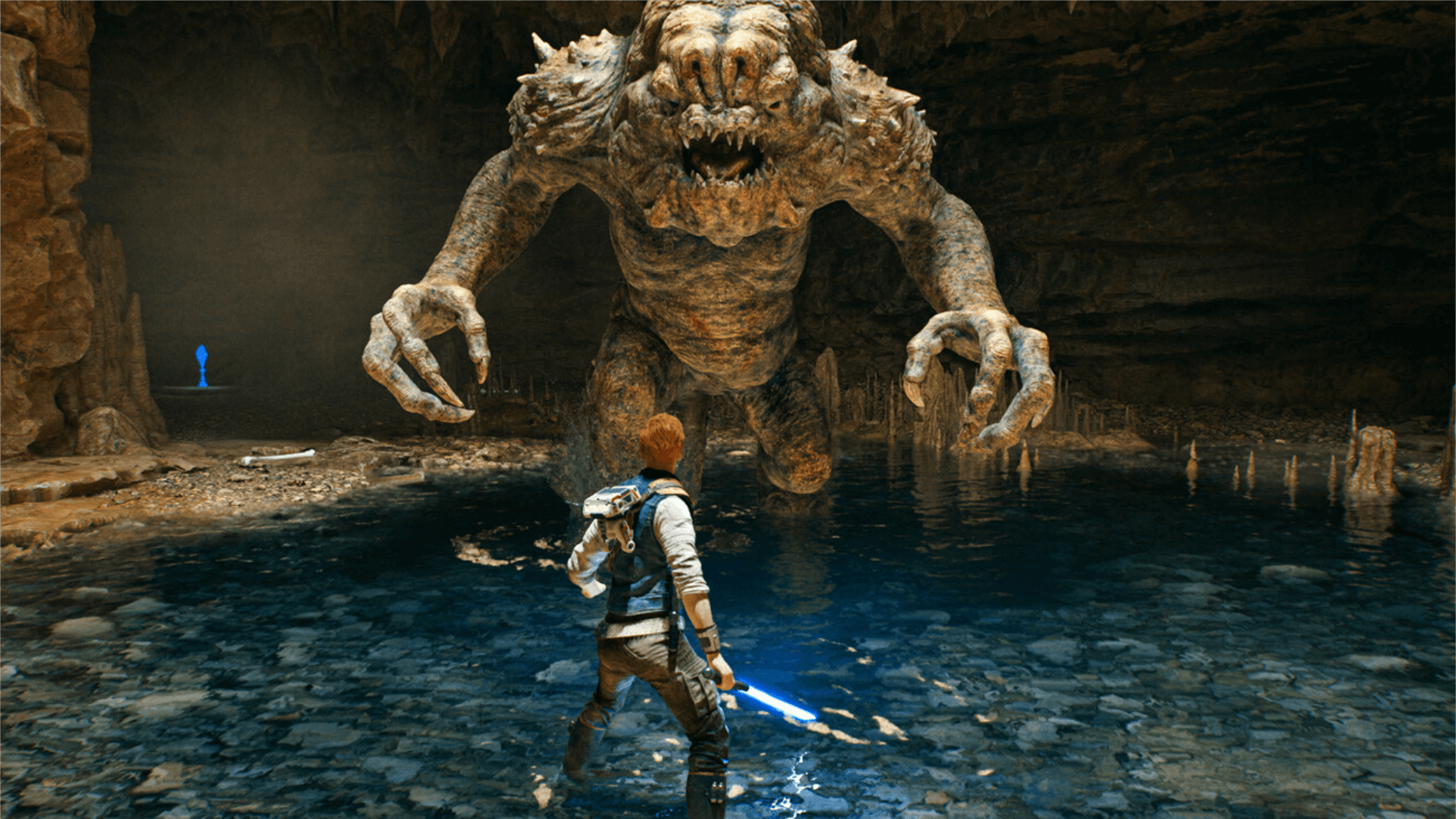
There are a few side missions found here and there. Challenge Rifts can be found throughout the galaxy as well as Jedi Vaults. These consist of platforming and/or combat challenges and will reward you with new perks or skill points. I found some of the platforming challenges to be quite difficult, which was not the case with the combat ones, even when fighting two Rancor bosses at the same time.
The hub planet, Koboh, also features Greez’s saloon, which will eventually become more populated as you progress through the story and do a few side quests. There is a mini-game called Holotactics. It is an auto-battler of sorts. You fight against waves of AI opponents. Winning earns you some cosmetics. A roof garden is also available where you can plant seeds you find throughout the game.
In short, Jedi: Survivor gives you plenty to keep you busy, both in gameplay and fun extras. I personally found all the secrets and collectibles on some of the stages but not all. Thankfully, once you have completed the game you can carry on playing and explore all the locations you missed or didn’t get around to doing previously. In addition, as you near the end of the game, you will unlock icons that show you where chests and other stuff you may have missed are located.
New Features
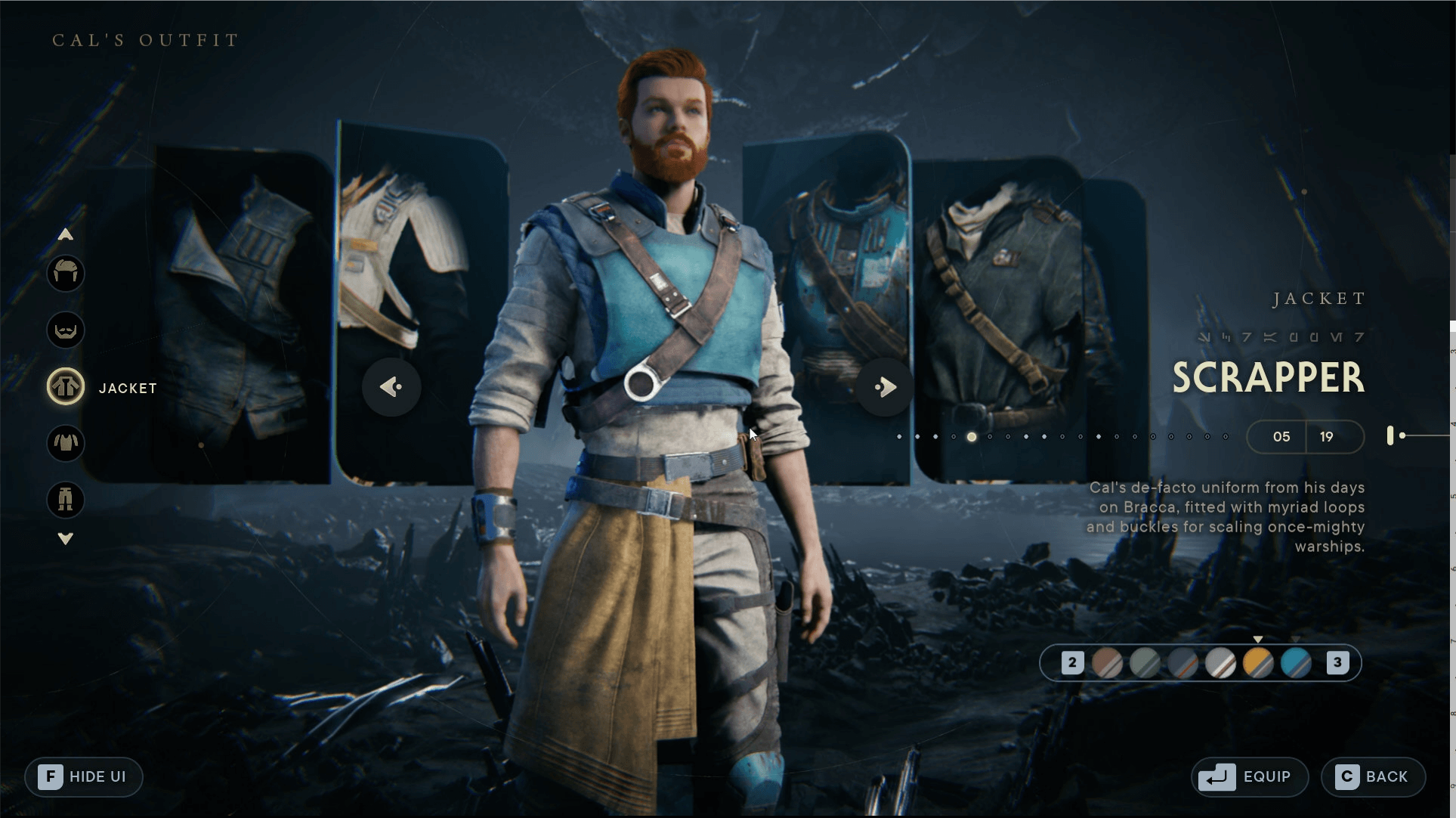
You can now customize Cal’s clothing type, colors, hairstyles, and facial hair. BD-1 can customize its frame parts and colors. Your lightsaber blade color, handle parts, and blaster parts can all be modified. This increased personalization is a large improvement over the original game’s poncho and lightsaber customization options.
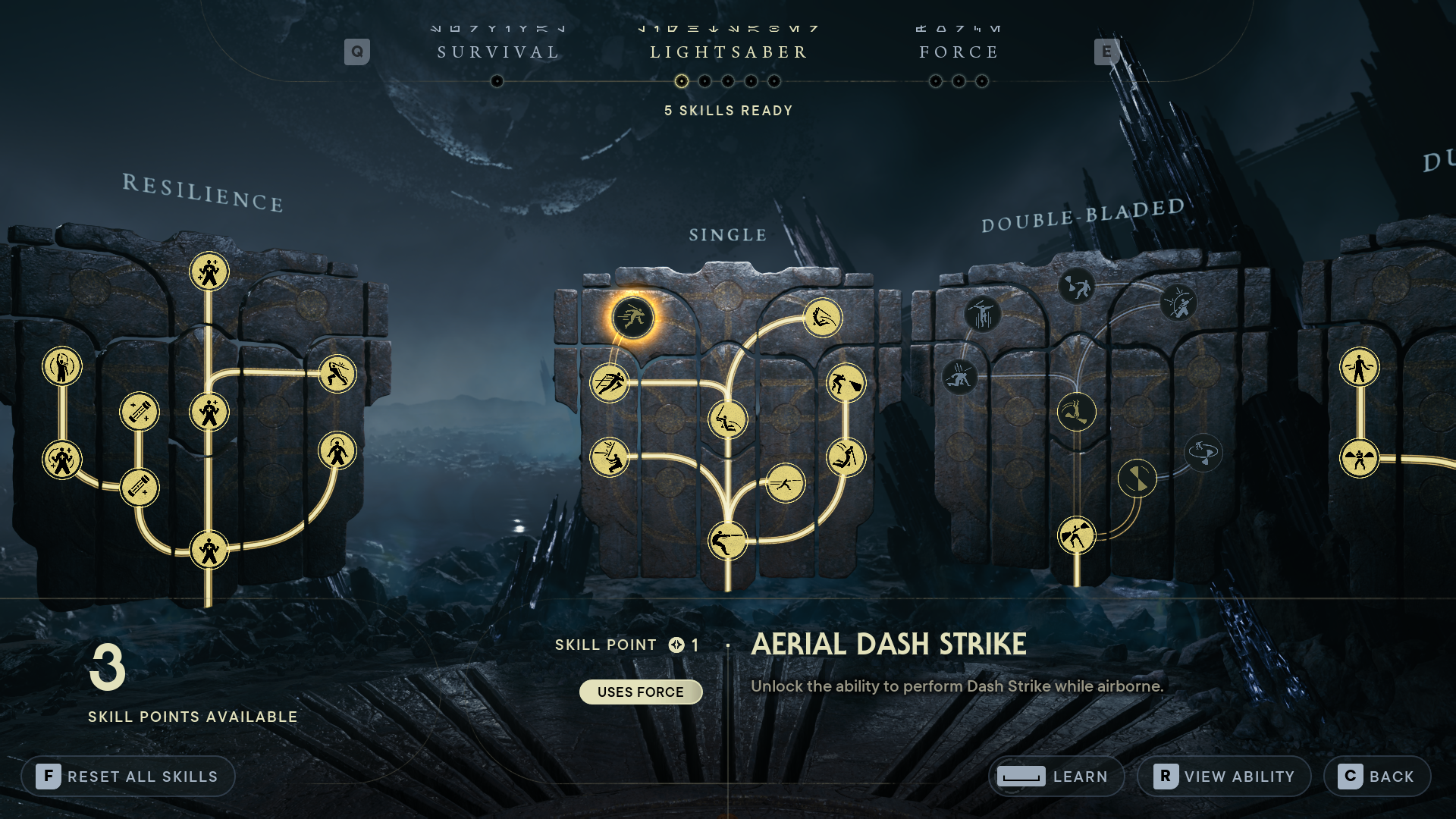
There are more lightsaber combat stances available as well. Single, double, and dual blades are back. In addition, cross guard is added, which is a slow, high-damage two-handed stance. Blaster and blade is also new, which is a sort of hybrid stance. Each of these stances has a skill tree available (totaling five stance trees). Then there’s a survival tree and force trees (divided into 3 categories).
A great addition is the ability to respec your skills if you are wanting to try another build. The first respec is free, but subsequent respecs will cost one skill point. It’s not a lot, since farming XP to get a skill point does not take overly long.
The addition of perks is interesting. You start with four perk slots, but this can be increased. Each perk takes up a certain number of slots, with stronger ones taking up more space. This allows you to further customize your build. There are 22 available perks, of which I obtained around 12. A few more are unlocked after completing the game and starting New Journey +.
Issues
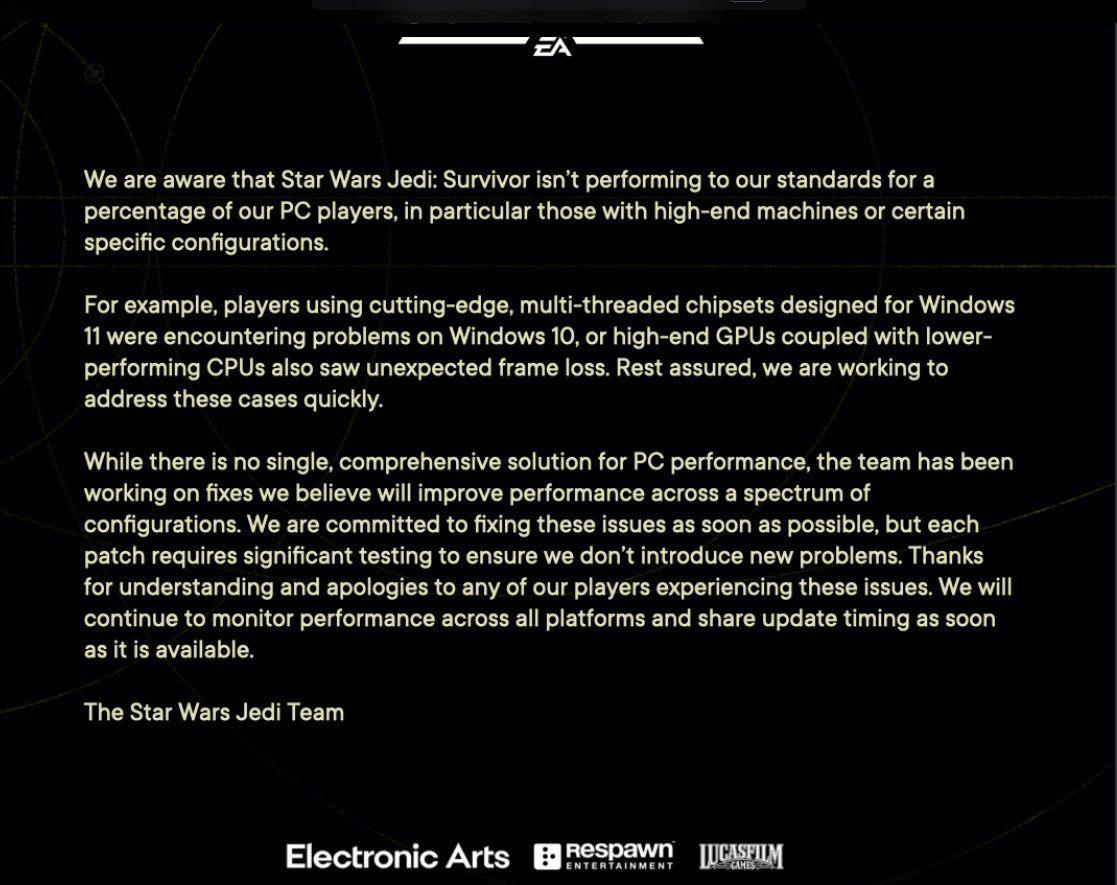
Sigh… I don’t even know where to start here. New releases these days seem to be plagued with all sorts of issues. Jedi: Survivor is no different. I would go as far as to say this is even worse than usual. The PC version of this game is a broken mess. This is even after five patches that have come out (at the time of writing this review). None of these patches have significantly remedied the following issues.
There are bugs and graphical glitches. Textures pop in. Flashing white squares appear at the corners of your screen when moving the camera in certain locations. Enemies get stuck in the terrain. Despite these issues being somewhat distracting and annoying, they are not game-breaking by any means.
The biggest two issues are the performance and dreaded traversal stutter (back from the first game). The game is unable to maintain 60 FPS @1080p (regardless of detail settings) in several locations. This is especially true in the hub location, Koboh, and in many combat encounters including boss fights. Frames dropped as low as the 30 to 40 range on my i7-12700K and RTX 3080. There are even sections that indicate the game is running at 60 FPS but feel unsmooth regardless. The Holomap on the Mantis can’t get higher than the low 30’s most of the time, either.
These issues would be bad enough if they ruined the artistic and visual enjoyment of the game. Even worse, they are a serious detriment to the many demanding combat encounters and platforming sections that require precise timing. The frequent stuttering and unstable frame rates undermine the core gameplay. Granted, these issues are not present 100% of the time, but they are common enough to hinder the experience. The game is not unplayable though, just far less enjoyable.
While I only had the issues listed above, some players are reporting even worse performance issues than me with faster hardware. Others are experiencing constant crashes preventing them from playing the game at all. Just keep those reports in mind.
Conclusion
I would love to recommend Star Wars Jedi: Survivor because underneath this abysmal port is an engaging game. I’d be disingenuous if I said I didn’t enjoy playing it. However, the technical issues marred and ultimately ruined what would have been a great experience. If you want to be fully immersed, I would not recommend the PC version until they fix it.
Even if you can tolerate the issues and don’t mind a horridly inconsistent frame rate, I don’t think you should support EA with your hard-earned money when they couldn’t be bothered to release a quality product. The fact that EA even released the game in this state is just mind-boggling, not to mention they’re trying to sell this unfinished product for $70 USD with a $90 USD Deluxe Edition, even after apologizing. It’s ridiculous. Perhaps they should have a category in The Game Awards for best apology letter since these come out so frequently nowadays.

- Graphics & Audio
- Gameplay is solid
- Improvement over the original
- One of the better Star Wars games available

- Traversal stutter
- Abysmal PC port with serious optimization’s issues
- Bugs & glitches
- Price
Computer Specs:
Windows 11 64-bit computer using an Intel i7-12700k, 32GB Ram, and an nVidia RTX 3080 graphics card.

Stephen is our resident kung fu master and reviewer. When he’s not kung fu fighting, he’s playing games, and has been since the atari 2600. He also runs his own YouTube channel called Particular Pixels, where he creates a variety of content related to PC gaming. He goes by the nickname Shaoling (not to be confused with Shaolin), which comes from his favorite PC game of all time, System Shock 2.