Zombie Army Trilogy – PC Performance Analysis

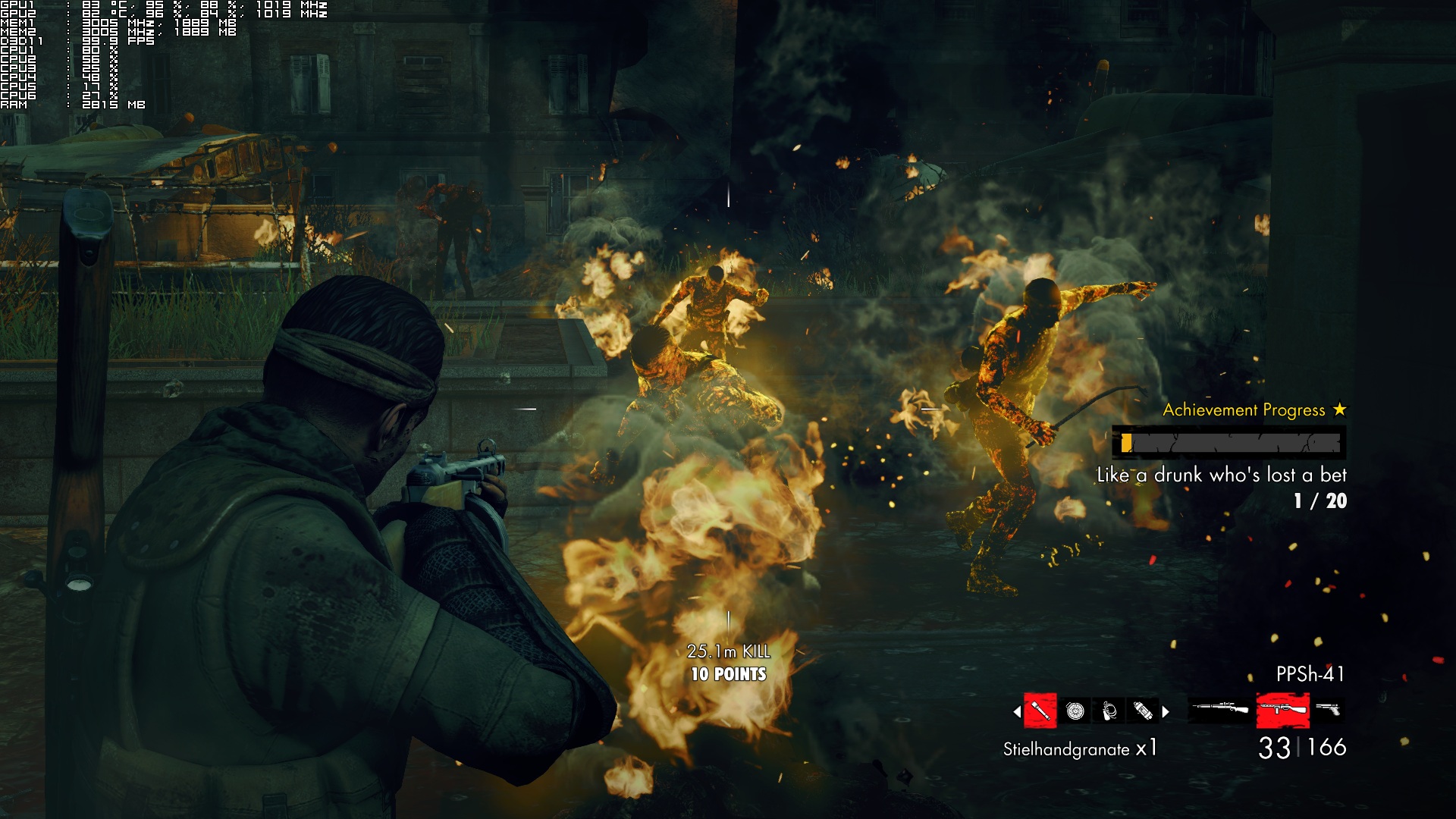
Rebellion has provided us with some review codes for Zombie Army Trilogy, and you can read below our PC Performance Analysis for this latest FPS title. Zombie Army Trilogy is powered by the Asura Engine; the same engine that powered Sniper Elite 3. Sniper Elite 3 was one of the most optimized games of 2014, and we are happy to report that Zombie Army Trilogy looks and performs even better than that title.

As always, we used an Intel i7 4930K with 8GB RAM, NVIDIA’s GTX690, Windows 8.1 64-bit and the latest WHQL version of the GeForce drivers. NVIDIA has not released yet any SLI profile for this title, however you can easily enable it via NVIDIA Inspector Tool. All you have to do is browse the available game profiles, find the one for Sniper Elite 3, and add Zombie Army Trilogy’s executable file. SLI scaling with Sniper Elite 3’s SLI profile is exceptional, so we highly recommend using it.
ZAT CPU Graph

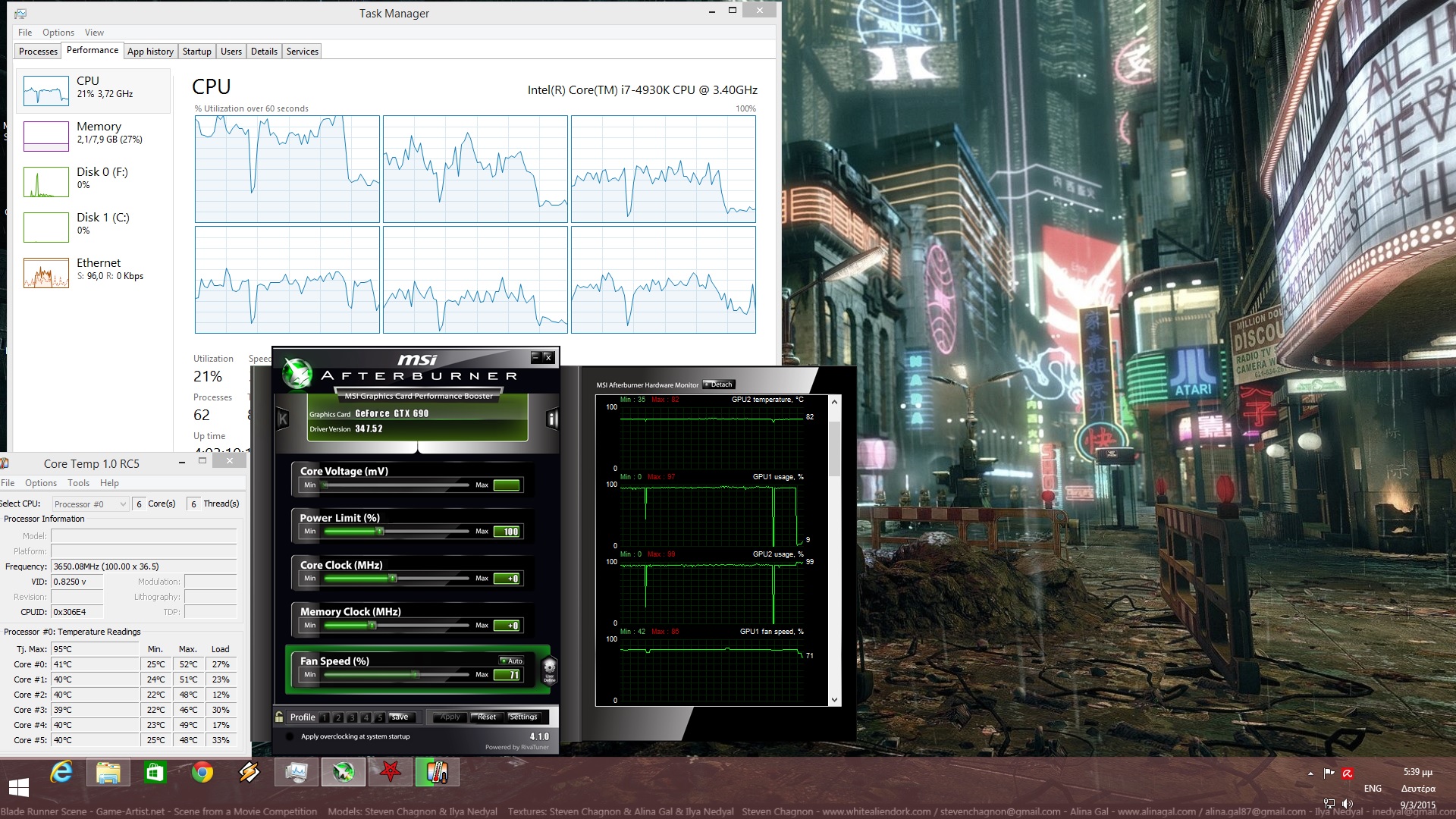
In order to find out whether the game is playable on older systems, we simulated a dual-core CPU. Much like Sniper Elite 3, Left 4 Zombies Trilogy does not require a high-end CPU to shine. Our simulated dual-core system was pushing 120FPS at 1080p with Ultra settings (without Supersampling). Not only that, but our GPU was being used at 97%, meaning that Zombie Army Trilogy is a GPU-bound title even on that dual-core system. In short, this is another example of a game requiring a powerful GPU and a mid/low-range CPU. And given Asura’s multi-threading capabilities, Zombie Army Trilogy scales well even on six CPU cores.

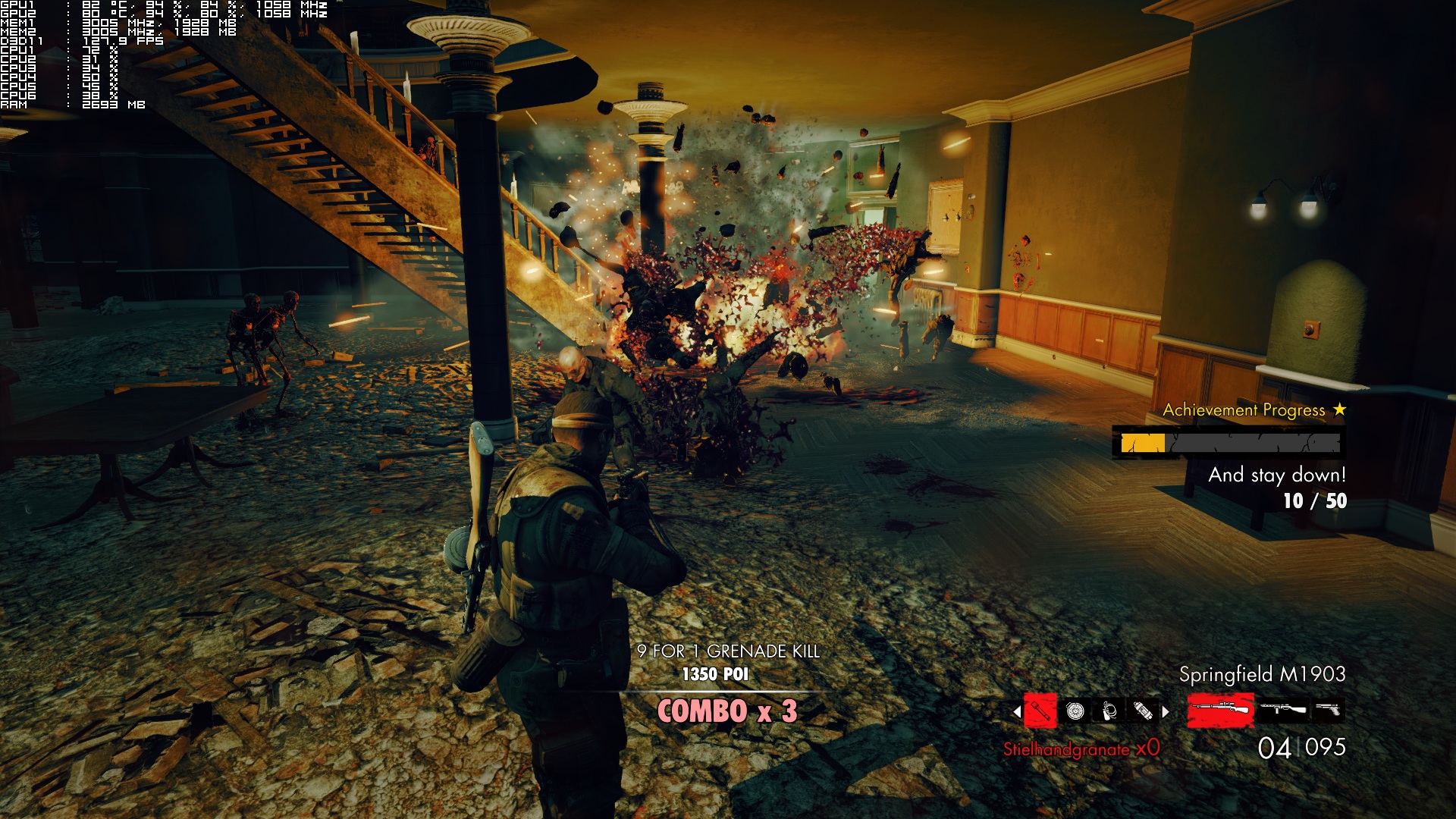
Regarding its GPU requirements, a single GTX680 is enough for 60FPS at 1080p with Ultra settings. We did notice some drops to 40s when there were a lot of zombies on screen, however the game maintained 60FPS for almost our entire testing session. On the other hand, a GTX690 (or a GTX970) can provide a constant 100FPS experience at the same settings. Moreover, the game did not use more than 2GB of VRAM, something that will definitely please those with weaker GPUs. Not only that, but the game’s textures are of higher quality than those featured in other triple-A games that require more than 3GB of VRAM.
ZAT_2015_03_09_19_12_54_244

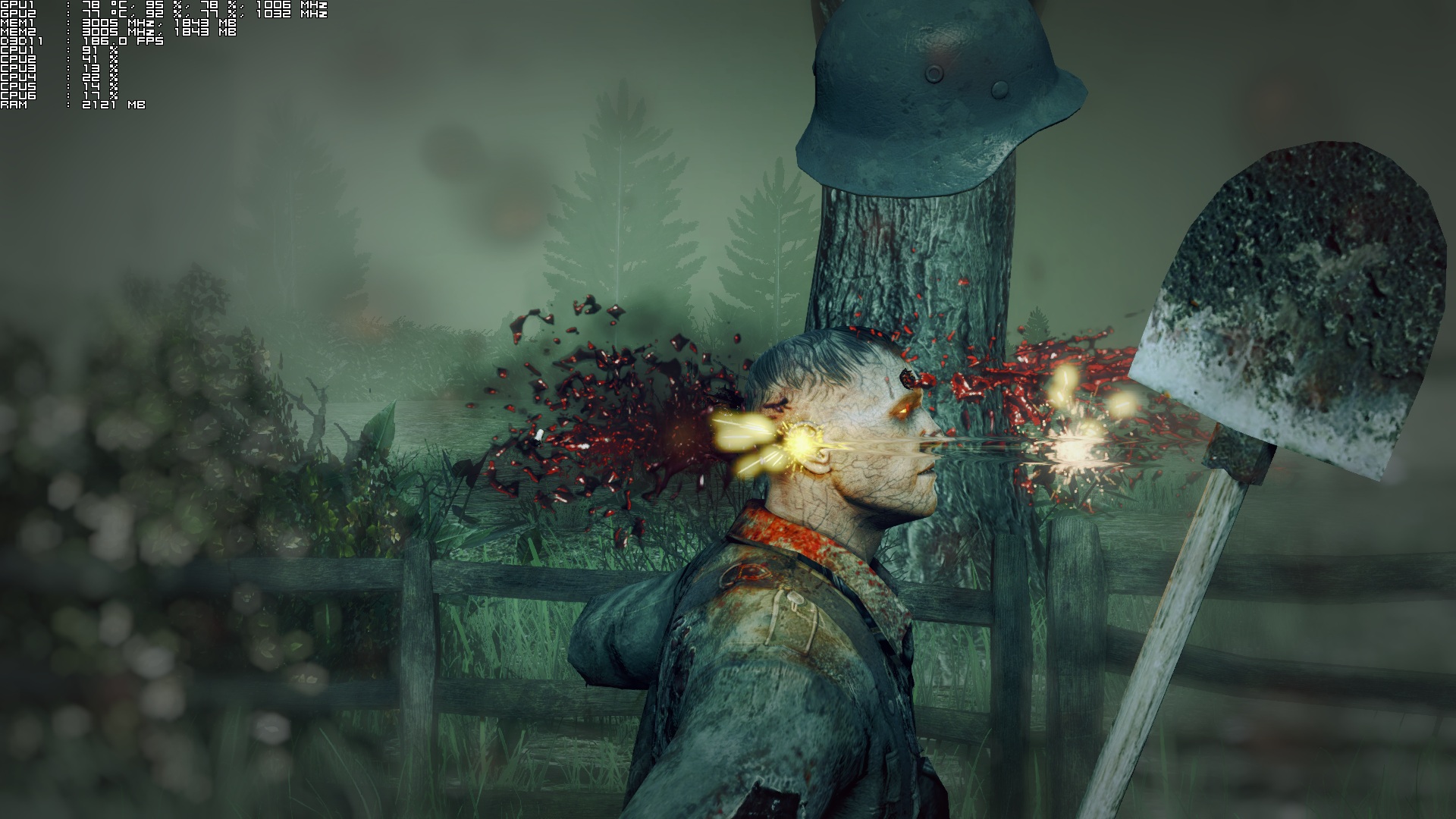
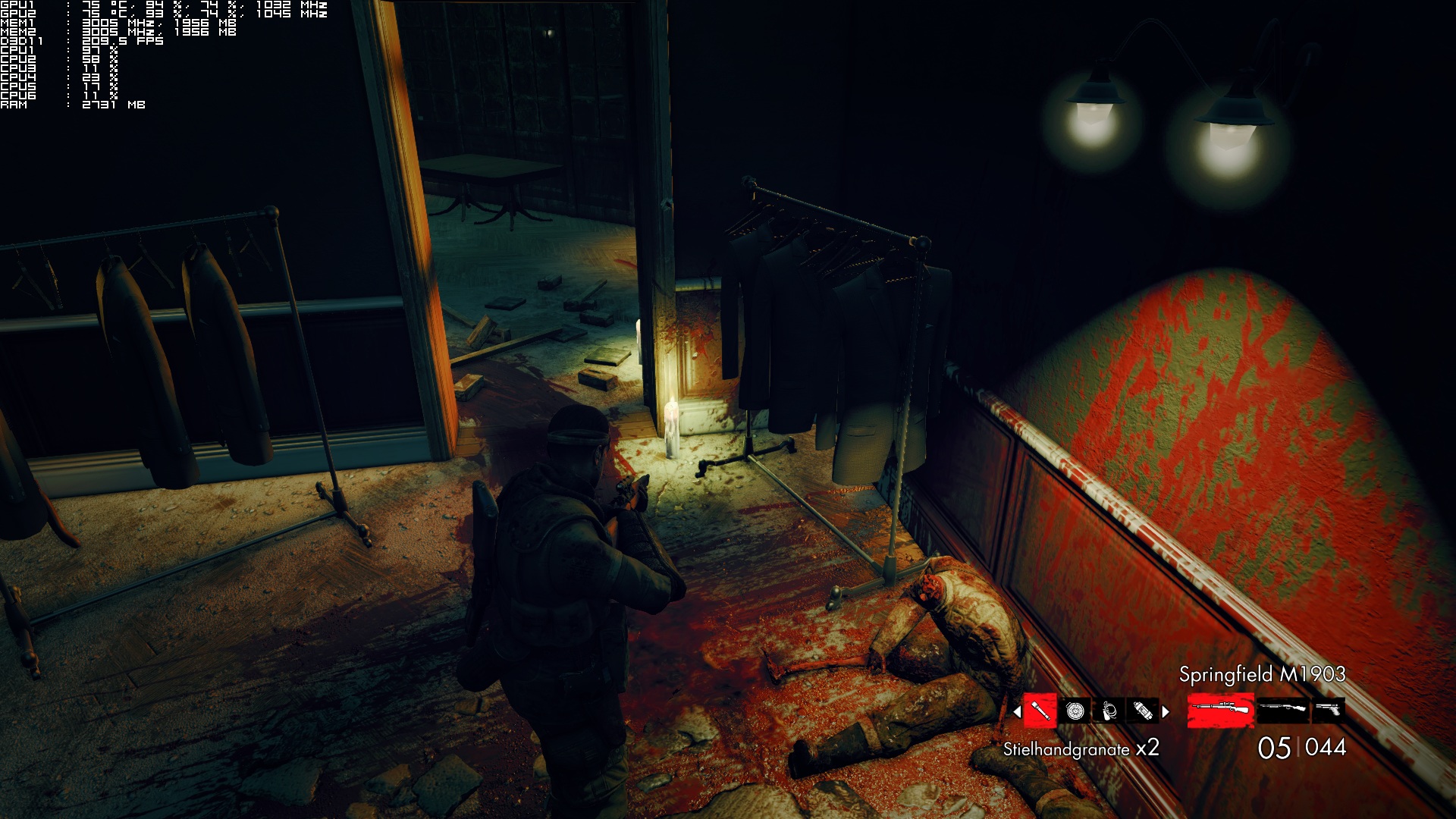
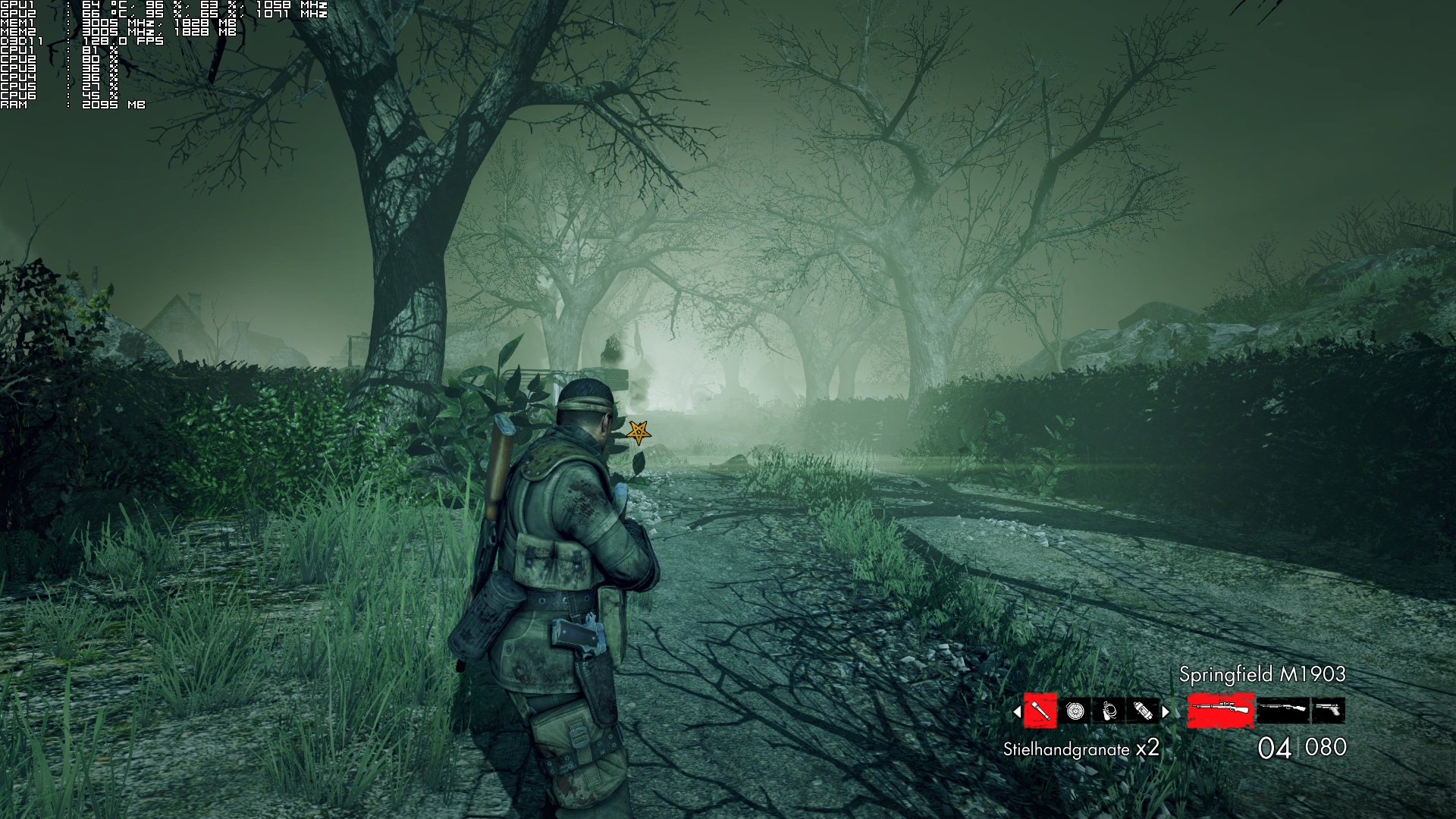
Zombie Army Trilogy does not pack as big environments as Sniper Elite 3, something that may very well explain the reasons behind its amazing performance (at least when compared to Sniper Elite 3). In addition, Rebellion has implemented a clever fog effect that limits player’s view distance, therefore the GPU has fewer things to render. Given the game’s nature, this is actually not a bad thing. And in case you’re wondering, no; Zombie Army Trilogy is far from an ugly title.

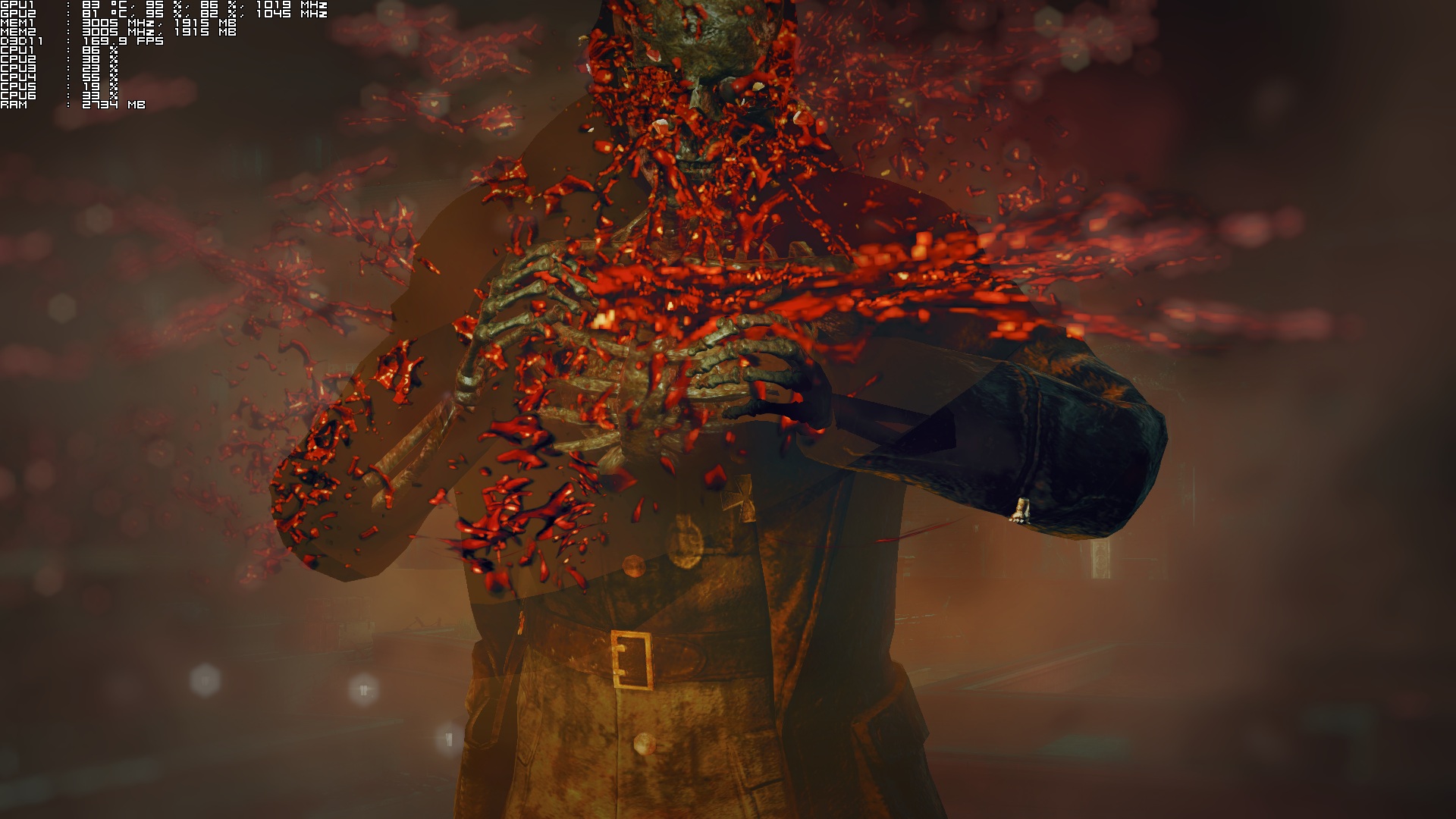
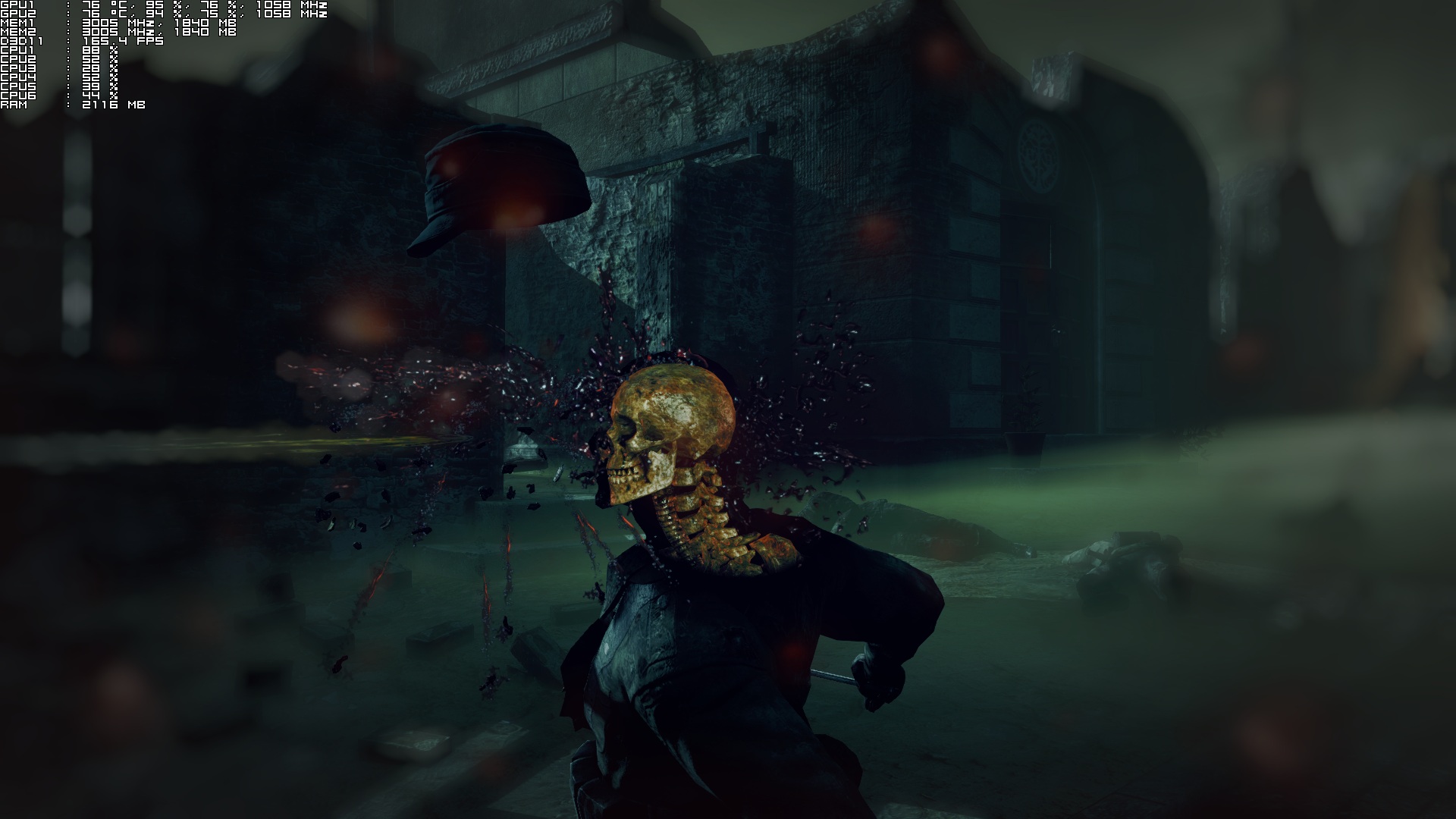
Zombie Army Trilogy features self-shadows, almost all light sources cast shadows, LOD transitions have been improved (compared to Sniper Elite 3), shadows are of high quality and do not suffer from those low-res issues found in Sniper Elite 3, there is bendable vegetation, a clever DOF filter has been implemented, and there is a great dismemberment system. Moreover, the X-Ray bullet cam returns and reminds us how cool it actually is.

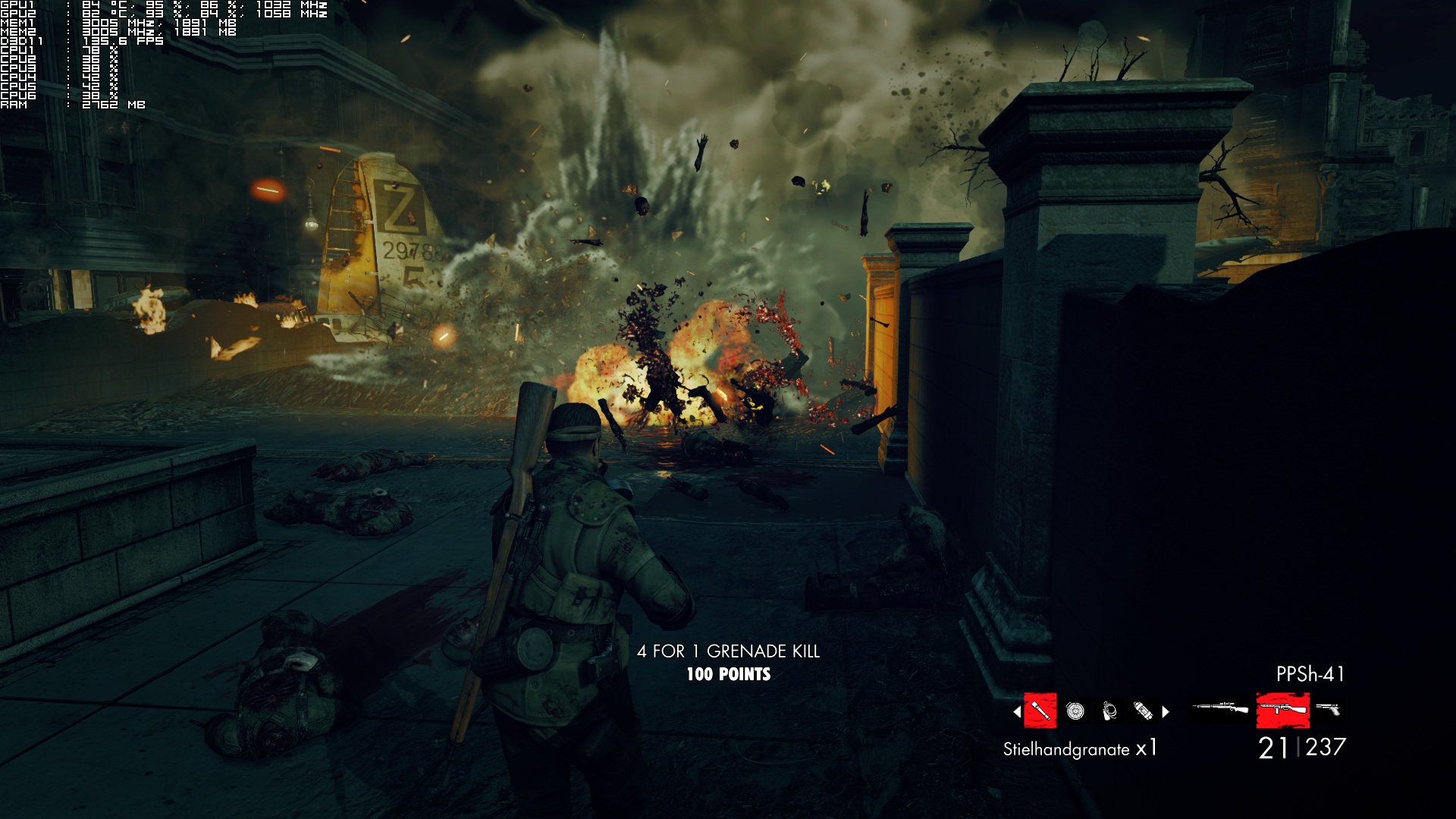
Unfortunately, Zombie Army Trilogy is currently plagued by a really annoying flickering “lights” issue. What this means is that a lot of light sources flicker like crazy. This issue appears in both SLI and Single-GPU modes, so here is hoping that NVIDIA and Rebellion will sort it out. Apart from that bug, however, Zombie Army Trilogy looks great and packs lots of enemies on screen (which means that you’re in for some gloriously gory explosions when all zombies are nearby a mine or a grenade).
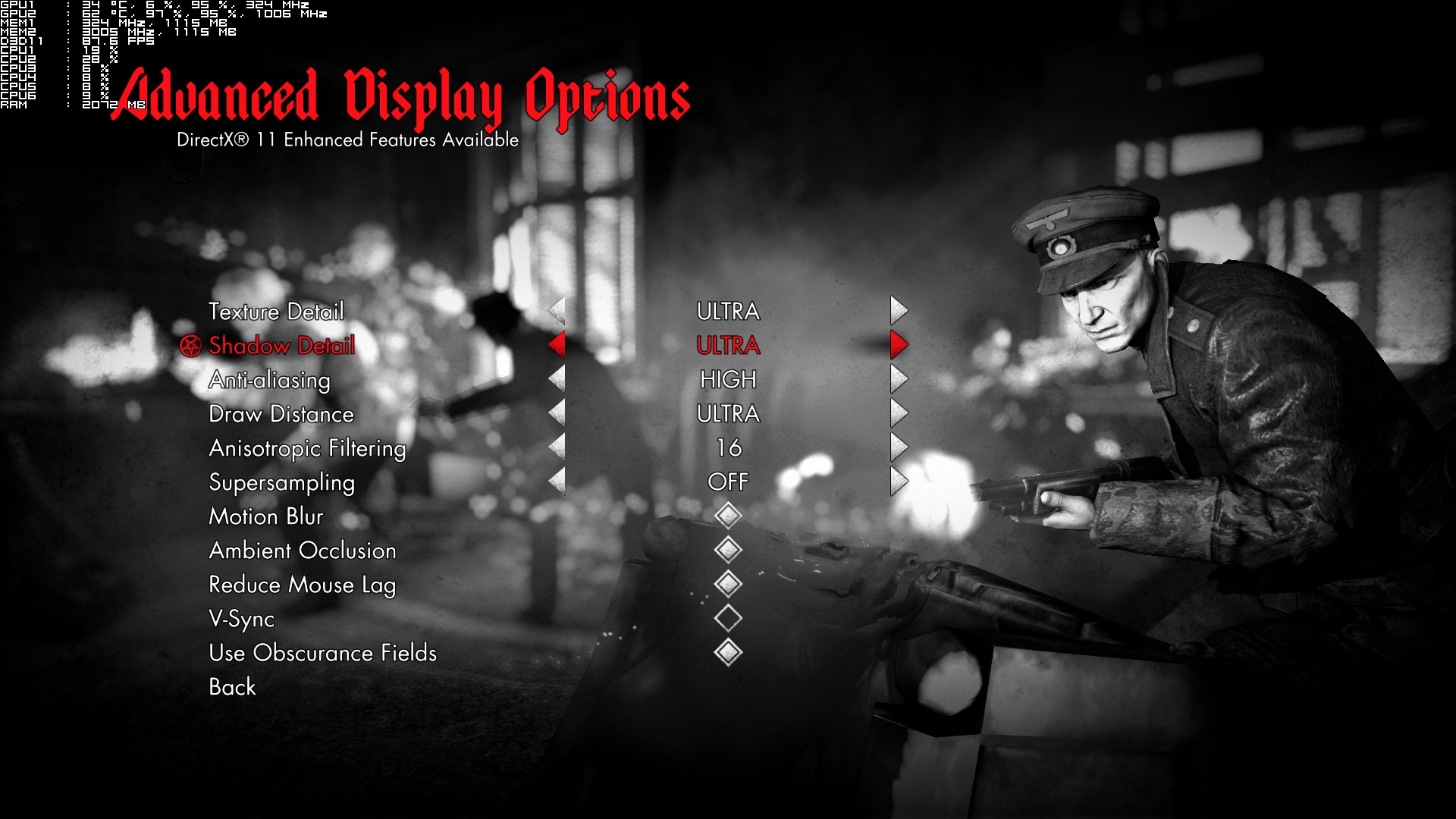
ZAT Graphics Options

Rebellion has also included a nice amount of graphics options to tweak. PC gamers can adjust Texture/Shadows/Draw Distance/Anti-Aliasing/Anisotropic Filter, and can enable/disable Motion Blur, Ambient Occlusion, Obscurance Fields and VSync. In case you’re not aware of, Obscurance Fields is a technique which allows to have soft shadows from characters on any surrounding geometry. As well as shadowing against the world, this technique also allows characters to have natural self-shadows.

All in all, Zombie Army Trilogy is a incredibly polished PC title. The game runs great even on a dual-core PC systems, sports great visuals, and while it does not require a high-end GPU to be enjoyed at Ultra settings, you can enable SuperSampling and witness your 970s and 980s being pushed to their limits. Also, Zombie Army Trilogy does not suffer from mouse acceleration or smoothing side effects, something that definitely makes us happy.

Enjoy! Cookies to all those who are reading this line and have not commented about the ‘Left 4 Zombies Trilogy’ intentional typo
ZAT_2015_03_09_17_23_23_862ZAT_2015_03_09_17_25_28_130ZAT_2015_03_09_17_26_39_554ZAT_2015_03_09_19_10_37_018ZAT_2015_03_09_19_16_35_369ZAT_2015_03_09_19_21_12_464ZAT_2015_03_09_19_21_28_067

20 thoughts on “Zombie Army Trilogy – PC Performance Analysis”

  1. I’m about halfway through this and if you’ve played the first, you’ll notice that it all seems very familiar to it, and doesn’t really offer anything new. Maybe they’re busy working on a new Sniper game, but it feels like they couldn’t really be bothered with this.

    1. Hey i never played this game i was wondering how is it? Like what type of gameplay is it. I played resident evil old and new ones and i played dying light and dead island is it like that? No i’m not just talking about zombies.

      1. Ever play any of the Sniper Elite series at all? If so, it’s the same but with hordes of Zombies. If not, it’s a World War 2 3rd person shooter, and you play as a sniper who trundles through the streets of Germany, killing lots of Zombies, with a bullet-time effect when you fire your rifle. You get other weapons too, pistols, machine guns, land mines etc.. Good fun, but it’s more like DLC, than a full game, hence the price. No it’s not like Dying Light, or Dead Island, but fun all the same if you’ve never played it before.

        1. sounds nothing like the games i played thanks a lot however for replying. I’d hate to buy something i don’t want.

  2. Good review. On a side note, AC Rogue runs great but looks worse than Black Flag not that we should have expected amazing visuals though.

    1. I deleted it after 45mins, it was a crappy attempt at a Black Flag re-skin. It looked like DLC, and most definitely not worth full price. Sure it ran better than Unity, but that wasn’t hard.

        1. There is nothing in the world that can run worse than Unity, only another Ubisoft mess can surpass Unity’s record breaking worst performance.

          Why I am saying that ? because recently I bought 2x Gigabyte GTX 980s for SLI and thought that Unity would be a perfect game to test. My results are surprising because it stays on 60 fps easily on ultra with 2x MSAA at 1440p but sometimes drop to mid 40s just because my CPU usage reaches 100% and I have an i5 4690k. If I am targeting just 60 fps with Vsync on then this shouldn’t happen at all but no this face palm game is hard on both GPUs and CPUs so what do I need an i7 4990k to run this ? I gladly remove it from my system, AC4 Black Flag was way better than this.

          1. Yes because SLI is broken in Unity and Black Flag is capped at 63FPS and CPU scaling is vastly better than that POS Black flag. Black Flag had great SLI scaling from the start, doesn’t change the fact that Unity’s performs much better on a single card, especially 970/980.

          2. I can easily say that SLI is not broken in this game, at least not with latest patch. Both of my GPUs stay at 95% – 97% load, there are no artifacts or any other weird stuff and if I turn off the vsync the fps goes to 109 max, but it drops to around 50 as soon as CPU starts getting bottlenecked. It’s not about scaling, it’s about the game being un optimized and putting unnecessary load on CPU. Even Crysis 3 on 140 fps doesn’t take my CPU usage above 90%.

            I don’t know how you’re making that claim because with single 980 I can keep black flag on 60 fps all the time with max settings while in Unity the same card struggle to maintain 60 fps all the time. It goes to 75 fps while on roof tops and less loaded areas but also goes to 45 in heavy areas, I rarely saw black flag dropping that much.

          3. Crysis 3 performs about the same as Unity and in some parts Crysis 3 goes into as low as 35fps around the system X.for me.

          4. You need i7 for unity.Its loves hyperthreading.Don’t blame the game for it.So you finally switched from amd to nvidia?lol

          5. Maybe but it doesn’t look like a game that warrants an i7. It’s not even fully open world and those unnecessary A.I entities adds nothing to the game and then we have load of tons of draw calls. Remember how Ubisoft was blaming AMD for having bad performance on their CPUs ? seems like even a latest Haswell i5 is not enough for this and this is the first time I am looking at a game bottlenecking an overclocked i5 4690k which is otherwise regarded as one of the best gaming CPUs.

            And what’s so funny about it ? I have no brand loyalty towards any company, I just go for what’s better right now and Gigabyte GTX 980s are around 20% – 25% faster than R9 290X so that’s good enough for me but at the same time I also don’t like folk spreading non-sense like claims of AMD still having bad drivers just to make Nvidia look good.

            You will still find me supporting AMD if I hear some fan boy nonsense and still denouncing GameWorks due to it’s closed nature, PC of all the platforms should get unified experience because it’s open in nature. I appreciate Nvidia’s decision of making their PhysX engine open source with UE4 even after the fact that they are moving towards PhysX FLEX, something is better than nothing.

          6. All modern game engines loves hyperthreading.I7 is now the go to gaming cpu.

            Frostbite,cry engine,disrupt engine to name a few.

          7. I agree, the value of hyper threading is growing in gaming now but what I am saying is that even with Crysis 3 if I turn off the vsync I get around 140 max fps and even then my CPU utilization stay around 80% – 90% while Unity just keeps my CPU at 100% and that’s with vsync on. I can understand a Haswell i5 getting bottlenecked by 2 GTX 980s with unlocked fps but with 60 fps target, it’s kind of unimaginable.

        2. Black Flag runs way better for me actually and the same can be said for many PC gamers. Unity runs so bad on anything but the high-end systems. I guess at the high-end Black Flag doesn’t really take full advantage of that power but Unity does. Overall though, Black Flag runs better when you take into account lower-end systems.

Leave a Reply

Your email address will not be published. Required fields are marked *