
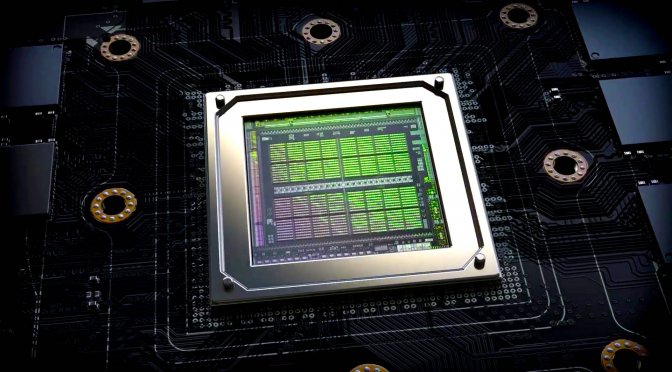
NVIDIA has announced that its latest graphics cards will be able to support Resizable BAR in late February. However, there is a catch here. This feature will only be available on the RTX 30 series GPUs. In other words, those that have purchased the expensive RTX 20 series GPUs will not have access to it.
As NVIDIA noted:
“New GeForce RTX graphics cards starting with the GeForce RTX 3060 will have support for Resizable BAR. NVIDIA and our GPU partners are also readying VBIOS updates for existing GeForce RTX 30 Series graphics cards starting in March.”
What’s also important to note is that, alongside a new driver, Resizable BAR will also require new BIOS updates for GPUs and motherboards. As such, if your motherboard manufacturer does not release a new BIOS with support for it, you won’t be able to use it, even if you own an NVIDIA RTX 30 series GPU.
NVIDIA claimed that it has been working closely with Intel, AMD and major motherboard manufacturers, including ASUS, ASRock, EVGA, GIGABYTE, and MSI, to bring Resizable BAR support to a wide range of motherboards. Still, we are not certain yet which motherboards will support it.
Resizable BAR is a new tech via which assets can be requested as-needed and accessed. As such, the CPU will efficiently access the entire frame buffer. Moreover, transfers can occur concurrently, rather than queuing, whenever there are multiple requests.
AMD has already showcased this tech in action, showing an 8-15% performance boost in some games. This is free performance boost, without any image degradation/loss.
NVIDIA’s Game Ready Driver with Resizable BAR support will be out in late February.

John is the founder and Editor in Chief at DSOGaming. He is a PC gaming fan and highly supports the modding and indie communities. Before creating DSOGaming, John worked on numerous gaming websites. While he is a die-hard PC gamer, his gaming roots can be found on consoles. John loved – and still does – the 16-bit consoles, and considers SNES to be one of the best consoles. Still, the PC platform won him over consoles. That was mainly due to 3DFX and its iconic dedicated 3D accelerator graphics card, Voodoo 2. John has also written a higher degree thesis on the “The Evolution of PC graphics cards.”
Contact: Email