

Intel feature 5

Intel tapes out its first discrete Gaming GPU, the Xe-HPG ‘DG2’ graphics processor

According to Intel’s most recent quarterly earnings, coming via SeekingAlpha, the company has announced that it has successfully started shipping its first discrete GPU DG1 in volume, and also revealed that the DG2 GPU, based on XE HPG architecture, has already been taped out and powered on in the labs.

The company reaffirmed that it is working on a full stack of discrete Xe-HPG-based GPUs that will target the mid-range/mainstream and enthusiast gaming market segment sometime next year.

The new Intel DG1 is Intel’s first discrete GPU in over 20 years. You might remember the good old Intel i740 chip from the early 1990s, and it has almost been over two decades since the company released a discrete graphics processor in the market.

Intel’s DG1 GPU is now already shipping in volume. DG1 is codenamed as Intel Iris Xe MAX, and this GPU will land up in ultraportable and thin laptop designs. It is based on the Xe-LP architecture for iGPUs and low-power models, and entry-level gaming PCs. According to Intel, DG1-equipped notebooks are expected later in Q4 2020.

“Our first discrete GPU DG1 is shipping now and will be in systems from multiple OEMs later in Q4,” said Bob Swan, CEO of Intel, during the company’s earnings call with analysts and investors.

“We powered on our next-generation GPU for client DG2. Based on our Xe high-performance gaming architecture, this product will take our discrete graphics capability up the stack into the enthusiast segment.”

The new Intel DG2 discrete gaming graphics processor on the other hand is currently in alpha silicon form, but Intel said they’ve already powered-on this new DG2-based GPU in their labs.

DG2 isn’t just a successor to DG1, but instead is a higher performing bracket GPU based on the company’s latest Xe-HPG architecture.

Intel Xe-HPG slide

Xe-HPG is the enthusiast, and gaming focused GPU architecture, incorporating hardware-enabled features found in similar discrete GPUs like e.g. ray tracing/RTX etc.

This GPU is being manufactured outside of Intel’s fabs, in an external foundry. While the company hasn’t said which fab and process node is being used, but most likely it is being manufactured at TSMC’s facilities.

So Intel has actually used a lot of other third-party IP, such as the memory controller and interface, and display interface to optimize the overall design costs. Intel’s family of Xe-HPG graphics processors will consist of multiple SKUs targeting different market segments spanning all the way from mid-range to the high-end enthusiast level.

Though, Intel hasn’t clarified whether DG2 is a flagship-grade bigger chip, or a more modest, and smaller high-volume part. For now, the company is simply saying that DG2 will “take our discrete graphics capability up the stack into the enthusiast segment.”
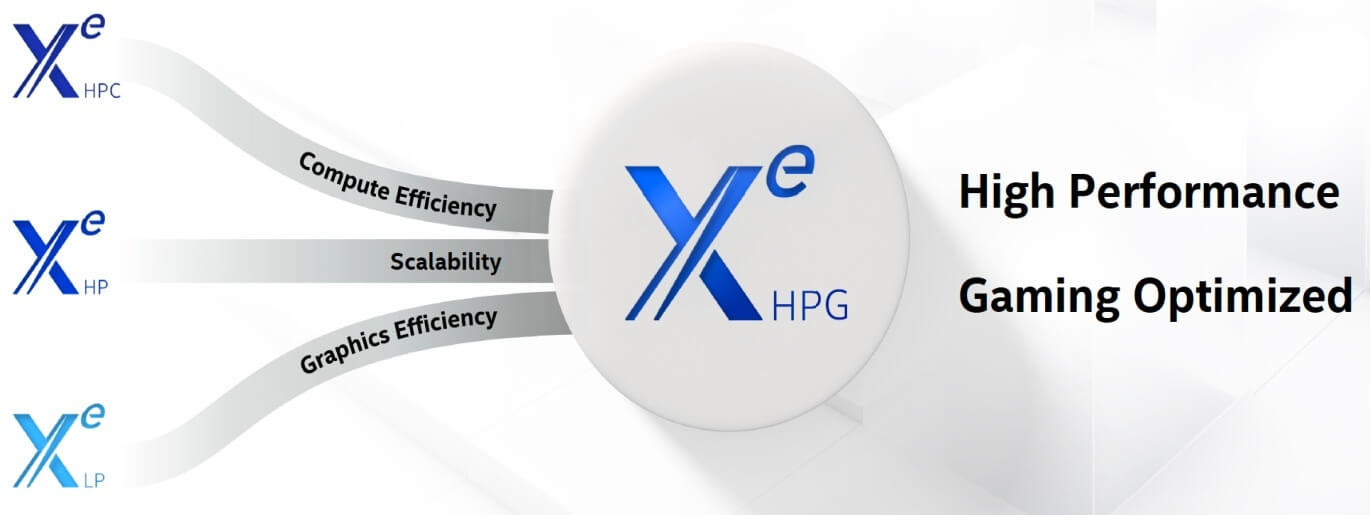

Intel Xe-HPG slide-2Intel Xe-HPG slide-3

Thanks, Anandtech.

25 thoughts on “Intel tapes out its first discrete Gaming GPU, the Xe-HPG ‘DG2’ graphics processor”

  1. I can’t wait to see the performance of these. Personally I hope it does well. Competition is good for consumers. Drive these prices down a little.

      1. Maybe not now that sooner or later it will be, Intel has enough money to burn on this and make it a success, and they will.

        Its an arch which is a part of their Core so not random IoT trash they used to spent their money on so it actually has future.

  2. Good.. No stay on track and give us gamers a competitive GPU. Don’t really care about the Flagship high-end segment.

    Just release a good decent performing budget mainstream GPU.

    1. That’s the best they can do. release a mainstream offering. Makes no sense for them to compete with high-end cards from other camps.

      But I seriously doubt Intel can gain some serious Gaming market share. Only time will tell though.

  3. I wonder if this will shake thing up or just go unnoticed.
    They’ll need a decent amount of marketing to push it through the already established AMD and NVIDIA brands.

  4. No graphics card can even come close to the power of Xbox Series X aka the most powerful gaming machine in the universe! Cyberpunk 4K 120fps with Ray Tracing enabled only on Xbox!

    1. I think he might be trying to be funny. Surely he doesn’t believe what he keeps posting. It does get annoying after so many posts promoting the Xbox Series X on a PC gaming site though and it does qualify as spam. Reminds me of some of the nonsense that Sp4cTro used to post.

    2. hey dingleberry, you do know that xbox uses all amd chips and not intel, right? and there are already more powerful parts for pc than what’s used in the x-jox, right?

      pc master race rules supreme and consoles are for kids.

      burn that phrase in to your simple pleb of a brain and shout it from the rooftops.

  5. Wow, Thought I would never hear that i740 again, This article really shows my age. 😉
    I remember playing Hexen on a Pentium 120 with an i740.
    Seems like garbage now but back then I thought it was great coming from an Amiga 500 and consoles over to pc, 3d games started to take off on a whole new level and got me hooked on pc hardware and custom builds/overclocking later on.
    I look forward to having more than 2 gpu companies in the market again for gamers.

    1. “I remember playing Hexen on a Pentium 120 with an i740.”

      Hexen didn’t require or even support a hardware 3D accelerator like the i740 which was released in 1998. 1998 is NOT “early 1990’s” despite what the idiot “METAL MESSIAH” wrote above.

      I had a Real3D-branded i740, and it was a nice card at the time for the price. It wasn’t as fast or as expensive as a Voodoo 2, but the image quality was better. The software bundle that came with it was good too.

      1. Maybe it was Hexen II then, That far back I can’t remember exactly. lol
        I just know I had the i740 and P120 and pretty sure it wasn’t any of the quake games.
        i740 got a lot of crap, But I thought it was quite good for it’s time, Cheap and did the job.

  6. How many of you really think Intel can really offer a competitive Gaming GPU ? I don’t to be honest, as I cannot trust RAJA koduri anymore since he left AMD.

    They already hyped about this XE graphics processor before but to no avail.

    1. At best for now maybe they can offer something like 750Ti if i had to guess from the leaks we have been provided now and then, and Intel has a strong brand name they could make it work.

      I guess ? God knows. Also i don’t even know if Raja leaving is good or not.. maybe its fine, never liked that guy anyway since the poor volta bs.

  7. Intel won’t come close, NVIDIA is falling down … and Radeon is picking up steam. Radeon is for the first time trying to hardware RT, and it already beats Turing at it. That is why Huang is investing so much in RTX and DLSS, Intel has to start coming close to Polaris. You can’t take them really seriously, it will take multiple years before Intel will be a threat for NVIDIA or AMD.

    1. Turing is here for 2 years. So it’s good that new Radeons beat this. But also according to result from Port Royal benchmark, they will be at least 50% behind Ampere. Plus Ampere has advantage in DLSS. This does not look so good for new Radeons. In RT, they are one generation behind.

    2. If AMD doesn’t improve their Software it won’t matter even if their HW is 2 times better. Pray for AMD’s Adrenaline 2021 edition in December to have some magic in it otherwise its pointless.

      They need something close to Geforce Experience, without the always online/login as mandatory.

  8. BTW I expect very high prices from Intel when it launches the “real” discrete GPUs, the enthusiast ones …. the fact that there is a third competitor in the GPU market is a good thing for us consumers … but if Intel will apply the same pricing policy it has always implemented with CPUs … well, I expect very high prices…???????????????

Leave a Reply

Your email address will not be published. Required fields are marked *