
Unity Technologies on DX12, Vulkan, Ray-tracing, Physically-based Rendering, Dynamic LOD, E3 Demos & more

A couple of days ago, we had the pleasure of interviewing Unity Technologies’ Field Engineer, Mathieu Muller. We talked with Mathieu about a lot of interesting subjects, such as the performance issues that affected all Unity 4 games, the Global Illumination solution for Unity 5, DX12, Vulkan, ray-tracing, and the future of the Unity Engine. Enjoy the interview after the jump!

DSOGaming: Before we begin, please introduce yourselves to our readers.

Mathieu Muller: My name is Mathieu Muller. I am Field Engineer at Unity Technologies, and my job is to travel across Europe and Africa to represent the development team for the people using Unity and vice versa. I have been working in the simulation and game industry for about 15 years as graphics and AI software engineer.

DSOGaming: A lot of engines already support DX12, and Unity 5 is one of them. Have you experimented with this new API and what are the performance benefits of it? What is your general opinion on DX12?

Mathieu Muller: We started work on DX12 with support from Microsoft and hardware manufacturers about 2 years ago. We first focused on introducing functional support and experimental support in Unity 5.2. But we could see already slight performance improvements on some tests. In parallel, we have been working on a new graphics architecture to support graphics jobs that could be used across all new low-level graphics APIs. This is currently available as experimental in 5.4 Beta, and we are getting some performance benefits but not yet nearly as much we could—we are working on changing even more of our code to be better. Moreover, most performance benefits currently come when you are CPU-bound while PC games tend to be GPU-bound.

DSOGaming: The first DX12 games that have been released on the PC were a bit underwhelming (in terms of performance and visuals compared to DX11). Is that normal? When can PC gamers expect to see games that will take advantage of DX12?

Mathieu Muller: Yes, quite normal. Most engines are in a similar situation as I previously mentioned: the potential for performance of DX12 is there, but it is hard to beat 5+ years of driver optimization improvements. To some extent, this reminds me of PS3 — while the potential of the architecture may be outstanding, it also requires deep changes. You get very close to the hardware, but it takes time to master this power and balance the end benefits as opposed to the overhead of the system that will use the new predicates. A decade ago, many studios spent a huge chunk of development time optimizing their software for PS3’s SPUs and ended up obtaining fewer improvements than if they would have simply optimized their main algorithms. After some time, the architecture and the drivers had matured sufficiently and great results could be reached. The same thing should happen in the coming years with DX12.

DSOGaming: Asynchronous Compute is a feature that has been in the spotlight since the announcement of DX12. Have you experimented with it and how can this feature benefit future games?

Mathieu Muller: The potential is certainly there, but currently only AMD GPUs do it efficiently and we haven’t implemented Async compute support yet.

DSOGaming: Apart from the performance boosts, what visual improvements can PC gamers expect from DX12 games?

Mathieu Muller: Most of the new features (conservative rasterization, etc.) are coming to DX11.3 too. So DX12 is very much about (CPU) performance and frame rate stability.

DSOGaming: What’s your opinion on UWP? Do you see it as something that will limit your future audience in case Microsoft locks DX12 behind it?

Mathieu Muller: For us, UWP is a platform that offers great opportunities to reach XBox One without a dev kit, which is especially empowering for developers. DirectX 12 is currently not limited to UWP, and we don’t foresee it becoming unavailable for classic Win32 applications.

CGI Animated Short & Tech Demo: "The Blacksmith" - by Unity Technologies | TheCGBros

DSOGaming: Does Unity 5 support Vulkan and have you experimented with it? If you had to choose one, would you go with DX12 or Vulkan?

Mathieu Muller: We just announced officially at Google I/O that we will be supporting Vulkan and cannot wait to give it into the hands of our users! We have been working on DirectX 12 for longer, and it will take some time for Vulkan to be as mature. On the other hand, many concepts are similar which should help getting the two technologies on par as quickly as possible. We are looking forward to getting Vulkan integrated to bring multi-threaded rendering to a huge number of mobile devices. So far, it is too early on in the process to make any definitive conclusions.

DSOGaming: Physically-based rendering is the next big ‘graphical’ thing. Can you explain the benefits of using this rendering technique to both our advanced-tech readers and the average Joe?

Mathieu Muller: Physically-based rendering has been originally introduced to remove the need for artists to iterate on textures when the lighting is changing, by giving physical properties to a material (e.g. roughness or softness, metallic-ness). If the environment is modified (a forest covered with snow or a warm desert), a piece of aluminium will always look like aluminium. Another benefit is to be able to mix assets from different sources if they are photorealistic and well calibrated. But it is not just about materials. Light is also very important. Currently, lighting is just one of the values, and just like mixing music, you often end up saturating your mix. The promise of physically-based lighting is in being able to play with real-life light values in order to get more control over the result. This is one of the research areas that our graphics team is working tirelessly on.

DSOGaming: Let’s talk about Ray-tracing. Does Unity 5 support ray-tracing? How far away are we from a fully real-time ray-tracing (or path-tracing) lighting system in video-games?

Mathieu Muller: Unity does not support ray-tracing as a final real-time rendering algorithm. However, ray-tracing is increasingly used in various parts of the engine and toolset. For example, global illumination lightmap baking is done using path-tracing, and real-time global illumination uses ray-tracing during the offline precomputation step. Similarly, post-FX such as SSRR (Screen Space Raytraced Reflections), that can be found in our cinematic effects or volumetric effects (e.g. atmospheric scattering, volumetric fog), do some kind of ray-tracing (ray marching). However, pure real-time ray-tracing rendering is in my opinion quite far away. Computational power will have hard time to keep up with the impact of increasing resolutions, better anti-aliasing, and stereo rendering over ray-tracing complexity. Imagine the power required to render a VR image, two times 1K rendering at 90 frames per seconds. For a ray-traced camera with this configuration, you need 180 MRays/sec to render primary rays only. An optimized GPU ray tracer can do ~300 MRays/sec, so adding a couple of shadow rays breaks the budget. An order of magnitude and more computing power is needed. The current trend is actually the opposite.

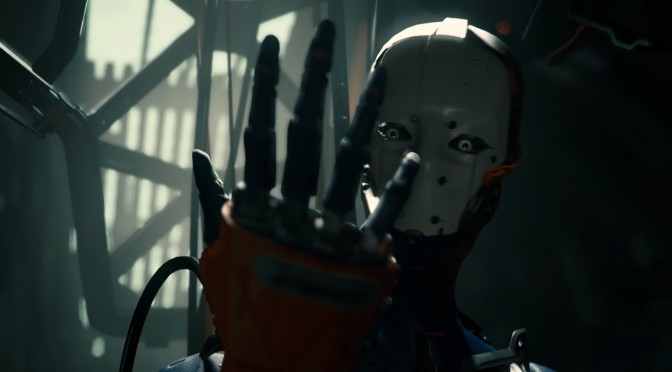
Industries like VFX are increasingly going for real-time rendering technologies to improve their iteration time and reduce their rendering farm workload. Our demos such as the Blacksmith and ADAM prove that real-time rendering is getting close to a high enough quality level for creating feature films. Caustics, complex VFX, hair, dense vegetation or water simulation are huge challenges for real-time rendering, and I bet that more progress will be done there than in full real-time ray-tracing. Our graphics lab team will, for example, present this summer at Siggraph a method to render area lights, usually a raytracer feature, at real-time frame rates.

That said, we are doing R&D in this area, working with partners such as Imagination Technologies and AMD, to look into uses of real-time ray tracing. Short-term, fast ray tracing can be used to make lightmap baking an interactive process. Mid-term, hybrid rendering algorithms using ray tracing could be employed to resolve shadows and reflections. And longer-term fully ray-traced cameras could be considered. Again, it is hard to compete with an entire industry that has been focused on rasterization for several decades.

DSOGaming: Photogrammetry is a technique that has impressed everyone these past few years. Does Unity 5 support it and what’s your opinion on it?

Mathieu Muller: There is no real engine support needed for photogrammetry, since it is nothing more than meshes and textures. However, we have a team part of the graphics lab working actively on photogrammetry. Photogrammetry and physically-based rendering are closely tied together. When both are mastered, one should be able to take a reference picture of a scenery, scan the objects, export the geometry and materials to Unity, place the lights accordingly to the reference environment, and should visualise in-engine at real-time the almost exact scene. For us, it is key because it will be the reference to measure the quality of our rendering pipeline. This is not for now, but we should get very interesting things published along the way.

DSOGaming: Can you share more tech details about Unity 5’s Global Illumination solution?

Mathieu Muller: Unity’s global illumination is currently fully based on Enlighten by Geomerics that delivers real-time global illumination across almost all of our platforms. It is a fantastic technology which manages very complex parallel and time-sliced systems to allow to smoothly compute the global illumination at runtime when the lighting or materials change, even on high-end mobile platforms. Having said that, it also requires more attention and we have seen a few of our users suffer on the workflow side. It can be hard to author correctly with typical pitfalls (too many small objects, poor quality UV unwraps, inappropriate parameters,…) that can lead to long baking times. It is mostly a global process making it hard to selectively iterate on the lighting. This is why we are working on a progressive lightmapper partnering with Imagination Technologies, which progressively builds the lightmaps, focusing on the visible part of the scene and then the parts outside the view. This way, objects and lights can be moved around and users can directly see the impact on the lighting interactively while the solution is converging. It was presented at our GDC Keynote this year and we hope to provide an Alpha build in the coming months. In addition to this, we will improve the authoring workflow for real-time GI using Enlighten.

Unite 2015 - Advanced Global Illumination in Unity 5

DSOGaming: Let’s talk about the future of the Unity 5 Engine. What are the biggest future tech features that PC gamers can expect from Unity 5 (apart from VR )?

Mathieu Muller: There is a lot of exciting work in progress which is, or should become, available in the coming months or year: motion vectors, AAA-quality cinematic post-FX (temporal anti-aliasing, new tone mapping and color grading tools are just some of the examples), a progressive lightmapper, a cinematic sequencer to allow the authoring and playback of sequences of animation and audio clips, runtime build of the NavMesh, a whole lot of 2D tools, and much more. For more detail, take a look at our roadmap. We have also recruited a lot of very talented and experienced people across the world who have previously worked for the best engines and studios. They are helping out getting on par with quality expectations of the AAA industry, but are also already thinking and working on what will be the best tech in the coming years.

DSOGaming: Pop-in of objects is an issue that has not been addressed yet. While some games have higher LOD levels, every game – more or less – suffers from it. What’s really puzzling us is that while dynamic tessellation basically solves this problem by varying the level of detail on the fly, no one has ever used it. What’s your opinion on dynamic tessellation and have you experimented with it in order to eliminate object/environmental pop-ins?

Mathieu Muller: You almost guessed them all! Level of detail is again one of the research area our graphics lab is working on. There are many possibilities here and not only triangles have to be considered. Reducing the number of materials, the complexity of shaders, the number of details in the diffuse or normal maps to prevent aliasing or flickering are necessary. We have been internally experimenting on some really interesting concepts recently and hope they will find their way into the engine in the near future.

DSOGaming: A lot of PC gamers have complained about framerate issues in games powered by the Unity Engine, even on high-end systems. Moreover, some games that were ported to the latest version of the Unity 5 benefited from better framerates. What were the culprits of the underwhelming performance in older games powered by the Unity Engine, and what steps did you take in order to improve the overall performance of your engine?

Mathieu Muller: Unity 4 was more or less a single-threaded engine.  We had a few components multi-threaded and a render thread. Unity 5’s core has been rebuilt with multithreading in mind. At release time, we had multi-threaded physics, occlusion culling, real-time GI and skinning. Every release since then have seen other components getting multithreaded: UI batching, frustum culling, culling groups, sorting, graphics jobs, transforms evaluation, etc. We have also done a lot of refactoring effort of core components to get better data caching and SIMD optimization which is key for high performance. We also created a team dedicated to performance analysis and regression tracking.

Unity GDC demo - Adam - Part I

DSOGaming: Does Unity 5 support multi-GPU setups? And will you ever release your “Adam” short film as a real-time benchmark so that PC gamers can test their systems?

Mathieu Muller: We support multi-GPU in the sense of SLI/Crossfire, which does not always guarantee better performance. It’s mostly transparent to the engine/application, and how well does it scale largely depends on application, drivers and the moon phase.

Multi-GPU can also be in the form of “I have two different GPUs in my machine” (e.g. An integrated Intel one and a discrete one, or two different discrete GPUs). DX12 allows using that, but we don’t support that yet.

Concerning our short film ADAM, we are still working very hard on ADAM Part 2, and we plan to release as much of this content as possible in a third phase.

DSOGaming: Lately we’ve seen a number of games being downgraded from their E3/GDC showcases. What’s your opinion on this? Should game developers showcase games that are not possible even on high-end PCs?

Mathieu Muller: Setting expectations too high can backfire. On the other hand, trying to show the best of your technology is always interesting, because this is how you push the limits and differentiate from others. Another factor to take into account is that shipping a game can sometimes be almost the hardest thing on earth, and almost everyone has to cut a lot of things in the last months of development. Experienced studios have developed tools and methodologies to reduce that risk. For indies, things can go wild, if they have not done unit testing, continuous integration, tools to easily analyse and reproduce problems. And the Number One rule is: do not develop your game on a high-end PC!

DSOGaming: Thank you very much for the interview, any last words you want to share with our fans?

Mathieu Muller: Thank you for the great questions! Unite Europe starts May 31st – see you there or watch online!

127 thoughts on “Unity Technologies on DX12, Vulkan, Ray-tracing, Physically-based Rendering, Dynamic LOD, E3 Demos & more”

  1. “And the Number One rule is: do not develop your game on a high-end PC!”

    Not that anyone else will ever admit this is a rule of thumb in the Industry these days, because “why be honest?”

    Nice to know it takes an Engine Developer to straight-up admit this, since nobody else has the balls to do so.

    Anyway, great interview. That’s CryEngine & Unity down, planning one with Epic Games over Unreal 4, too?

    Interesting point he brings up too; a large part of DX12 is coming to DX11.3, meaning Windows 8/8.1.

    1. graphical feature wise everything that can be done in DX12 can also be done with DX11. DX12 is more about reducing CPU overhead and direct control of the resource that otherwise done by driver. most developer admit that the first part is quite easy to tackle but the second part is not.

      1. it doesnt matter what anyone wants dx12 will be the main api for gaming.if people devs cave to lievidia its a sad day in gaming indeed.

  2. “The potential is certainly there, but currently only AMD GPUs do it
    efficiently and we haven’t implemented Async compute support yet.”

    How to being a d**k illustrated! How about enabling it and change some bits when Nvidia releases its support for it… if they doesn’t do that, you will not implement it? AMD doesn’t throw money at you like nVidia does?

    1. it will take gimpvidia forever to release support for async compute for dx12.they are trying to push vulkan which will never happen.

      as long a ms has control over dx12 pc/xbox use dx12 it will be the main api for gaming.

      1. Are you stupid? Async compute is included in the GTX 1080 and 1070 (basically all of the pascal series). And it works great.

        1. “And it works great.” *Allegedly. Last I heard, it still trails behind AMD’s DX12 + Async by serious percentages in early tests.

          Regardless, good point. I forgot about the upcoming GTX 1000’s.

          1. According to Gamers Nexus tests, yes, 24FPS ahead of DX11 on the GTX1080 in Ashes, high, 1080p. Gamers Nexus concluded it’s Pascals preemption Async.

      1. as long as these kind of articles pop up i will not.i will make sure everyone know dx12 is the main api for gaming and vulkan has no backwards compatibility what so ever.

          1. Go to your doctor and tell him that the dosage you are taking it’s too much.

          2. see nothing but a troll.what next the do you speak english line…lol get some new trolls.

          3. First rule of the DSOGis bias fanboyism and suck eachers wee wee..no thx

            any one with a brain can google vulkan backward compatibility and see how stupid most of you are.

          4. Oh, you poor thing, don’t be so jealous.
            You can be a troll to, you can. *-*

          5. i just know your troll routine since thats what you do when you get shown up like the rest.whats next the do you speak english line?…lol

          6. Don’t bother. The guy don’t even know what he is talking about. He somehow got this stupid idea about using vulkan will make you unable to play dx11 games on your pc but with dx12 you can because of backward conpatibility. Vulkan is vulkan. What does it have to do with other API?

          7. wow you guys are almost as bad as the ps4 fanboys.its not hard to google it any one with a brain can.

          8. Using google does not make people clever. Brain? Yes you need to stuff your brain with more fact and knowledge before try talking things you don’t know about.

          9. direct x games arnt compatible with other apis just direct x.most of these guys are still mad that i show them up they think they know everything.

            its not hard to google vulkan backward compatibility thses guys just are nvidia fanboys who support vulkan.

            remember mantle before it was vulkan and amd only had a few games to support it. you may want to use google and do you own rechearch
            before listning to these nvidia fan boys.

            thats the only reason they talk about vulkan is because of nvidia.

          10. Im nvidia fanboy myself. I think vulkan support mostly linux guys. I would like to “convert” to linux too, thats why i support vulkan. btw one of the biggest pushers for vulkan is valve.

            And about backward compatibility. I dont even understand what it should be compatible with. There is no older version of vulkan.

          11. na the only reason people are talking vulkan right now is because of nvidia and the doom demo.if you dont understand how backward compatibility works and how the whole compatiblething works google it.

            vulkna will never take off as long as win 10 dx12 is every where.

            uwp is why vulkna will never happen..lol

          12. I tried to google “how compatiblething works” but google is silent. Can you please explain. You seems to be an expert.

          13. “na the only reason people are talking vulkan right now is because of nvidia and the doom demo.”

            AHAHAHAHAHAHAHA *runs out of breath*

            *re-reads, & catches the “uwp is why vulkna will never happen” part of the post*

            AHAHAHAHAHAHAHAHAHAHA –

          14. if doom was run 100fps on dx12 which it wont you wouldbe all whooo dx12 whoo x12..lol you guys are worse the ps4 ponies..lol

          15. “the only reason people are talking vulkan right now is because of nvidia and the doom demo.”

            If you seriously believe that………

          16. Tell him how AMD started it and how people where calling NVIDIA how they don’t support open source low level APIs LOL

          17. Na but they were going to, because they were going to get pressured into it, then AMD sold themselves out to the Khronos Group because they didn’t really want Mantle to be Open-Source…..

            Or some sh*t? ;D

          18. Personally I believe it was a plan from the start to get Microsoft to use asynchronous compute and go low level in their next DirectX, funny how it worked a treat because AMD started telling devs to support DX12 instead of Mantle, then they gave Mantle away instead of making it a competing graphics API. Basically, giving it to Khronos Group means they don’t have to do anything and let someone else do all the work.

          19. poor nvidia…..poor nvidia.locked out of the console market by mad and now the mid range gpu market by amd.all they have left is high end gpus that most will not buy…lol

          20. Right….

            Because apparently it’s AMD that controls ~80% of the current GPU Market, not Nvidia.

          21. btw amd get a boost from vulkan to but they know dx12 will be required for games.

            what are you going t do when a gam say required qin 10 dx12 cry to mama?

          22. Yeah poor nvidia with basically 3/4 the market share and how much is their stock worth compared to Amds’ again lol.

            Lets not kid are selfs here Amd is quite behind their competition in many ways not one thing will save them they need an overall better product not just one special feature they always show off.

            I told you this before Mantle didn’t save Amd’s market share, windows 8 didn’t save bulldozer from being mediocre. No one is falling for it anymore.

          23. only 3% of steam users use the gtx 970 and they have 3/4 of the gou market…come uo with some real numbers before you repeat false information you herd….lol.

          24. You know that is real info right Amd just gained 3% this quarter but Nvidia still owns 75% of the discrete video card market.

          25. here is some real dx12 info from pc gamers using a real game. not fake benchmarks and look amd is beating the gtx 1080..lol

          26. That’s the nano in CF of course it will win. Dude just wait for Amd to release their newer cards. Rumor is they will release their mid-range cards first.

          27. No you showed the benchmarks and it showed the 1080 winning compared to anything Amd except in CF with 2 nano’s

          28. i showed that the gtx 1080 isnt faster then the nano in cf.the big boast was the gtx 1080 is faster then 2 titan x’x its not even faster then 2 gtx 980’s.

          29. well that was all a load of crap anyways remember when i said never trust Nvidia or Amd or Intel in terms or marketing?

            They all troll

          30. All fanboys are bad Amd fanboys are pretty darn bad to and i know i used to be one of them, but yeah nvidia fanboys can be bad to.

            ONLY listen to benchmarks man believe me if Amd had the best performance and performance per watt my 970 would be sold so fast same with my 4790K if Amd can come close.

            Sadly as of late i just don’t see it and i want to so badly

            Anyways again Nvidia, Amd and intel fanboys are horrible and imo just as bad as console fanboys

          31. You just named Amd’s competition. For one speaking from a pure Nintendo and PC fan the PS4 is king of consoles its more powerful and has more sales.

            Second i owned a 8350 hey check my youtube videos which is called “jd gaming” the 8350 was quite a bottleneck even with a weak 770.

            Also man oh MAN i hope Zen smashes Intel more than anything

          32. “direct x games arnt compatible with other apis just direct x”

            This just shows you how clueless this guy is.

          33. “For Vulkan, the Khronos Group decided to completely scrap the old
            OpenGL+ES APIs in favor of a clean-slate approach. Vulkan started life from AMD’s generous contribution of the Mantle API, which was modified to be fully open standard and multi-party approved. While this approach does mean breaking backward compatibility, it also ensures this new API will be clean and optimal.”

          34. Yeah, but that just means it’s not backwards compatible with OpenGL, period.

            OS compatibility is off the charts, on the other hand.

          35. As i said before “I dont even understand what it should be compatible with. There is no older version of vulkan.”. Now i understand some people expect brand new api to be backward compatible with some completely (yet from the same developers) different api. It seems silly to me but i get it now.

          36. Pretty much. Most people just see it as another piece of Software, & since 99% of Software is backwards compatible with their previous versions/iterations, “why isn’t Vulkan compatible with OpenGL?”

          37. I just quoted that because Hvd as usual knows nothing ,expects you to google instead of properly explaining to you or quoting the full context.

    2. This is not about nvidia only. Try widen your view. What games usually using Unity engine? It was mobile game (android/iOS). And we still got few gpu players on mobile. ARM (Mali), Imagination (Power VR), Qualcomm (adreno). They mention only AMD have efficient async compute. that’s mean every other gpu are not really in different situation than nvidia. Since most game that use unity is on mobile it is better for them to focus on what that can benefit most of these mobile gpu. Amd don’t even have gpu for mobile market. And it is quite rare to see unity to be used for pc games. So it is not that surprising if they did not focus on that front right now. Plus Unity dev will not going to implement feature that can only benefit one gpu vendor only with their engine. Unity has been long using nvidia PhysX (including the latest PhysX 3 from nvidia) but they outright mention that they will not going to implement gpu PhysX for their engine because gpu PhysX only work on nvidia hardware.

    3. Honestly, most likely neither nvidia nor AMD are throwing money at them. Be a little more realistic. AMD GPUs are the minority so it makes no sense for devs to invest heavily into something that will only work on our hardware.

  3. Can’t wait for Unity 5.4 with full support of DirectX 12 and Vulkan. More engines with support of DX12/Vulkan = better graphics in more games. PS: Few days ago Valve add Vulkan to DOTA 2

          1. “the AMD-provided benchmark only runs in DirectX 12” Note how AMD didn’t prove a DX11 version because it makes them look bad.

      1. nope nvidia still has no async compute.this is using dx12 as the api not vulkan and it shows the same results as sots tests withe the fury x and gtx 1080 being only a fep fps apart.

        nvidia still has no async compute.

        1. “nvidia still has no async compute”

          But they add thread preemption in Pascal. Is nearly as good as asynch shaders. GTX 1080 is far better designed for DirectX 12 games than old GTX 980

          1. The top graph is at 4k. Botton is 1080p. All 1080p fury x numbers are above 90fps,

        1. I don’t know what CPU they are using but I have a 4th generation Intel i5 so it’s not exactly an amazing CPU by any means. I just think the numbers shown are much lower than what I saw personally.

          1. You can see the CPU at the top of each benchmark. The first six rows are from an old AMD CPU, not surprising that performance is terrible there. Rows 7-12 are using a stronger CPU than yours so your framerates shouldn’t exceed those.

          2. Well they might be a stronger CPU but I’m running a water cooled rig. I usually don’t have much issue with CPU throttling because of temperatures so my rig is pretty good for testing in that regard and can out perform a lot of computers that are air cooled.

  4. there is alot of advantage for vulkan tbh, if sony decide to support a game dev could make a game for PC, ps4, steamOS, linux, mac etc etc and only code the game for one renderer, but that is of course if the game wasnt going to xbox. its the same thing as dx12 between xbox and pc, designed to reduce porting time

    1. Actually according to Crytek, porting from Vulkan to DX12 is extremely easy, so even Xbox & DX12 Win 10 support wouldn’t be a problem.

      If that’s true, Vulkan is clearly the superior development choice IMO.

      1. Na, I think most Developers will do Vulkan-based development (especially once the PS4 gets Vulkan support), & then port that over to DX12 for Windows 10 UWP & Xbox SDK compatibility.

        Assuming, of course, that porting it over is/will be as easy as Crytek claims. Otherwise, we’ll have an interesting split; Assuming once again that the PS4 gets Vulkan, developers will be faced with an interesting choice between Vulkan & DX12. Vulkan works on pretty much everything, including Windows 10 (non-UWP Store) & the PS4, whereas DX12 only works on the XBONE, Win 10 & UWP, so what’ll it be? Vulkan for everything “non-UWP-based?” Or not? It’ll be interesting to see how things play out.

        Especially since, Vulkan becoming mainstream will only increase Windows 7, 8, & 8.1’s lifespans, as it’s basically DX12 without Windows 10, specifically contrary to Microsoft’s “get everyone onto Windows 10, UWP & DX12” goals. So, will we end up with another “works better on AMD, works better on Nvidia” type thing? “Works better with Vulkan, works better with DX12?” Or will one (Vulkan, most likely) absolutely dominate & dwarf the other?

        I’m looking forward to seeing how this plays out.

        1. They literally sh*tcanned Windows 7 support far earlier than originally promised because they want people to move to Windows 10 faster. They’ve literally introduced aggressive, intrusive ad campaigns in Windows 7 & 8 to get you to upgrade to Windows 10. They’ve literally marked Windows 10 as a “recommended update” in order to stealth it through less tech-savvy users who don’t know enough to turn off Automatic Updates.

          Microsoft is literally doing everything short of launching full-out virus attacks (yet) to get people to move over to Windows 10.

          Vulkan is literally a full-fledged alternative to DX12, without the OS upgrade requirement. If it takes off, it gives people yet another incentive not to move to Windows 10.

          There’s no reason for Sony not to adopt Vulkan. Sure, they’ve got their own brand-new GL on the PS4, but as far as I’ve heard it doesn’t have the “lower CPU usage” portion of Mantle or Vulkan, & since Mantle is PS4-compatible, why not spring for Vulkan?

          See, pre-DX12, the Xbox One is normally recognized as the weaker console. Post-DX12 however, I’m guessing things could go either way now (unfortunately there’s still no way to actually confirm this, as there’s no Xbox + PS4 DX12 games yet). Vulkan would be one way for Sony to push themselves ahead a little again.

          1. Sorry my bad, I meant hardware support. They tried to cut off support to Intel 2016+ CPU’s in early 2017, the resulting backslash caused them to rethink it & extend to early 2018. So yeah, while we do have extended support until 2020 on paper, the hardware side is f*cked in under 2 year’s time.

            Interesting. I wonder if they’ll find anything worth snagging from Vulkan then.

          2. “With windows 10 it will just be updated constantly so there wont be a windows 11 or anything.”

            Supposedly, yeah. I’m not convinced that’ll work out yet, though.

            Granted, this sort of “service-based” thing is likely the future of high-profile Software, but I think this is another case of Microsoft jumping ahead, much like Windows 8 was. It’s one thing to provide Photoshop & Microsoft Office as a service, it’s another thing to do that with an entire Operating System.

        2. “MS stops supporting OS’s after so long so it doesnt get any important update”
          I don’t see how it needs any updates, it already works. As long as devs make their games work on Win7 I’ll be using it.

          1. It’s basically an “all-in-one” pack of all the updates released over the years, so instead of forcing us to spend most of an entire day just endlessly downloading updates, restarting, downloading more updates, restarting, downloading even more updates, restarting, etc.

            We instead just download “Windows 7 Service Pack X” & get them all together, done.

  5. Great interview John! And Mathieu seems to be very comfortable (that cheeky joke with the moon phase and sli xD).

    I like the engine, despite the bad rep, I’m hoping for the newest iterations. 🙂

    1. Well, I’d point to my post directly under this one where I point out how Vulkan will most likely come to dominate the market over Direct3D, but you’d just try (& fail) to sh*t all over that one too, so really I don’t even know why I’m bothering to type this, even.

      1. i guess you didnt read the article and here is why devs will ALWAYS want dx12 over vulkan.

        “For us, UWP is a platform that offers great opportunities to reach XBox
        One without a dev kit, which is especially empowering for developers”

        this kind of feature makes devs want to develop for win 10 like i told you before as long a pc/xbox uses win 10 and dx12 it will be the main api because of xbox.

        its all about that uwp and vulkan is just an after thought.

        1. thats just your opinion these devs said they like it because of how easy it is to port pc to xbox

          says it all right here they like it.
          “”For us, UWP is a platform that offers great opportunities to reach XBox
          One without a dev kit, which is especially empowering for developers””

          this means as i have been saying this WHOLE time as long a pc/xbox use dx12 win uwp it will be the main api and its because of xbox.

          1. He’s a troll, forget about it, when he ignores facts like that he’s just toying with you.

      1. You cannot choose others preferences. You like to control things i can see that but if one prefers let’s say 1080p@144hz compared to 1440p@75hz then on should just play @what he likes wtf…

        Edit : typo with the @ wtf… lol

      2. Come play some FPS online at 60 frames vs someone at 120+ and then you will know why people game like that.

    1. He can’t see past this “DX12 is the main gaming API”, he seems to like a locked in monopolistic, proprietary platform that can dictate to the users that they need to upgrade an entire OS just for a new DirectX version. All he sees as well is Vulkan>NVIDIA, all because NVIDIA did ONE demo of it with Doom and because of that he doesn’t want Vulkan. No one claimed Vulkan will be the main graphics API of Windows, devs will and are using it because they want to.

  6. “d3d and opengl are NOT COMPATIBLE” Yeah, they newer was. So what does it have to do with backward compatibility?

    1. games up to this point have been made with direct x .you cant play your old games on vulkan.hello any thing in there?

      1. Do you realize you can have in your system more apis at once? Like opnegl, directx , vulkan. Why not play older games on older apis? Why do you want to “play your old games on vulkan”. I really dont understand.

        1. there is no need for more then dx12 as long a xbox and pc are using it games will be mad for that first over anything else.i just cant wait till nvidia gets async compute and rub it in your faces when you praise dx12..lol

          thats all im waiting for..lol

  7. “crappy gpu company like nvidia”
    How can a company be crappy if they are beating their competition while also having 3/4th the market?

  8. You have a huge tunnel vision. My comment had nothing to do with DX12 or Vulkan. The point was that some people prefer fps instead of resolution and you can’t choose for them. Who are you exactly to tell them what they should like ? get out of here.

    1. “pc has always been about dx”

      Tell this guy about OpenGL, GLIDE back in the 90s, he’s f*cking clueless.

      1. As much as i don’t like how he makes his arguments and repeats the same crap over and over he still has a good point. MS is going to do anything to promote the DX api. They got money and power so it would be fair to say right now that DX seems to be the go to API for developpers. Personally i’d like both Vulkan and DX12 to rise equally. I’d also like to play around with a Vulkn enabled game (Doom) to test it out. Having high hopes for Both DX and Vulkan, the future seems brights for Gaming!

  9. “PC games tend to be GPU-bound”
    Low framerate peasant detected 😉
    He seems unbiased (outside of Unity-specific things, I mean) and genuine throughout the interview. Good read!

  10. AMD GPU user here, noone likes you, Microsoft. Noone. Win 10 is garbage, DX12 is vaporware until years from now and Vulkan is better for everyone.

Leave a Reply

Your email address will not be published. Required fields are marked *