
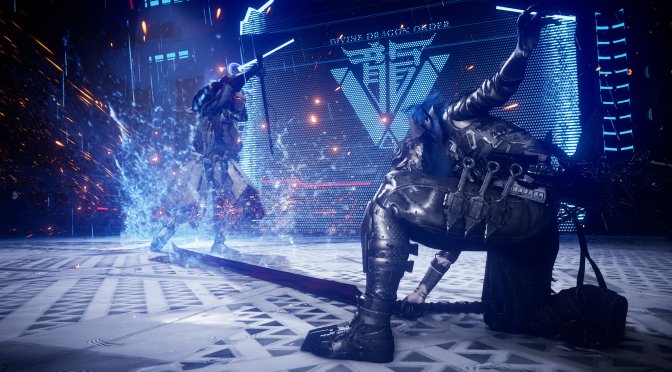
Xbox published the long-awaited sequel to Ninja Gaiden, after the misstep of Ninja Gaiden 3, Ninja Gaiden 4. Developed by action game auteurs PlatinumGames and Koei Tecmo stalwarts, Team Ninja delivered the month of Tomonobu Itagaki’s untimely passing. So, does Ninja Gaiden 4 deliver on the highs of the franchise?
I won’t keep you waiting in suspense; Ninja Gaiden 4 absolutely delivers and deserves to be in the discussion concerning Game of the Year. On lower‑end hardware, visuals punch above their weight. The game runs smoothly and looks fantastic, a testament to both its technical optimization and its striking art direction. Environments feel detailed and unique, with well-timed changes in theme to keep momentum. This is the best-looking Ninja Gaiden game.
The biggest shift in gameplay and narrative comes with the introduction of Yakumo, the new protagonist, replacing series mainstay Ryu Hayabusa. Yakumo feels incredibly fluid and dynamic, offering a level of versatility that even longtime fans will find refreshing. His four‑weapon arsenal provides diverse playstyles, and each one feels thoughtfully crafted rather than tacked on. The Kage‑Hiruko (mechanical arms) and the Yatousen (lance) stand out as my personal favorites, offering a blend of reach and mobility. When shifting into Yakumo’s Bloodraven form, however, the Takeminakata sword becomes my preferred style due to some excellent crowd control options. This incentive to switch around to my preferred weapons for various scenarios is indicative of the balancing of each of the available weapons, they are each feasible options depending on player preference. For players open to someone other than Ryu taking the lead, Yakumo may very well become a welcome addition to the franchise.
For long time fans, this entry feels closest to Ninja Gaiden 2, and I’ve seen other critics reach the same conclusion. It represents a return to form following the disappointing Ninja Gaiden 3. It also proves that PlatinumGames can still deliver top‑tier action experiences even without Hideki Kamiya at the helm after his departure and return to Capcom. The studio’s signature intensity and tight gameplay are on full display. Level design has also evolved: larger arenas and branching paths hosting secrets introduce a sense of exploration that keeps the moment‑to‑moment gameplay engaging, especially compared to the more linear layouts of previous installments.
Fans of the series’ trademark difficulty will be pleased to know that nothing has been watered down. The game retains the classic Ninja Gaiden level of challenge, demanding the player’s attention; though the easiest difficulty is pretty playable for the average gamer, by my assessment. Optional Purgatory Gates push difficulty even further, offering some of the toughest encounters in the game. While they’re not required, they provide a satisfying test for players who want to test themselves. Several boss fights, that I will leave unnamed here to avoid spoilers, rank among the slickest looking and feeling fights that Platinum has crafted since Metal Gear Rising, blending spectacle and mechanical depth in a way no other studio has matched.
That said, the game isn’t without its shortcomings. Later levels featuring Ryu fall back on some noticeable recycling of environments. Players who are deeply attached to Ryu as the series’ face may also find the shift to Yakumo jarring, even if the new protagonist is exceptionally well‑designed. Additionally, the lack of save points after making purchases in Purgatory Gates can make retries more tedious than they need to be.
Despite these issues, the game stands as a successful revival of a historic action franchise and evolution of the series. Its bold new direction, refined combat, and standout encounters make it one of the most exciting action titles in recent memory. And with the exception of the environment recycling, I am having to search for gripes to make this review read as though it was not written by a fanboy. This is an excellent game deserving of the IP and one that lives up to the legacy of Tomonobu Itagaki.

- Visuals, game runs well on lower end hardware and looks great art direction.
- New protagonist, Yakumo feels incredibly fluid and dynamic in play, with four different weapons, each with a different playstyle. Prefer playing as him over Ryu. Particularly enjoy the Kage-Hiruko (mechanical arms) as well as the Yatousen (lance) playstyles. However in Yakumo’s Bloodraven form, I prefer his standard Takeminakata (sword).
- Out of prior entries, game feels most like Ninja Gaiden 2.
- Platinum can still deliver top shelf action games without Kamiya, bodes well for the future output of the studio.
- Level design accommodates larger arenas and branching paths allowing for some degree of exploration that keeps player’s attentions during gameplay. Vs. more linear progression in prior entries.
- Classic Ninja Gaiden difficulty present and not dumbed down.
- Purgatory gates are particularly challenging but optional and not required.
- Some of the boss fights in this game, which I won’t name due to spoilers, are the slickest I’ve seen since Platinum’s Metal Gear Rising.

-
- Later levels with Ryu rely on some degree of recycling, which is disappointing.
- Some players may be unhappy with the new protagonist if they are particularly attached to Ryu.
- Lack of saves after purchases in purgatory gates make retries a nuisance.

Spencer joined us in early 2015, previously a console centric gamer he switched to PC a few years ago. He later helped push for an increase in Japanese content on PC with the #SEGAPCPorts campaign. Previously he ran a SEGA fansite as well as co-hosted a gaming podcast. He thinks Duke Nukem 3D is the best FPS of all time, his text message alert on his phone is literally Duke Nukem saying “Let God sort ’em out.”
Contact: Email